
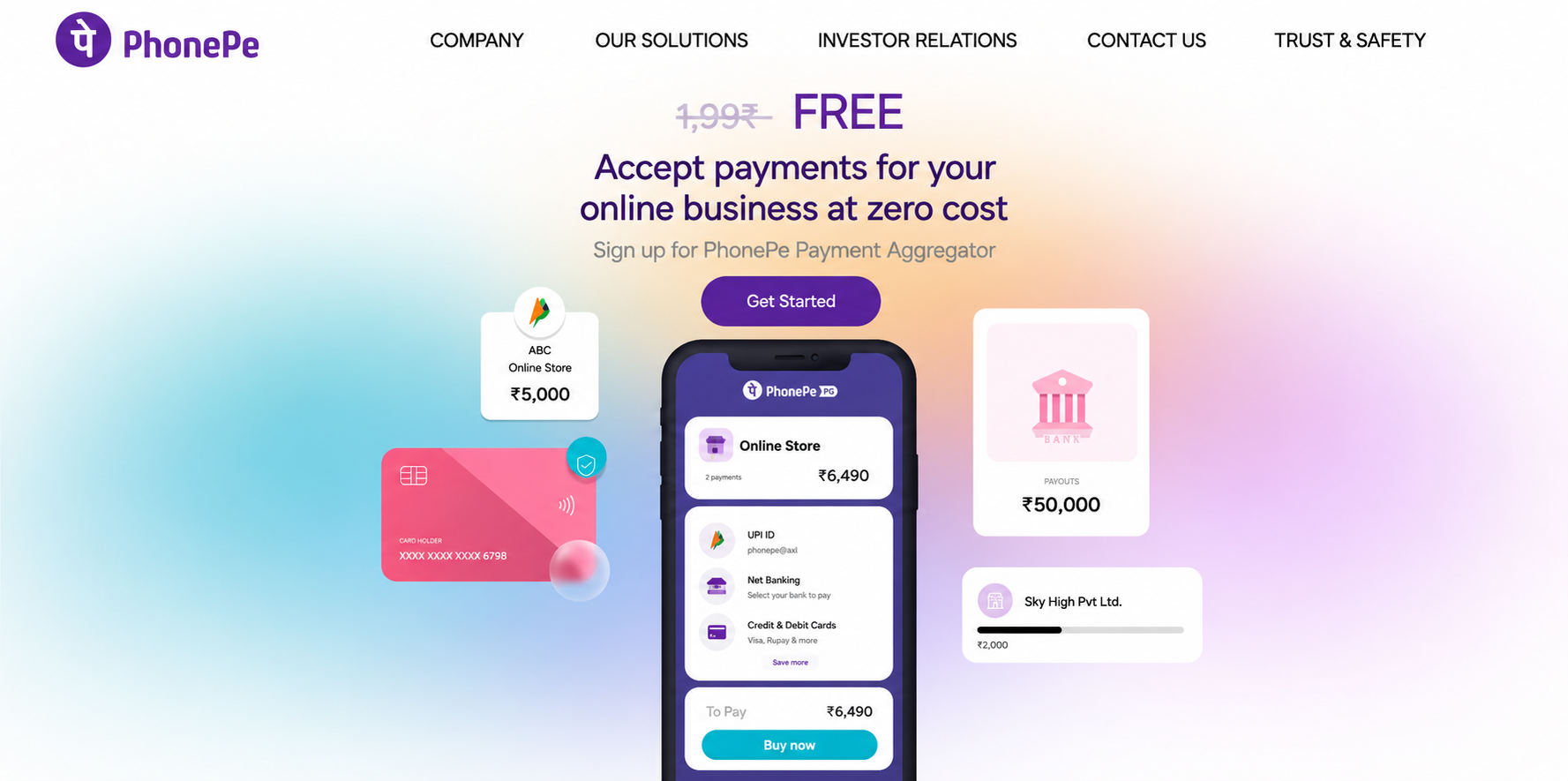
An honest, deeply researched review of PhonePe covering how the UPI app works, fees and charges, failed transactions and refunds, fraud and safety, how it compares to Google Pay and Paytm, and the verdict for 2026
Thank you for reading this post, don't forget to subscribe!Published by brands.run | The independent brand review hub
Reviewed Brand: PhonePe | Sector: Digital Payments and Fintech | Headquarters: Bengaluru, India | Website: phonepe.com
PhonePe is India’s largest UPI and digital payments app, and one of the most used apps in the country. Hundreds of millions of Indians use it every day to send money, scan QR codes at shops, pay bills, and recharge phones, and it has grown into a full fintech super-app offering insurance, lending, investments, and more. It has led the UPI market for years, holding close to half of all UPI transactions. This review is part of brands.run’s independent brand reviews, covering the apps people rely on every day.
For everyday payments, PhonePe is truly excellent: fast, widely accepted almost everywhere, and reliable for the vast majority of transactions. That dominance is earned. But because this is an app handling people’s money, an honest review has to look hard at the complaints too, and there are real ones, around failed transactions where money is debited, refund and support delays, a growing pile of cross-sell and fees, and the fraud risks that come with any payment app. Both the strength and the friction are real.
It’s built in three parts. Part 1, The Expose, covers what PhonePe actually is: its history and scale, how UPI payments work, its full range of products, and how a free-to-use UPI app actually makes money. Part 2, The Autopsy, weighs what works against what to scrutinize: the genuine reliability and reach, against failed-transaction stress, refund and account issues, customer service complaints, app clutter, creeping fees, and fraud risks. Part 3, The Killcritic, is the verdict: who PhonePe suits, who might prefer alternatives, how it compares to Google Pay and Paytm, and whether it deserves its place on your phone in 2026.
If you’re wondering whether PhonePe is safe, what it really charges, what to do when a payment fails, or how it compares to Google Pay and Paytm, this is the honest version, written to help you use it wisely and safely.
| Review Methodology This review draws on PhonePe’s own disclosures and policies, public market and business data, independent reporting, and customer feedback across review platforms. Where complaint platforms skew negative, that selection bias is noted, since people are far more likely to review a payment app after a failed transaction. Many failed-transaction and refund issues reflect the wider UPI and banking system, not PhonePe alone, and this is flagged where relevant. This review is informational and not financial advice. Fees and features change, so verify current details in the app and on phonepe.com. |
Part 1: The Expose
The expose lays out what PhonePe actually is: where it came from, how big it is, how its payments work, what it offers beyond payments, and how a free UPI app makes money.
What PhonePe Actually Is
PhonePe is an Indian digital payments and fintech platform, best known as the country’s leading UPI app. At its core, it lets you link your bank account and send or receive money instantly using UPI, scan QR codes to pay shops, pay utility bills, and recharge mobile and DTH connections, all for free for standard UPI payments. Over time it has expanded far beyond payments into a super-app offering insurance, loans, mutual funds, digital gold, stock investing, and even hyperlocal shopping.
In plain terms, PhonePe is the app a huge share of India uses to pay for things. Its purple QR codes are everywhere, from large malls to roadside vendors and tea stalls, and for hundreds of millions of people it has become the default, almost automatic way to move money in daily life. It became the market leader by making digital payments simple, fast, and widely accepted, and it has held the top position in UPI for years, processing close to half of all the transactions that flow through the system every single day. PhonePe is, for much of India, synonymous with digital payment itself, which is exactly why how reliably it works and how safely you can use it matter so much.
Understanding PhonePe means understanding two things at once. It’s an excellent, dominant payments app at its core, and it’s increasingly a sprawling financial super-app trying to sell you many other products. The payments work well; the wider experience is more crowded. The sections below break down what it offers, how it earns, and where the friction lies.
History and Scale
PhonePe’s rise tracks the rise of UPI itself. The company was founded in December 2015, shortly before UPI launched, and was acquired by Flipkart, which was later majority-acquired by the American retail giant Walmart, making Walmart PhonePe’s majority owner. Headquartered in Bengaluru, PhonePe rode the explosive growth of UPI to become India’s leading payments app.
The scale today is enormous. PhonePe has hundreds of millions of registered users, reported above 600 million, and serves over 40 million merchants across the country. It processes hundreds of millions of transactions a day and has held close to half of the entire UPI market, leading for many consecutive months, with a market share generally around 46 to 48 percent. Its revenue reached over 7,000 crore rupees in a recent year, growing strongly, and its core payments business turned profitable. It has been preparing for a major initial public offering, one of India’s most anticipated fintech listings, at a valuation reported in the range of 12 to 15 billion dollars, though the timing has shifted with market conditions.
This scale matters for a review in two ways. First, PhonePe’s dominance and reach mean it works almost everywhere, a genuine, practical advantage that smaller apps cannot match. Second, at hundreds of millions of users and transactions, even a tiny percentage of problems translates into a large absolute number of frustrated people, which is the backdrop to the complaints the autopsy examines. The market leadership and reliability for most are real; so is the volume of individual issues that comes with operating at this size. Both are part of an honest picture.
How UPI and PhonePe Payments Work
To understand PhonePe, it helps to understand UPI, the system it runs on, since that explains both how smooth payments are and where failures come from.
UPI, the Unified Payments Interface, is India’s instant payment system, built by the National Payments Corporation of India, that lets money move directly between bank accounts in real time using a simple identifier instead of sharing bank details. PhonePe is a UPI app, an interface on top of this system. When you pay through PhonePe, you authorize the transaction with a UPI PIN, and the money moves from your bank account to the recipient’s, usually in seconds. You can pay by scanning a QR code, entering a UPI ID or phone number, or selecting a contact. Receiving money requires no PIN, an important point for safety covered later.
The practical experience is remarkably smooth: a payment takes seconds, works at almost any shop with a QR code, and is free for standard UPI transfers. The crucial thing to understand is that a PhonePe payment involves multiple parties: your bank, the recipient’s bank, the UPI system, and PhonePe. When everything works, it’s instant. When a payment fails or gets stuck, the cause often lies in the banking or UPI layer, not PhonePe specifically, which is why failures can affect any UPI app and why resolution sometimes involves your bank. Understanding this shared infrastructure helps make sense of both the reliability and the occasional failures the autopsy examines.
PhonePe’s Full Range of Products
PhonePe has grown from a payments app into a broad financial super-app. Knowing the full range helps you understand the app and its clutter.
- UPI payments and transfers: The core: send and receive money, scan QR codes to pay merchants, all free for standard UPI.
- Bill payments and recharges: Pay electricity, water, gas, and other utility bills, and recharge mobile and DTH, sometimes with small fees on certain recharges.
- UPI Lite and Credit Line on UPI: UPI Lite for fast small-value payments without a PIN from an on-device balance, and credit-line and RuPay credit card payments on UPI.
- Insurance: Digital purchase of health, life, motor, and even small-business shop insurance, as a distributor of policies.
- Lending: Personal loans, buy-now-pay-later, and co-branded credit cards through lending partners.
- Wealth and investments: PhonePe Wealth for mutual funds, digital gold from small amounts, and stock investing through its Share dot Market platform.
- Merchant solutions: QR codes, Soundbox devices that announce payments aloud, and point-of-sale machines for businesses.
- New commerce: Hyperlocal shopping through its Pincode app on the ONDC network, plus travel, ticketing, and more.
This breadth means PhonePe can be a single app for payments and many financial needs, which is convenient. It also means the app has become crowded, with many products and offers competing for attention, a double-edged quality the autopsy examines. For a user, the core payments are what most people need and use; the wider products are optional and worth approaching selectively, especially the financial ones like loans and investments, which deserve the same scrutiny as anywhere else.
How PhonePe Makes Money
A natural question is how PhonePe earns money when UPI payments are free, and understanding this explains both its other products and its push to cross-sell.
UPI person-to-person payments generate essentially no direct revenue for PhonePe, since they’re free by design and regulation. So PhonePe monetizes in other ways. It earns from merchant services, including subscription fees on Soundbox and point-of-sale devices deployed across millions of shops, a growing and recurring revenue stream. It earns commissions and fees from distributing financial products, insurance, loans, mutual funds, and credit cards. It earns from certain transactions like specific bill payments and recharges, and from its newer commerce and advertising ventures. Its revenue has grown strongly on the back of this shift from pure payments to financial services and merchant monetization.
For a user, this revenue model explains a lot about the app experience. Because free UPI does not pay the bills, PhonePe is strongly incentivized to cross-sell higher-margin products, which is why the app surfaces loan offers, insurance, investments, and promotions, and why small fees have appeared on some transactions. None of this is improper; it’s the logical economics of a free-payments super-app. But it does mean users benefit from understanding the incentive: the app wants you to use more than just free payments, and a savvy user enjoys the excellent free payments while approaching the cross-sold products, especially loans and investments, deliberately and on their own merits, rather than simply because they’re conveniently presented.
| Why a Free App Pushes So Many Products PhonePe earns almost nothing from free UPI payments, so it makes money from merchant device subscriptions, distributing insurance, loans, and investments, fees on certain transactions, and advertising. This is why the app surfaces so many offers and cross-sells. The free payments are truly free and excellent; the many other products are how PhonePe earns, and you should evaluate financial products like loans and investments on their own merits, not just because they appear in an app you already trust for payments. |
UPI Lite Explained
UPI Lite is a feature worth understanding, since it changes how small payments work and addresses some common UPI friction.
UPI Lite lets you load a small amount, up to a few thousand rupees, into an on-device balance, and then make small-value payments instantly without entering your UPI PIN each time and without each payment cluttering your main bank statement. The idea is to make frequent small payments, like a cup of tea or a bus fare, faster and to reduce the load on bank servers, which can improve reliability for tiny transactions. Because the balance is small and on-device, the risk is limited compared to your full bank account.
For users who make many small payments, UPI Lite is a truly useful convenience: faster checkout, fewer PIN entries, and a cleaner bank statement. The trade-offs are minor: the on-device balance is capped and separate from your bank, so you top it up as needed, and it’s designed for small amounts only. The honest take is that UPI Lite is a sensible feature that solves real small-payment friction, and it’s worth activating if you make frequent low-value payments, while standard UPI with PIN remains appropriate for larger transactions where the extra authentication is a security benefit. It’s a small but practical improvement to the everyday payment experience.
The Merchant Side: QR Codes and Soundbox
A large part of PhonePe’s dominance comes from its merchant network, and understanding the business side explains why the app is accepted almost everywhere.
PhonePe has built an enormous acceptance network of over 40 million merchants, from large retailers to roadside vendors, anchored by its ubiquitous purple QR codes. To strengthen this, it deploys physical devices: the Soundbox, a small speaker that announces payments aloud so shopkeepers know instantly that money has arrived without checking a phone, and point-of-sale machines for larger merchants. The Soundbox solved a real problem for busy shops, confirming payment audibly in noisy environments, and millions are now in use. These devices typically carry a small monthly subscription, which is a meaningful and recurring revenue source for PhonePe, and the company has offered low promotional pricing to drive adoption.
For consumers, the merchant network is the quiet reason PhonePe is so useful: because so many shops display its QR code and use its devices, the recipient almost always accepts PhonePe, which makes paying frictionless. For merchants, the appeal is access to the huge base of PhonePe users and the convenience of audible confirmation, weighed against the device subscription cost. It’s worth noting that the payments ecosystem is evolving toward interoperable devices that accept any UPI app, which could change the device economics over time. The honest point is that PhonePe’s merchant infrastructure is a genuine strength underpinning its consumer convenience, and the same network is a key part of how the company builds the recurring revenue that a free-payments app needs.
Digital Payments in India and PhonePe’s Place
To understand PhonePe’s significance, it helps to understand how central digital payments have become in India, since PhonePe is at the heart of that shift.
India has undergone one of the world’s fastest transitions to digital payments, driven by UPI, which has made instant, free, account-to-account payment available to hundreds of millions and turned even small vendors into digital-accepting merchants. UPI now processes tens of billions of transactions a month, a scale unmatched in most of the world, and digital payment has become the default for a huge share of everyday transactions, from groceries to street food. This transformation has advanced financial inclusion, bringing more people and businesses into the formal digital economy, and PhonePe, as the leading app, has been a central player and beneficiary.
PhonePe’s place in this story matters for a user because it means the app is not a niche tool but core infrastructure for daily life for much of India. Its reliability and reach are part of why digital payments work so smoothly day to day, and its scale gives it both responsibility and influence in the ecosystem. At the same time, the concentration of so much payment volume in a few apps has drawn regulatory attention, including proposals to cap any single app’s share to preserve competition, which could shape the market over time. The honest framing is that PhonePe is deeply woven into India’s digital payment fabric, which is why it works so well and matters so much, and also why its conduct, fees, and reliability carry weight beyond any single user, making an honest assessment of both its strengths and its frictions especially useful.
The Network Effect Behind PhonePe
PhonePe’s dominance is reinforced by network effects, which is worth understanding because it explains both its strength and the stickiness users feel.
A payment app becomes more useful as more people and merchants use it, because you can pay more recipients and be paid by more payers. PhonePe’s large user and merchant base creates a powerful network effect: because so many people and shops already use it, new users find it the most useful app, which attracts still more users and merchants, reinforcing its lead. This is a major reason it has held its market position for so long, and why its acceptance is so wide. The same effect makes it a default that people stick with out of ubiquity and habit, even as competitors offer similar core functionality.
For a user, the network effect is mostly a benefit: it’s why the recipient almost always has a compatible app and why paying is frictionless. But it also explains the stickiness some users feel, the sense of being tied to an app partly because everyone else uses it, which can make small annoyances like fees or clutter feel harder to escape. The honest point is that PhonePe’s network effect truly makes it more useful and is a fair part of its dominance, while also creating a lock-in that benefits the company. For users, the practical reality is that the wide acceptance is real and valuable, and keeping a backup app remains sensible, since the network effect does not prevent occasional failures or justify tolerating issues without recourse.
Part 2: The Autopsy
The autopsy weighs PhonePe’s real strengths against its real complaints. PhonePe is a dominant, reliable payments app that works excellently for most transactions, and it also draws consistent complaints about failed transactions, refunds, support, clutter, and fees, alongside the fraud risks common to all payment apps. Because this is people’s money, the concerns get full and honest treatment, with clear guidance, alongside the genuine strengths.
What PhonePe Gets Right
The strengths are substantial and explain why PhonePe leads the market.
Dominant Reliability and Reach
PhonePe works almost everywhere, accepted at the vast majority of shops and online, across nearly all of India. For the practical need of paying anyone, anywhere, its reach and reliability for most transactions are its biggest strength, and a high transaction success rate means most payments simply work.
Free, Fast UPI Payments
Standard UPI payments are free and complete in seconds, which is the core of the app’s value. For everyday money movement, it’s hard to beat, and there’s no charge for sending money to people or paying most merchants.
One App for Many Needs
Payments, bills, recharges, and a range of financial products in one app is real convenience, letting users handle many tasks in one place without juggling apps.
Strong Acceptance Infrastructure
With over 40 million merchants and QR codes everywhere, plus Soundbox devices, PhonePe’s acceptance network is vast, which is why it’s so practical: the recipient almost always has it.
Established Trust and Scale
As the market leader backed by a major global parent, with strong brand recall and security investment, PhonePe is a trusted, established platform that hundreds of millions rely on daily.
These strengths make PhonePe an excellent, dependable choice for everyday payments, which is what most people use it for. The concerns that follow are real and worth knowing, but they do not undermine the core payments experience for the majority of transactions.
Failed Transactions and Money Debited
The most stressful and frequent complaint about any UPI app, including PhonePe, is a failed transaction where money is debited from your account but not received by the recipient, and it deserves prominent, honest treatment with clear guidance.
Users report transactions that fail or get stuck in processing while the amount is debited from their bank, leaving them anxious about whether the money is lost. The crucial context is that this is largely a UPI and banking ecosystem issue rather than a PhonePe-specific fault: failures can occur due to bank server load, connectivity, or system timeouts at any of the multiple parties in a transaction, and they affect all UPI apps. The reassuring part is that the system is designed to handle this: per the payments regulator’s rules, failed UPI transactions where money was debited but not credited are automatically reversed, usually within a short window, often around an hour, and refunds that are initiated can take a few days to reflect depending on the bank. The frustrating part is the anxiety in the meantime and the cases where reversal is delayed and you must follow up.
The honest and practical guidance is important here. If a payment fails but money is debited, do not immediately retry, since that can cause a duplicate payment, a common mistake. Wait, as most failed transactions auto-reverse within about an hour. Keep the transaction details and any reference number. If the money is not reversed within the expected window, raise the issue in the PhonePe app, and if needed with your bank, since the bank is often central to UPI dispute resolution, and the matter can be escalated through PhonePe’s grievance process and ultimately the banking ombudsman. The fair takeaway is that while failed-transaction complaints are real and stressful, the money is usually recovered automatically or through the dispute process, and much of the cause lies in the shared UPI infrastructure rather than PhonePe alone, though the experience of waiting and sometimes chasing is a genuine frustration.
| If a Payment Fails but Money Is Debited Do not retry immediately, as you may pay twice. Most failed UPI transactions auto-reverse within about an hour under the payments regulator’s rules. Keep the transaction ID and reference number. If it is not reversed in the expected window, raise it in the PhonePe app and with your bank, since the bank is often central to UPI dispute resolution, then escalate through PhonePe’s grievance process and, if needed, the banking ombudsman. This applies to all UPI apps, not just PhonePe. Refunds that are initiated can take a few days to reflect. |
Refund Delays and Account Issues
Closely related are complaints about refund delays and account problems, which add to the frustration when something goes wrong.
Beyond failed transfers, users report refunds for failed recharges or cancelled transactions taking time to arrive, with PhonePe’s own policy noting that while a refund can be initiated instantly, it may take several days to reflect in the account depending on the payment method, and some categories involving third parties can take longer. Separately, a recurring complaint involves accounts getting blocked or stopping working, sometimes after changing phones or SIM cards, with the app unable to verify the device and users facing delays in regaining access. Difficulty stopping autopay or subscription deductions also appears in complaints.
The honest framing is that these issues are real and truly frustrating, especially account blocking when you depend on the app, while some are partly structural. Refund timelines are often governed by banking and network rules that apply across apps, so some waiting is normal, though delays beyond the stated windows are a legitimate grievance. Device-change verification exists as a security measure to protect your account, which is sensible in principle but frustrating when it locks you out. The practical guidance is to keep records, use the in-app support and escalation path for unresolved refunds or blocks, review and cancel any autopay mandates you no longer want through the app’s autopay settings, and be patient with standard timelines while escalating genuine delays. These are real pain points, more about the experience when issues arise than about the core payment function, which works well for most.
Customer Service Complaints
As with many large consumer apps, customer service draws significant complaints, and for a money app, support quality matters when something goes wrong.
On complaint platforms, PhonePe accumulates many negative reviews about support: difficulty reaching a helpful human, automated responses, delays in resolving disputes, blocked-account frustrations, and unresolved refund or transaction issues. Some users report feeling ignored or stuck in loops without resolution. At the same time, PhonePe does provide a structured grievance process with multiple escalation levels, a nodal officer, and ultimately recourse to the banking ombudsman, and many users do get issues resolved, while complaint platforms inherently attract dissatisfied users far more than satisfied ones.
Both sides are true and worth stating honestly. Customer service is a real weak point, and when a payment issue arises, getting fast, effective human help can be harder than it should be, which is a legitimate frustration for a financial app. At the same time, the visible complaint volume overstates the typical experience, since the hundreds of millions of smooth daily transactions generate no reviews, and a formal escalation framework does exist. The fair takeaway is to use PhonePe knowing that most transactions need no support at all, but that if you hit a problem, the support experience may test your patience, and knowing the escalation path, in-app support, then grievance officer, then banking ombudsman, is valuable. This matters more the more you rely on the app’s many features beyond simple payments.
The App Clutter Problem
A common and growing criticism of PhonePe is that the app has become cluttered, with the simple act of paying buried under cross-sell and promotions.
As PhonePe has added products, the app has become busier. Users describe opening it to make a simple payment and being met with loan offers, insurance prompts, investment nudges, promotional banners, and games or reward offers, which some liken to walking into a crowded marketplace just to pay for milk. The core payment function still works, but it can feel surrounded by attempts to sell other products, which dilutes the clean, focused experience the app once had. This clutter is a direct result of the super-app strategy and the need to monetize beyond free payments.
For a user, this is a real if non-critical annoyance. The payment function remains accessible and fast, so the clutter does not break the core use, but it does make the experience busier and can push products you did not come for. The honest guidance is to use PhonePe for what you need, the excellent payments, and to consciously ignore the cross-sell unless you specifically want a product, evaluating any loan, insurance, or investment on its own merits rather than impulsively from a banner. Some users who want a cleaner experience prefer a more minimal UPI app for pure payments, which is a reasonable preference. The clutter is a genuine downside of the super-app approach, weighed against the convenience of having many services in one place, and how much it bothers you is a matter of preference.
Creeping Fees
A further frustration is the gradual appearance of fees on what users long experienced as a free app, which feels to some like a loyalty tax.
While standard UPI payments remain free, small fees have appeared on certain transactions, such as a fee on some mobile recharges and processing fees on certain payments like specific bill or card-related transactions. Individually these are small, often just a rupee or two on a recharge, but to long-time users accustomed to everything being free, the principle grates, the sense of being charged simply for continuing to use an app they have relied on for years. As payment companies seek profitability, such fees have crept in across the industry, not only on PhonePe.
The honest framing is that the fees are currently small and limited to specific transaction types rather than core money transfers, so the app remains free for its main use, sending money and paying merchants. But the trend is worth noting: as the industry pushes for profit, convenience fees tend to appear and grow, much as they have elsewhere. For users, the practical point is to be aware of any fee shown before confirming a transaction, especially on recharges and bill payments, and to compare if a fee seems significant, since other apps or direct payment may avoid it. The fees are a minor present annoyance rather than a major cost, but they reflect a direction of travel that cost-conscious users should watch, and the principle of fees creeping into a once-free service is a legitimate, if small, grievance.
Fraud and Safety Risks
The most important safety topic for any payment app is fraud, and while this is not unique to PhonePe, an honest review must address it clearly, because UPI fraud is widespread and the stakes are your money.
UPI and payment app fraud is a serious and common problem in India, and scammers target users of all apps, including PhonePe. Common scams include tricking you into entering your UPI PIN to receive money, when in reality you never need a PIN to receive money, only to send it, so any request to enter your PIN to get money is a scam. Other scams include fake QR codes that take rather than give money, fraudulent calls pretending to be from PhonePe or your bank asking for OTP or PIN, fake refund or cashback offers, and requests to install screen-sharing apps that let scammers see your screen and steal credentials. A particularly important scam involves fake customer care numbers: scammers post fake PhonePe helpline numbers online, so that people searching for support call them and are then tricked into revealing details or installing malicious apps.
The essential safety guidance is clear and worth following strictly. Never share your UPI PIN or OTP with anyone, and remember you never enter your PIN to receive money. Never call PhonePe customer care numbers found through web searches or forums, since many are fake; only use the support option inside the official app. Do not install screen-sharing apps at anyone’s request. Be wary of unknown payment requests, unexpected QR codes, and offers that seem too good to be true. If defrauded, report immediately through the app’s fraud reporting, to your bank, and to the national cybercrime helpline. The honest point is that PhonePe itself provides security and fraud detection, and the app is structurally safe to use, but the biggest risk in digital payments is social engineering that tricks users into authorizing or revealing things, which no app can fully prevent. Using PhonePe safely is mostly about your own vigilance, and the guidance above is the core of it.
| Essential PhonePe and UPI Safety Rules You never need a UPI PIN to RECEIVE money, only to send it, so any request to enter your PIN to get money is a scam. Never share your PIN or OTP with anyone. Never call PhonePe helpline numbers found via web search or forums, as many are fake scam numbers; use only the support inside the official app. Never install screen-sharing apps at someone’s request. Beware fake QR codes, fake refund or cashback offers, and calls pretending to be from PhonePe or your bank. If defrauded, report in the app, to your bank, and to the national cybercrime helpline immediately. |
What You Cannot Fully Verify
In the interest of honesty, here is what’s hard to assess definitively about PhonePe, and which varies by individual experience.
- The typical experience versus the complaint skew, since most transactions are smooth and unreviewed while failures get reported.
- How a specific failed transaction, refund, or blocked account will be handled and how quickly.
- How much of a given failure is PhonePe versus the bank or UPI system, which is often hard to attribute.
- The exact current fees, which change and apply to specific transaction types.
- Whether you will be targeted by fraud, which depends on circumstances and your vigilance.
This is not a list of hidden flaws; it’s a reminder that experiences vary and the core payments are reliable while the support experience and edge cases are mixed. A review can tell you PhonePe is a dominant, reliable payments app that’s excellent for everyday use, with real failed-transaction, refund, support, clutter, and fee frustrations, and the universal fraud risks of digital payments. It cannot predict your specific experience or protect you from scams, which depend on your own caution. The honest guidance is to expect excellent everyday payments, know the escalation path for problems, and follow the safety rules strictly.
Part 3: The Killcritic
The killcritic is the verdict. Who PhonePe suits, who might prefer alternatives, and how it compares to Google Pay, Paytm, and other ways to pay.
Who PhonePe Is For
PhonePe suits almost anyone who makes digital payments in India, with the fit depending on how much of its breadth you want.
Everyday Payment Users
If you want a reliable app to pay shops, send money, and split bills that works almost everywhere, PhonePe is one of the best choices, with vast acceptance and a high success rate. For the core need of paying anyone, anywhere, it excels.
Those Who Want One App for Many Needs
If you like handling payments, bills, recharges, and financial products in one place, PhonePe’s super-app breadth is convenient, putting many services at your fingertips, provided you approach the financial products selectively.
Merchants and Small Businesses
If you run a shop, PhonePe’s QR codes, Soundbox devices, and vast customer base make it a practical way to accept digital payments, given how many customers already use it.
Users Wanting Wide Acceptance
If you value the recipient almost always having the same app, PhonePe’s market leadership means high compatibility, which matters for smooth payments to people and shops alike.
For these users, essentially most Indian digital payment users, PhonePe is an excellent, dependable choice for everyday payments, with its weaknesses mostly affecting edge cases and the optional extra products rather than the core function.
Who Might Prefer Alternatives
Some users might reasonably prefer or also use alternatives, depending on their priorities.
Those Who Want a Cleaner App
If the cross-sell and clutter bother you and you want a minimal app just for payments, a more focused UPI app may suit you better for a cleaner experience, though acceptance is similar across major apps.
Users Avoiding Specific Fees
If you want to avoid even small fees on recharges or certain payments, comparing apps or paying directly for those specific transactions may help, since fees vary.
Anyone Burned by Support Issues
If you have had unresolved support or refund problems and value responsive help, you might keep a second app or your bank’s UPI app as a backup, since support quality is a common frustration across payment apps.
Privacy-Minded Users
If you prefer to limit how much one app knows about your finances and habits, spreading activity across apps or using your bank’s app for some payments is a reasonable choice, given how much data a super-app collects.
PhonePe vs Google Pay
The main comparison is Google Pay, PhonePe’s closest rival, and the honest answer is that they’re both excellent and quite similar for everyday payments.
| Factor | PhonePe | Google Pay |
|---|---|---|
| UPI market share | Largest (around 47%) | Second (around 33%) |
| Core payments | Fast, reliable | Fast, reliable |
| Acceptance | Vast | Vast |
| App experience | Feature-packed, busy | Cleaner, simpler |
| Extra products | Many (super-app) | Fewer, more focused |
| Owner | Walmart-backed | |
| Best for | All-in-one needs | Simpler payments |
Both are dominant, reliable UPI apps with vast acceptance, and for core payments the experience is similar and excellent on either. The main differences are in feel and breadth: PhonePe packs in more financial products as a super-app, which means more capability but a busier app, while Google Pay tends to feel cleaner and more focused on payments. Neither is decisively better for everyday paying; many users keep both. The honest guidance is that if you want an all-in-one financial app and the widest acceptance, PhonePe is excellent, while if you prefer a simpler, cleaner payment experience, Google Pay may appeal more, and using both as backups for each other is a common, sensible approach given that occasional failures affect all UPI apps.
PhonePe vs Paytm
Another comparison is Paytm, an earlier leader in Indian digital payments that now holds a smaller UPI share.
Paytm pioneered much of India’s digital payments wave and offers a broad app with payments, a wallet, and many services, but its UPI market share is now well behind PhonePe and Google Pay, and it has faced regulatory challenges affecting parts of its business. For users, Paytm remains a capable app with wide acceptance and its own features, but PhonePe’s larger UPI share means slightly broader ubiquity in practice. The choice often comes down to which app you and the shops you frequent already use, and personal preference for each app’s features and feel. PhonePe’s market leadership gives it an edge in sheer ubiquity, while Paytm retains a loyal base and particular features some prefer. As with all UPI apps, the core payment function is similar, and acceptance is wide across the major players.
PhonePe vs Bank UPI Apps and BHIM
A different comparison is against your own bank’s UPI app or the government-backed BHIM app, which some users prefer for simplicity or trust.
Your bank’s UPI app and BHIM let you make the same UPI payments, often with a more minimal, no-frills experience and no cross-sell of extra products, which appeals to users who want pure payments without a super-app’s clutter. The trade-off is that these apps may have fewer features, less polished interfaces, or fewer offers and conveniences than PhonePe. For a user who wants only simple payments with minimal distraction, a bank app or BHIM is a reasonable, clean choice, while PhonePe offers more features and convenience at the cost of more clutter. Many users sensibly use PhonePe for its acceptance and features and keep a bank app as a reliable backup, since having more than one UPI app helps when one has an issue. The honest point is that for pure payments, simpler apps work fine, while PhonePe adds breadth and ubiquity that many value.
PhonePe vs Using Dedicated Apps
A final comparison concerns PhonePe’s extra products, insurance, loans, investments, against using dedicated specialist apps for those needs.
Convenience
Buying insurance, investing, or borrowing within PhonePe is convenient, keeping everything in one app you already use, which has real appeal for simplicity.
Depth and Choice
Dedicated apps for investing, insurance, or lending often offer more depth, choice, comparison, and specialized features than a payments super-app’s add-on versions, which can mean better products or terms.
The Honest Call
For convenience, using PhonePe’s financial products is easy, but for important financial decisions, it’s worth comparing against dedicated platforms rather than defaulting to the option in your payments app. An insurance policy, loan, or investment deserves evaluation on its specific terms, coverage, rates, and choice, which specialist apps may do better. The sensible approach is to use PhonePe for its excellent payments and to treat its financial products as one option to compare, not an automatic choice, especially for significant decisions. Convenience is valuable, but for money matters beyond simple payments, comparing on the merits protects your interests, and the easiest option in an app is not always the best one for you.
The Final Verdict
| PhonePe Final Rating: 4 / 5 India’s dominant UPI app and a truly excellent, reliable choice for everyday digital payments, accepted almost everywhere with a high success rate and free standard transfers, backed by huge scale and trust. Held back by the universal stress of occasional failed transactions where money is debited, refund and account-unblocking delays, customer service that can disappoint, a cluttered super-app experience with growing cross-sell, small creeping fees, and the fraud risks common to all payment apps. A strong, dependable payments app worth using, best used for its excellent core payments with awareness of the safety rules and the escalation path for problems. |
Use PhonePe if you want a reliable, widely accepted app for everyday payments, you value having many services in one place, or you run a business needing wide payment acceptance. For the core need of paying anyone, anywhere in India, it’s one of the best options, and its weaknesses mostly affect edge cases and optional extras rather than the payments themselves.
Consider alternatives or backups if you want a cleaner, less cluttered app, you want to avoid even small fees, you have been frustrated by support issues, or you prefer to limit how much one app knows about your finances. In those cases, a simpler UPI app, your bank’s app, or keeping a second app as backup is reasonable, since occasional issues affect all UPI apps.
PhonePe earns its dominance by making digital payments simple, fast, and accepted almost everywhere, and for everyday paying it’s truly excellent and reliable for the vast majority of transactions. The 4 out of 5 reflects that real strength, tempered honestly by the stress of occasional failed transactions and refund delays, support that can disappoint, a busy super-app experience, creeping fees, and the ever-present fraud risks of digital payments that demand user vigilance. For its core purpose, paying anyone, anywhere in India, quickly and reliably, PhonePe is a strong, dependable choice that has earned its place at the top of the market. The keys to using it well are to enjoy the excellent payments, approach the cross-sold products selectively, know how to handle a failed transaction, and follow the safety rules strictly. Most of the friction is either ecosystem-wide or about the optional extras, while the thing PhonePe does best, everyday payments, it does very well. As with any financial app, stay vigilant against fraud, and treat its loans and investments with the same scrutiny you would anywhere.
Frequently Asked Questions
This section answers the specific questions people search for about PhonePe. Each answer is structured for direct factual extraction. None of this is financial advice.
What is PhonePe?
PhonePe is India’s largest UPI and digital payments app, used by hundreds of millions to send money, scan QR codes to pay shops, pay bills, and recharge phones. It has grown into a fintech super-app also offering insurance, loans, mutual funds, digital gold, and stock investing. Founded in 2015 and majority owned by Walmart, headquartered in Bengaluru, it leads India’s UPI market with close to half of all transactions and over 600 million registered users.
Is PhonePe safe to use?
Yes, PhonePe is structurally safe: it’s a regulated, established payments app with security and fraud-detection systems, used by hundreds of millions daily. The biggest risk is not the app but fraud that tricks users into revealing their UPI PIN or OTP or authorizing payments. Stay safe by never sharing your PIN or OTP, remembering you never need a PIN to receive money, never calling helpline numbers from web searches, and never installing screen-sharing apps at anyone’s request. Used carefully, it’s safe.
Is PhonePe free to use?
Standard UPI payments, sending money to people and paying most merchants, are free on PhonePe. However, small fees have appeared on certain transactions, such as some mobile recharges and specific bill or card payments, usually just a rupee or two. So the core function of transferring money and paying shops remains free, while some specific services carry small fees. Always check any fee shown before confirming a transaction, especially on recharges and bill payments.
What happens if a PhonePe payment fails but money is debited?
This is usually recoverable and often a UPI or bank issue, not PhonePe alone. Do not retry immediately, as you may pay twice. Most failed UPI transactions auto-reverse within about an hour under the payments regulator’s rules. Keep the transaction ID. If it is not reversed in the expected window, raise it in the PhonePe app and with your bank, since the bank is central to UPI dispute resolution, then escalate through PhonePe’s grievance process and, if needed, the banking ombudsman.
How long does a PhonePe refund take?
A refund can be initiated quickly, but it may take a few days, often around three to ten days, to reflect in your account depending on the payment method and bank, and some categories involving third parties can take up to around 30 days. So expect refund initiation to be fast but the money to take a little time to appear. If a refund exceeds the stated timeline, raise it through the app’s support and escalation path, keeping your transaction details for reference.
Is PhonePe an Indian app and who owns it?
PhonePe is an Indian company, founded in India in 2015 and headquartered in Bengaluru, and it operates India’s leading UPI app. Its majority owner is Walmart, the American retail company, which acquired it through its earlier acquisition of Flipkart. So PhonePe is an Indian business and brand serving the Indian market, with majority foreign ownership through Walmart. It has been preparing for a public listing in India, one of the country’s most anticipated fintech IPOs.
What is UPI Lite on PhonePe?
UPI Lite lets you load a small amount, up to a few thousand rupees, into an on-device balance and make small-value payments instantly without entering your UPI PIN each time and without each payment cluttering your bank statement. It’s designed to make frequent small payments faster and reduce load on bank servers. The balance is small and separate from your bank, limiting risk. It’s useful if you make many small payments, while standard UPI with PIN suits larger transactions where the extra authentication adds security.
Is PhonePe or Google Pay better?
Both are excellent, dominant UPI apps with vast acceptance, and for core payments they’re similar. PhonePe leads UPI market share and packs in more financial products as a super-app, which means more capability but a busier app. Google Pay tends to feel cleaner and more focused on payments. Neither is decisively better for everyday paying, and many users keep both as backups, since occasional failures affect all UPI apps. Choose PhonePe for all-in-one features and ubiquity, or Google Pay for a simpler experience.
Why does PhonePe show so many loan and investment offers?
Because UPI payments are free and earn PhonePe almost nothing, the company makes money from other products, including loans, insurance, investments, and merchant services. This is why the app surfaces many offers and cross-sells, it’s how a free-payments app earns revenue. The payments stay free and excellent, while the offers are how PhonePe monetizes. Evaluate any loan, insurance, or investment on its own merits and compare with dedicated providers, rather than choosing it just because it appears in the app.
My PhonePe account is blocked, what should I do?
Account blocks can happen for security reasons or after changing your phone or SIM, when the app cannot verify your device. Use the in-app support to report the issue and follow the verification steps to regain access, keeping your registered mobile number and details ready. If it is not resolved promptly, escalate through PhonePe’s grievance process to the nodal officer and, if needed, the banking ombudsman. Importantly, do not call helpline numbers found via web search, as many are fake scam numbers; use only official in-app support.
Can I get scammed on PhonePe and how do I stay safe?
Yes, UPI fraud is common across all apps, and scammers target PhonePe users. Stay safe by never sharing your UPI PIN or OTP, remembering you never enter a PIN to receive money, only to send it, so any request to enter a PIN to get money is a scam. Avoid unknown QR codes, fake refund or cashback offers, and calls pretending to be PhonePe or your bank. Never install screen-sharing apps at anyone’s request, and never call helpline numbers from web searches. Report fraud immediately in the app, to your bank, and to the cybercrime helpline.
What is the real PhonePe customer care number?
Be very careful here: many customer care numbers for PhonePe found through web searches, social media, or forums are fake numbers posted by scammers to trick you into revealing details. The safe approach is to never call a number you found by searching online, and instead use the support or help option inside the official PhonePe app, which routes you to genuine support and the escalation process. For unresolved issues, the app provides the official grievance and nodal officer channels. Using only in-app support protects you from the fake-helpline scam.
Does PhonePe work without internet or with any bank?
PhonePe needs an internet connection for most payments, though UPI also has limited offline options in some cases. It works with the vast majority of Indian banks that support UPI, which is almost all of them, so you can link most bank accounts. For everyday use, you need an active internet connection and a bank account that supports UPI, which covers the large majority of users across the country. Acceptance is also nearly universal at merchants, since PhonePe QR codes and the UPI network are so widespread across India.
Should I use PhonePe for investments and insurance?
You can, and it’s convenient, but compare before committing. PhonePe distributes mutual funds, digital gold, stocks, insurance, and loans, which is handy within one app. However, dedicated investing or insurance platforms often offer more choice, depth, and comparison. For important financial decisions, evaluate the specific product, its terms, coverage, rates, and alternatives, rather than defaulting to the option in your payments app. Use PhonePe’s excellent payments freely, and treat its financial products as one option to compare. This is not financial advice.
Is PhonePe better than Paytm?
For UPI payments, PhonePe has a much larger market share than Paytm and slightly broader everyday ubiquity, while both offer wide acceptance and their own features. Paytm pioneered Indian digital payments and remains capable, with a wallet and many services, but its UPI share is now well behind PhonePe and Google Pay, and it has faced regulatory challenges in parts of its business. The choice often comes down to which app you and your local shops already use and personal preference. PhonePe’s market leadership gives it an edge in sheer ubiquity for everyday payments.
Can I use PhonePe internationally or for foreign payments?
PhonePe is primarily built for payments within India using UPI, and UPI has been expanding to some international acceptance in select countries and for certain cross-border uses, which is growing over time. For most users, PhonePe is an India-focused payments app. If you need international payments, check the current UPI international options and acceptance for your specific destination before relying on it, and be aware that dedicated international money transfer services may still suit cross-border remittances better in many cases. Within India, PhonePe’s acceptance is nearly universal, which is its core strength.
What should I do if I sent money to the wrong person on PhonePe?
Act quickly. UPI transfers are instant and generally cannot be reversed directly through the app once completed, so first contact the recipient if you know them and politely request they return it. If they refuse or are unknown, raise the issue through the PhonePe app’s support to request assistance, and you can also raise it with your bank and through UPI dispute channels. Keep the transaction details. Prevention is by far the best approach here: always double-check the recipient’s name and account details shown on screen before confirming any payment, since the money moves immediately and cannot easily be pulled back.
Does PhonePe charge for sending money to friends or family?
No. Sending money to other people through standard UPI on PhonePe is free, with no charge for person-to-person transfers, which is the core of UPI and a key reason for its popularity. Fees that have appeared apply to specific services like some recharges or particular bill and card payments, not to ordinary money transfers between individuals. So you can send money to friends and family for free, while checking for any fee shown on specific service transactions before confirming.
Is my money safe in PhonePe if I keep a balance?
PhonePe primarily moves money directly between bank accounts via UPI, so you usually do not keep a large balance in the app itself, your money stays in your bank. Small features like UPI Lite hold a limited on-device amount for convenience, with limited risk due to the small cap. The main safety consideration is not balances but protecting your account and credentials from fraud. Keep your UPI PIN and OTP private, use official in-app support only, and stay alert to scams, since social engineering, not the app, is the biggest risk.
Why has PhonePe added fees if UPI is supposed to be free?
Person-to-person UPI transfers remain free, but PhonePe earns almost nothing from them, so as the company pursues profitability, small fees have appeared on certain services like some recharges and specific bill or card payments. These are not charges on core money transfers but on particular value-added services. The trend reflects the wider industry seeking revenue, since free payments alone do not sustain a business. For users, the core function stays free, while it pays to check any fee shown on specific services before confirming.
How do I stop an autopay or subscription on PhonePe?
Look for the autopay or mandates section in the PhonePe app, where active recurring payments and subscriptions are listed, and cancel or pause the ones you no longer want. Unwanted autopay deductions are a common complaint, so reviewing your mandates periodically helps avoid surprise charges. If you cannot stop a mandate through the app or a deduction continues, raise it through in-app support and escalate if needed, and you can also manage some mandates through your bank. Keep records of any cancellation confirmations.
Is PhonePe going to have an IPO?
PhonePe has been preparing for a major initial public offering in India, one of the country’s most anticipated fintech listings, at a valuation reported in the range of around 12 to 15 billion dollars. The timing has shifted with market conditions, and the company has indicated it remains committed to a public listing in India once conditions are suitable. For everyday users, an IPO does not change how the app works, but it reflects PhonePe’s scale and its transition toward being a publicly accountable company, with the increased financial disclosure, regulatory scrutiny, and public accountability that a stock market listing brings.
Does using PhonePe affect my credit score?
Simply using PhonePe for payments does not affect your credit score, since UPI transfers are not credit. However, if you take a loan, buy-now-pay-later, or a credit card through PhonePe’s lending features, those are credit products that can affect your credit score like any borrowing, through your repayment behavior and credit checks. So payments themselves are neutral for your score, while any borrowing you do via the app follows normal credit rules. Treat any loan or credit product through PhonePe as you would borrowing anywhere, with care.
Can I use PhonePe without a bank account?
PhonePe’s core UPI payments require a bank account linked to the app, since UPI moves money directly between bank accounts. So for the main function of sending and receiving money, a bank account that supports UPI is needed, which covers most users. Some limited features may work differently, but the essential payment function depends on a linked bank account. Setting up PhonePe involves linking your bank account and creating a UPI PIN, after which you can pay and receive money instantly across India’s vast acceptance network.
What makes PhonePe the number one UPI app?
PhonePe leads UPI through a combination of early, aggressive expansion, a huge merchant acceptance network with ubiquitous QR codes and Soundbox devices, a reliable core payments experience with a high success rate, and powerful network effects, since so many people and shops already use it that it becomes the most useful app. Backing from a major global parent and heavy investment also helped. The result is close to half the UPI market and leadership sustained over many months, making it the default payment app for much of India. Once an app reaches that level of ubiquity, the convenience of everyone already using it tends to keep it on top, which is why the leading positions in UPI have stayed fairly stable even as the apps compete hard.
Common Mistakes and Safety Tips When Using PhonePe
This section captures the most common mistakes people make using PhonePe and UPI, and how to avoid each. Following these protects your money.
Mistake: Retrying immediately after a failed payment
Mitigation: If a payment fails but money is debited, do not retry at once, since you may pay twice. Wait, as most failed UPI transactions auto-reverse within about an hour, and check before attempting again.
Mistake: Sharing your UPI PIN or OTP
Mitigation: Never share your UPI PIN or OTP with anyone, and remember you never enter your PIN to receive money. Any request to enter your PIN to get money, or to share an OTP, is a scam, no matter who claims to be asking.
Mistake: Calling customer care numbers from web searches
Mitigation: Many PhonePe helpline numbers found online are fake scam numbers. Only use the support option inside the official app, which routes to genuine support and escalation, never a number you found by searching.
Mistake: Installing screen-sharing apps at someone’s request
Mitigation: Never install screen-sharing or remote-access apps because a caller asks you to, as this lets scammers see your screen and steal your credentials. No legitimate support will ask you to do this.
Mistake: Impulsively taking app-presented loans or products
Mitigation: Loan, insurance, and investment offers in the app are how PhonePe earns. Evaluate any such product on its own terms and compare with dedicated providers, rather than taking it just because it’s conveniently shown.
Mistake: Relying on only one payment app
Mitigation: Since occasional failures affect all UPI apps, keep a second UPI app or your bank’s app as a backup, so you can still pay when one app or bank link has a temporary issue.
Final Notes on This Review
This review was built using a query fan-out approach designed to answer the questions people actually search for about PhonePe, organized into topic clusters that map to how Google’s AI Overview surfaces answers. Every claim is grounded in a source: PhonePe’s own disclosures and policies, public market and business data, independent reporting, and customer feedback, with the negative complaint skew noted honestly and ecosystem-wide UPI issues distinguished from PhonePe-specific ones where possible.
Figures and features reflect publicly available information as of mid-2026 and change over time. Fees, products, and terms can change, so verify current details in the app and on phonepe.com. This review is informational and not financial advice, and any financial products like loans, insurance, or investments should be evaluated on their own merits. Above all, follow the safety rules: protect your UPI PIN and OTP, use only official in-app support, and stay alert to fraud, since your own vigilance, far more than any feature of the app, is the best protection for your money in the digital payment age.
More brand reviews on brands.run
brands.run publishes honest, independent reviews of brands across every category, from finance and technology to e-commerce and more. Explore the latest reviews on the brands.run homepage.
Review of PhonePe | Last updated: June 2026 | Reviewer: brands.run editorial team | Independent review. Fees and features change often, so verify current details in the app, and always protect your UPI PIN and stay alert to fraud.
PhonePe is a trademark of PhonePe Limited. All product names, logos, and brands are the property of their respective owners. Use of these names here does not imply any affiliation or endorsement. This review is for general informational purposes only, is not financial advice, and reflects publicly available information and customer feedback as of mid-2026.