
By the brands.run editorial team | Independent reviews, updated June 2026
Thank you for reading this post, don't forget to subscribe!Search for the best link building agency and most lists you find were written by an agency that ranks itself first, then fills the rest with names nobody chooses. This comparison takes a different approach. The ten agencies below are listed alphabetically, not ranked, because the right one depends entirely on your budget, your preferred model, and your goals.
At brands.run we review the brands people actually use, and link building and SEO services are among the most-reviewed names in our marketing category. This guide draws on that hands-on review work, plus public pricing, client feedback, and reputation data, to compare the leading link building services US buyers consider. The aim is a fair, side-by-side look so you can match a provider to your situation rather than to a sales pitch.
Backlinks are still among Google’s strongest ranking signals, and they increasingly shape which sources AI answer engines cite. So the agency you choose has a direct line to your traffic. Every entry below carries a clear best for label and an honest worth knowing note. The best link building services for a funded SaaS company chasing digital PR are not the best link building services for a local business that needs ten solid placements a month. Read the labels, shortlist two or three, and test before you commit.
What a Link Building Agency Actually Does
A link building agency earns backlinks to your site from other websites, so search engines and AI answer engines treat your pages as more trustworthy. In practice that means publisher outreach, content creation, placement, and reporting. Most run it as a done-for-you service: you provide target pages and anchors, they handle the rest. The workflow is fairly standard across the better providers, so the real difference between agencies is not the method.
The category splits into a few models. Full-service agencies run your whole campaign on a monthly retainer with a strategist setting direction. Productized services let you order links a la carte by metric and niche. Managed network services sit in between, giving you a large vetted publisher pool with transparent metrics and support, without a locked retainer. Knowing which model you want narrows the field fast.
What separates a strong agency from a weak one is the quality of its publishers, the transparency of its pricing, and whether you can see what you are buying before you pay. Editorial placements on real sites with real readers move rankings. Footer links, paid-looking inserts, and placements on sites with no audience do not, no matter what the headline metric says.
How brands.run Compared These Link Building Agencies
No comparison of agencies can be perfectly objective, and this one does not pretend to be a lab study. But the entries below are assessed on the factors that actually predict results, drawing on the same criteria our team uses when reviewing services in this space:
- Publisher quality and relevance: real sites with organic traffic in relevant niches, not expired domains or private blog networks dressed up as publications.
- Transparency: whether you can see publisher metrics like Domain Rating, Domain Authority, and organic traffic, plus the real price, before you commit.
- Pricing and model fit: per-link clarity versus opaque retainers, and whether the model suits startups, agencies, or enterprise teams.
- Editorial control: a content approval step so you see and approve articles before they go live, which is the clearest sign of a legitimate provider.
- Reputation and track record: third-party ratings, years in business, and consistency, weighed honestly rather than taken at face value.
A high Domain Rating means nothing if the publisher has no real visitors. Before you buy from anyone on this list, check organic traffic and topical relevance on each target site, not just the headline score. That single habit removes most of the weak placements that waste budgets.
The 10 Link Building Agencies, Listed Alphabetically
Ten providers, each strong at a specific job. The order is alphabetical and implies no ranking. Read the best for line on each to find the ones that fit your need.
Authority Builders
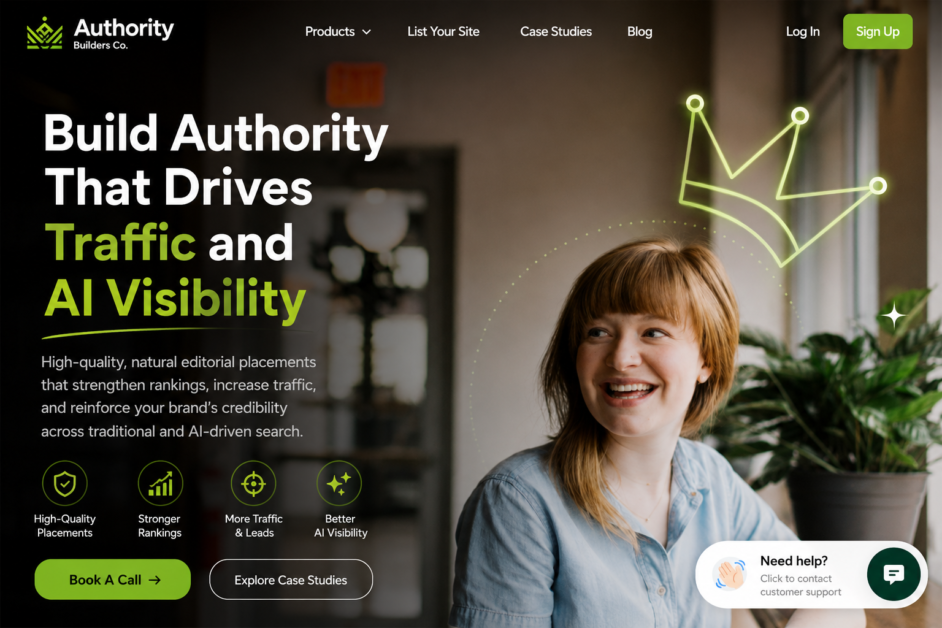
Authority Builders, often shortened to ABC, is known for editorial-quality contextual placements from a vetted network of real publisher sites with traffic. The emphasis is relevance and quality control, which appeals to SEOs who want vetted editorial links without running outreach themselves.
- Best for: SEOs and businesses that want vetted, editorial-quality contextual placements with traffic checks.
- Worth knowing: as with any network, confirming traffic and topical fit on each placement is still good practice.
FATJOE
FATJOE is one of the most established productized link building and content providers, and it is an agency favorite for white-label fulfillment. You log into a dashboard, pick a package, set your niche and anchor preferences, and the team handles outreach and placement, with content included in most packages. Delivery is consistent and predictable, which is the whole point. It is built for agencies that need to fulfill links across many clients without hiring an in-house outreach team.
- Best for: agencies and resellers that want reliable, repeatable volume across multiple clients.
- Worth knowing: the productized model is less tailored than a strategy-led engagement, and quality is dependable rather than ultra-premium, so choosing higher tiers helps.
The HOTH
The HOTH, based in St. Petersburg, Florida, is one of the best-known names in US SEO. It offers platform-style link ordering by DR tier and niche, plus a wider menu of SEO services, so you can buy links on their own or bundle them with broader work. The self-serve ordering and range make it popular with SMBs and agencies that want options in one place.
- Best for: SMBs and agencies that want menu-style link ordering alongside broader SEO services under one roof.
- Worth knowing: as a broad provider, link quality varies by tier, so lean toward higher tiers and confirm publisher traffic before ordering.
Loganix
Loganix is an SEO fulfillment partner that has operated since 2010, manually vetting publishers for traffic, spam score, and topical authority before each placement. It is a dependable white-label option for agencies that want consistent quality with minimal oversight, where you supply the direction and they handle delivery.
- Best for: agencies that want reliable white-label fulfillment with manual publisher vetting.
- Worth knowing: it is fulfillment-focused rather than full strategy, so the campaign direction comes from you.
Outreach Monks
Outreach Monks runs manual outreach for real editorial placements across niches, with domain pre-approval and strong third-party ratings, positioned on value pricing with managed monthly packages. It has leaned into brand mentions designed to help your brand surface in AI-generated answers, an increasingly relevant angle as search shifts toward AI overviews.
- Best for: value-focused buyers and agencies that want editorial links with domain approval and white-label options.
- Worth knowing: at the lower price band, confirming publisher traffic and relevance on each order remains wise.

Page One Power
Operating from Boise, Idaho since 2010, Page One Power specializes in relationship-based, custom manual link building. Instead of pulling from a fixed inventory, the team builds genuine publisher relationships and secures contextually relevant placements, with a clear quality-over-volume stance. It suits brands that want bespoke campaigns and durable, editorial links rather than speed or scale.
- Best for: established brands that prioritize custom, relationship-driven outreach and sustainable placements.
- Worth knowing: custom manual work is priced higher and scales more slowly than network-based or productized options.
Siege Media
Siege Media is a content-first agency that earns links through high-quality, linkable assets and creative work rather than pure outreach. It is a strong fit for brands that want content marketing and link acquisition handled together, with links earned because the content is useful and reference-worthy.
- Best for: brands that want content-driven link building where placements are earned through quality assets.
- Worth knowing: content-led link building is a longer-term investment and a larger engagement than buying individual placements.
Stellar SEO
Stellar SEO takes a consultative approach, building custom link strategies from competitive analysis and niche-specific publisher research rather than off-the-shelf packages. It suits businesses that want a tailored plan aligned to their exact niche and competitors, with strategy baked in from the start.
- Best for: businesses that want a tailored, research-driven link strategy mapped to their niche and competitors.
- Worth knowing: bespoke strategy is a higher-touch, higher-cost engagement than self-serve ordering.
uSERP
uSERP is a premium agency focused on enterprise digital PR and high-authority brand mentions. It secures links and mentions on well-known, high-Domain-Rating publications, aiming at authority and brand visibility, not just raw link counts. The fit is funded startups and enterprise brands that want their name on recognizable sites.
- Best for: funded startups and enterprises that want premium digital PR and placements on recognizable publications.
- Worth knowing: premium positioning means premium pricing, so it is oriented to larger budgets rather than small businesses.
Vefogix
Vefogix is a managed link building service built on a large verified publisher network, reported at 90,000+ vetted publishers across 80+ niches and 40+ countries. Its defining feature is transparency: you see live Domain Rating, Domain Authority, and Ahrefs organic traffic on each publisher before you commit, with pricing shown per placement rather than inside a retainer. It covers both guest posts and niche edits, with US-publisher filtering, and includes a content approval step before anything goes live. Entry links start from around $6, guest posts average roughly $185 per placement, and it holds a 4 star rating on Trustpilot and 4.5 stars on Clutch. For the full breakdown, see brands.run’s independent Vefogix review.
- Best for: buyers who want transparent, per-link pricing and visible publisher metrics, scaling from a single placement to bulk volume without a retainer.
- Worth knowing: there is no dedicated strategist setting your direction, so buyers who want a fully hands-off, strategy-led retainer may prefer a traditional full-service agency.
The 10 Agencies Compared at a Glance
Here is the quick side-by-side, in the same alphabetical order. Use it to shortlist two or three, then read their full entries above before reaching out.
| Agency | Best For | Model | Pricing Approach |
|---|---|---|---|
| Authority Builders | Vetted editorial | Vetted network | Per placement |
| FATJOE | Agency volume | Productized | Packaged, per order |
| The HOTH | Menu ordering plus SEO | Platform plus full SEO | Per link by tier |
| Loganix | White-label fulfillment | Fulfillment | Per placement |
| Outreach Monks | Value editorial links | Managed outreach | Per link or monthly |
| Page One Power | Custom manual outreach | Bespoke manual | Custom, retainer |
| Siege Media | Content-led links | Content plus earned links | Larger engagement |
| Stellar SEO | Bespoke strategy | Consultative custom | Custom |
| uSERP | Enterprise digital PR | Premium digital PR | Premium retainer |
| Vefogix | Transparent per-link buying | Managed network service | Per placement, links from $6 |
Prices move around, and the figures above are directional. Always confirm current pricing with each provider, since rates change and depend on domain authority, traffic, and niche.
Link Building Agency vs Marketplace vs In-House
Before you sign anything, get clear on which model you actually want, because it changes the cost and the level of control more than the brand name does.
A full-service agency runs everything on a retainer, usually between several hundred and a few thousand dollars a month, regardless of how many links land. You get a strategist and a hands-off experience, but you trade away visibility into individual placements and pay for the management layer. This suits teams with budget who want to delegate the whole function.
A pure marketplace lets you buy individual placements fast and cheap, sometimes from a few dollars per link, but quality control is on you, and the cheapest end is where link farms hide. A managed network service aims for the middle: marketplace-style transparency and per-link pricing, plus vetting, approval workflows, and support, without locking you into a retainer.
In-house is the fourth path. You can build links yourself, and a steady, evergreen approach will sustain rankings month after month, but it takes real time to run outreach, write content, and vet sites. Most businesses outsource because the hours add up faster than the budget does. The right answer depends on whether your scarce resource is money or time.
How Much Do Link Building Services Cost in the USA
Pricing is driven by three things: the publisher’s domain authority, its real organic traffic, and the niche. Higher traffic and tougher niches cost more, because those links carry more ranking weight. Beyond that, the model you choose sets the floor.
- Marketplace and per-link: entry placements can start from around $6, scaling up by DA tier, so a fixed budget buys several quality links rather than one.
- Productized packages: fixed monthly bundles, for example ten DA 40+ placements, priced for predictable volume.
- Full-service retainers: commonly several hundred to a few thousand dollars a month, covering strategy and management on top of the links.
- Premium digital PR: the high end, where single placements on major publications can run into the hundreds or more each.
The lesson is not to chase the highest Domain Rating you can afford. It is to find the right mix of authority, traffic, and relevance for your goal. A relevant placement on a mid-authority site with real readers in your niche usually does more for rankings than an expensive link on a high-authority site that has nothing to do with your business.
How Many Backlinks Does a Campaign Actually Need
This is the question most buyers get wrong, usually by aiming too high. There is no fixed number of links that guarantees a ranking, because it depends on the competition for your keywords and the strength of the sites already ranking. A local service business in a quiet niche might need a handful of relevant links to move. A company chasing a competitive commercial term may need dozens of strong placements built steadily over months.
What matters more than the raw count is velocity and consistency. A clean, relevant link profile built at a steady pace looks natural to search engines and compounds over time. A sudden burst of links followed by silence looks unnatural and rarely holds. Ten strong placements on vetted, relevant, high-traffic sites will consistently outperform fifty placements on sites that passed only a metric check. Quality and relevance beat volume in every realistic scenario, which is why the better agencies cap how fast they push placements rather than promising a hundred links next month.
A practical way to set a target is to look at what is already ranking. Check the referring domains pointing to the pages occupying the positions you want, then plan to close that gap gradually with links that match or beat them on relevance and traffic. That competitive picture, not a round number pulled from a sales page, is what should set the size of your campaign.
What Makes a High-Quality Backlink in 2026
The bar has moved. A few years ago, a high Domain Rating was enough to impress. Now Google’s systems, and the AI answer engines layered on top, reward links that are topically relevant and sit inside content real people read. A DR 45 niche blog with genuine traffic in your exact field often beats a DR 65 site that covers everything and means nothing to your audience.
Three signals separate a link that moves rankings from one that wastes budget. First, real organic traffic on the publisher, not just an inflated authority score. Second, topical relevance between the publisher and your page. Third, an editorial, contextual placement inside genuine content, rather than a footer link or a paid-looking insert. Providers that show you traffic and relevance up front make this easy to check. Ones that hide it are hoping you will not look.
Anchor text is the fourth signal, and the one most likely to cause trouble when handled carelessly. A natural link profile mixes branded anchors, your URL, and descriptive phrases, with only a small share of exact-match commercial keywords. An agency that stuffs every link with the same money keyword leaves a footprint that current spam systems are built to catch. The better providers let you set anchor preferences and steer you away from over-optimization rather than ignoring it.
This matters more as AI overviews and answer engines cite sources. Links from relevant, trusted publishers help your brand appear in those answers, not just in the classic blue links. A clean, relevant link profile feeds both traditional rankings and AI citations at once, which is where the smart budget is going in 2026.
Red Flags to Avoid When Choosing a Link Building Agency
Most of the money wasted in this industry goes to providers that look fine on a landing page and deliver nothing. Walk away if you see any of these:
- No content approval: if articles carrying your backlink get published without your review, you have zero control over what represents your brand.
- Hidden publishers: if you cannot see the sites, their traffic, and their metrics before paying, you are buying blind.
- PBNs and instant delivery: private blog networks, expired domains, and instant link claims are penalty bait under current spam policies.
- DR with no traffic: a DA 50 site with near-zero organic visitors is almost certainly an inflated or expired domain that passes no value.
- Opaque retainers: a monthly fee with no clarity on how many links land, or where, is a contract written in the agency’s favor.
The single clearest sign of a legitimate provider is publisher transparency plus a content approval step. Everything else, including a polished site and big claims, is secondary to whether you can see what you are buying.
How to Choose the Best Link Building Agency for Your Business
Skip the brand-first approach. Start with your own situation, and the right provider becomes obvious. Run through these questions:
- What is scarce, time or money? Tight budget and willing to manage placements points to a transparent network or marketplace. Plenty of budget and no time points to a full-service agency.
- What is your goal? Rankings on commercial pages favor relevant editorial placements. Brand authority and PR favor digital PR specialists.
- Who are you? Agencies need white-label volume and reporting. Startups and SMBs need transparent per-link pricing and flexibility. Enterprises need scale and account management.
- Can you see the publishers? Insist on visible metrics and a content approval step. This one filter removes most of the weak providers instantly.
- Does the niche fit? Ask which industries the provider works in most. A playbook built for ecommerce will not serve a B2B SaaS brand well.
Match those answers to the best for labels above and you will land on a shortlist of two or three, not ten. From there, a small test order tells you more than any sales call.
So, Which Link Building Agency Should You Choose?
There is no single best link building agency for every business, and any list that claims otherwise is usually selling something. The right choice depends on your model, your budget, and your goal. Here is the honest, needs-based read:
- For agency volume and white-label fulfillment: FATJOE or Loganix.
- For custom, sustainable manual outreach: Page One Power.
- For enterprise digital PR and brand authority: uSERP.
- For content-led links and bespoke strategy: Siege Media or Stellar SEO.
- For vetted editorial placements: Authority Builders.
- For menu-style ordering alongside broader SEO: The HOTH.
- For value editorial links with domain approval: Outreach Monks.
- For transparent, per-link buying with visible metrics: Vefogix.
Shortlist the two or three that match your need, ask each to show you publisher metrics and a content approval step, and run a small test order before scaling. Judge the result by the rankings and traffic it produces, not by the pitch.
Frequently Asked Questions
What is a link building agency?
A link building agency earns backlinks to your website from other sites through outreach, content, and placement, so search engines treat your pages as more authoritative. Most run it as a managed, done-for-you service covering strategy, publisher outreach, content, and reporting.
What is the difference between a link building agency and a marketplace?
An agency manages your whole campaign on a retainer with a strategist. A marketplace lets you buy individual placements yourself, faster and cheaper, but with quality control on you. A managed network service blends both: transparent per-link pricing with vetting and support.
How much do link building services cost in the USA?
Entry placements can start around $6 per link and scale by domain authority and traffic. Productized packages bundle monthly volume, while full-service retainers commonly run from several hundred to a few thousand dollars a month. Premium digital PR sits at the top end.
Are link building services safe for SEO?
Yes, when they use white-hat manual outreach and real editorial placements on sites with genuine traffic. They become risky when providers use private blog networks, expired domains, or instant-link schemes, which current spam policies penalize. Transparency and content approval are your safeguards.
What makes a high-quality backlink in 2026?
Three things: a publisher with real organic traffic, topical relevance to your page, and an editorial, contextual placement inside genuine content. A relevant DR 45 site with traffic often outperforms a DR 65 site that has no audience or topical fit.
How long do link building results take?
Most editorial backlinks take roughly 60 to 90 days to influence rankings, as Google crawls the link and reassesses the page. Sustained gains come from consistent monthly link velocity, not one-time bursts, so plan link building as an ongoing program.
How do I choose the best link building agency for my business?
Start with whether time or money is scarcer, then your goal and your type of business. Insist on visible publisher metrics and content approval. Match those answers to each provider’s best for strength, shortlist two or three, and run a small test order.
Which is the best link building agency in the USA?
There is no single best for every business. The right choice depends on your model, budget, and goal: agencies needing volume often choose FATJOE or Loganix, brands wanting custom manual outreach choose Page One Power, and enterprises wanting digital PR choose uSERP. Shortlist by your need and test before committing.
Related reviews on brands.run
brands.run has reviewed other tools and services in the link building space, including WebLinkBuzz, a backlink price comparison platform, and GuestPostSale, a guest post marketplace. Browse more independent brand reviews across every category.
Transparency note: brands.run is an independent review site. Placement in this comparison is not for sale, the order is alphabetical and implies no ranking, and every agency is assessed on publicly available information, pricing, reputation, and our own review work. Pricing and features change often, so verify current details with each provider before buying.