
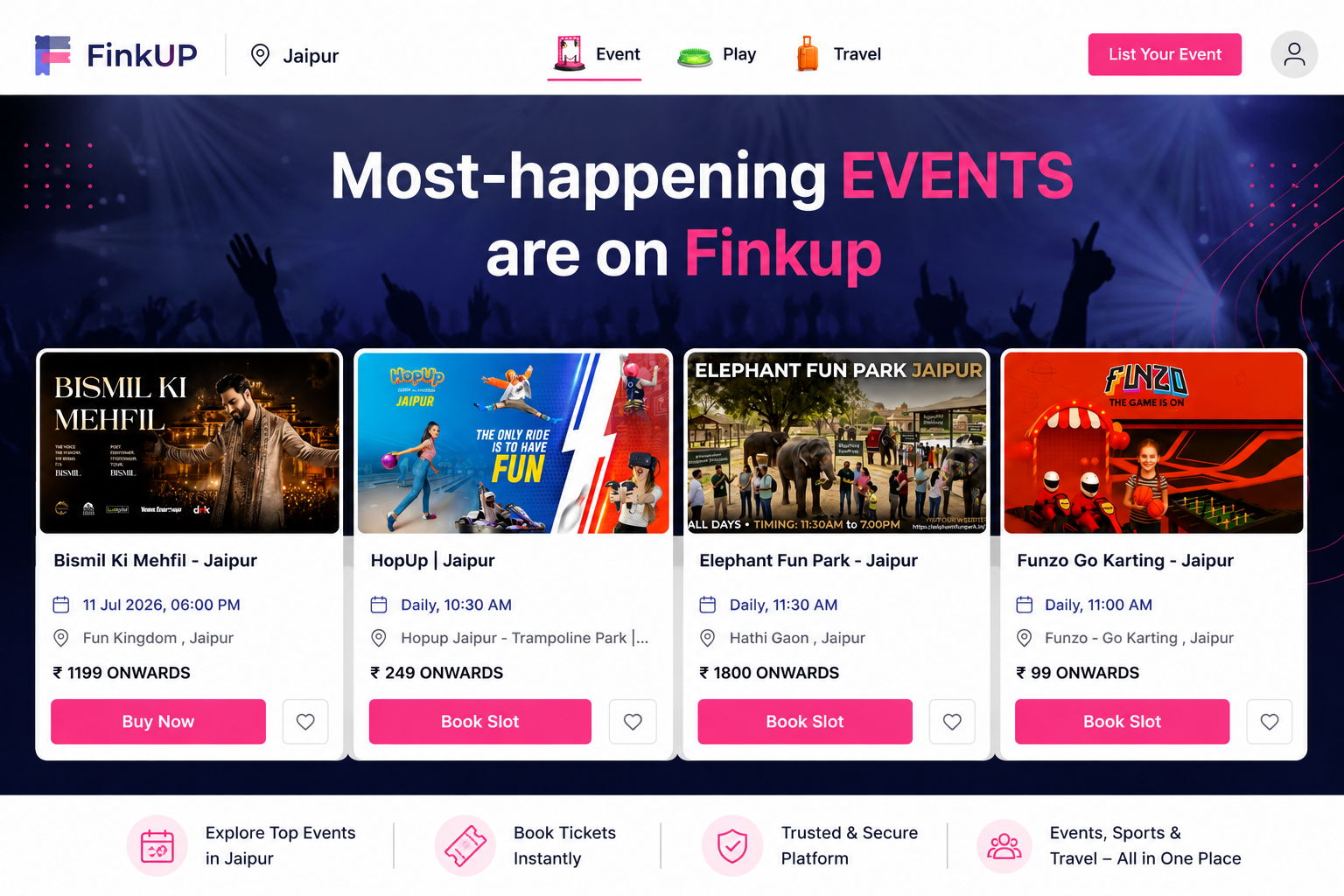
An honest, deeply researched review of FinkUP, covering how the Indian events platform works, listing and buying tickets, its fees, whether it is legit and worth it, and the verdict for event-goers and organizers in 2026
Thank you for reading this post, don't forget to subscribe!Published by brands.run | The independent brand review hub
Reviewed Brand: FinkUP | Sector: Events and Ticketing | Base: India | Website: finkup.com
FinkUP is an Indian events platform that helps you discover and book tickets for concerts, comedy shows, parties, workshops, travel experiences, and live sports, and that also lets organizers list and sell their own event tickets. Run by FinkUP Entertainment, it has been operating since around 2019 and positions itself as both a place for people to find things to do and a self-serve ticketing and event-management tool for organizers. This review is part of brands.run’s independent brand reviews, covering the apps and platforms that people actually use.
For ambition and feature range, FinkUP is interesting. It tries to combine event discovery, ticketing, event management, and even travel experiences in one place, offers organizers modern tools like QR and RFID check-in and instant ticket delivery over WhatsApp, and has picked up some real partnerships, including acting as an official ticketing partner for music festivals. That is a broad and ambitious offering for a young company still finding its footing in the market. But FinkUP is also small and largely unproven compared with the giants of Indian ticketing, its public track record is thin, and its own website still shows signs of being a work in progress, including placeholder filler text and empty listings in many cities. An honest review has to weigh the genuine ambition and useful features against the reality that this is an early-stage, unproven platform in a market dominated by much larger players.
This review is built in three parts. Part 1, The Expose, covers what FinkUP actually is: its background, how it works, what it offers to event-goers and organizers, how it makes money, and how big it is. Part 2, The Autopsy, weighs what FinkUP gets right against what to scrutinize: the broad features and organizer tools, against its small scale, unproven track record, visible rough edges, competition, and the usual ticketing considerations. Part 3, The Killcritic, is the verdict: who FinkUP suits, who should be cautious, how it compares to the established platforms, and how to use it wisely in 2026.
If you are wondering whether FinkUP is legit, whether it is safe to buy tickets or list an event on it, what it charges, how it compares to BookMyShow, or whether it is worth using at all, this is the honest version, written to help you decide with your eyes open and to judge a small, emerging platform fairly rather than either hyping or dismissing it.
| Review Methodology This review draws on FinkUP’s own website and public information, the broader Indian event-ticketing market, and general standards for ticketing platforms. Because FinkUP is a small, emerging company, there is limited independent coverage, funding data, or large-scale user review history to draw on, so this review avoids inventing complaints and instead focuses on what can be observed: the platform’s features, its stated offering, visible signs of its stage of development, and the sensible questions any buyer or organizer should ask. Where the platform’s scale or reliability cannot be verified, that is stated plainly rather than assumed. Details, features, pricing, and coverage change, so confirm current information directly with FinkUP before relying on it. This review is informational only. |
Part 1: The Expose
The expose lays out what FinkUP actually is: where it came from, how it works, what it offers to both event-goers and organizers, how it makes money, and how big it has become.
What FinkUP Actually Is
FinkUP is an online events and ticketing platform based in India that serves two kinds of users at once. For ordinary people, it is a place to discover and book tickets for things to do: live concerts, comedy shows, parties and nightlife, workshops, adventure and travel experiences, theater, art, and sports events across many Indian cities. For event organizers, it is a self-serve tool to create event pages, sell tickets online, and manage entry on the day using features like QR-code and RFID-based check-in. In other words, FinkUP wants to be both the app where you find your weekend plans and the system that the organizer behind that event uses to run ticketing. It is available through a website and a mobile app, and it is run by a company called FinkUP Entertainment. This two-sided design, serving both audiences and organizers, is a deliberate strategy, because a platform that can attract organizers gains events to list, and a platform that lists appealing events attracts audiences, so the two sides can reinforce each other when the model works. For a small challenger, winning organizers first, especially smaller ones underserved by the big platforms, is often the more realistic path, which is why FinkUP’s organizer tools are so central to its pitch. This two-sided design, serving both audiences and organizers, is a deliberate strategy, because a platform that can attract organizers gains events to list, and a platform that lists appealing events attracts audiences, so the two sides can reinforce each other when the model works. For a small challenger, winning organizers first, especially smaller ones underserved by the big platforms, is often the more realistic path, which is why FinkUP’s organizer tools are so central to its pitch.
What makes FinkUP distinctive is its attempt to bundle several things together, discovery, ticketing, event management, and travel experiences, in a single platform aimed at the Indian market, and to offer organizers a low-friction, self-serve way to start selling tickets quickly. It presents itself as a modern, flexible alternative to the established ticketing giants, with an emphasis on ease of listing and on-ground tools. At the same time, FinkUP is a young and relatively small player in a crowded, competitive market led by much larger and better-known platforms, and its scale, inventory, and track record are far more limited than those incumbents. FinkUP is, in short, both an ambitious, broad-featured platform with truly useful tools and a small, emerging, unproven service competing against dominant players, and much of what this review examines comes from being both at once.
For an event-goer or organizer, the practical thing to understand is that FinkUP is an Indian app for finding and booking events, and a self-serve system for organizers to sell tickets and manage entry, that is still building its scale and reputation. Think of it less as a finished, dominant destination and more as a functional, evolving tool that can serve specific needs well while it grows into the broader ambitions it describes. When people encounter FinkUP, they usually mean this events discovery and ticketing platform that competes, at a much smaller scale, with the big names in Indian ticketing. Understanding FinkUP means appreciating both its truly broad ambition and useful features and the reality that it is early-stage and unproven, which is the balance this review tries to strike fairly, without inventing problems or overstating its standing.
Background and Founding
FinkUP is operated by FinkUP Entertainment, a private company, and has been running since around 2019, based on the timeline shown on its own site. It emerged during a period when India’s live events and experiences economy was growing quickly, with rising demand for concerts, comedy, festivals, and curated experiences, and when a number of platforms were competing to serve both audiences and organizers. India has seen a surge in live entertainment in recent years, from major international tours by global artists to a booming comedy circuit, regional music festivals, and a wave of workshops and experience-based outings, and this growth drew both large incumbents and smaller challengers into the ticketing and discovery space. The market is often described as one of the most active in the country’s consumer technology sector, with hundreds of ticketing startups launched over the past decade, though only a small number have secured significant funding, and a few dominant names control most of the volume. FinkUP positioned itself in this space as a platform that would combine discovery and ticketing with organizer-friendly tools, aiming to carve out a place alongside the established names. Compared with the largest players in Indian ticketing, which have been operating for much longer and have raised significant funding, FinkUP is a younger and smaller company with a more limited public footprint.
Because FinkUP is a small, private company, there is limited public information about its founding team, funding, and scale, and it has not attracted the kind of independent press coverage, funding announcements, or market analysis that larger competitors have. This is normal for an emerging startup, but it means that claims about its size, reach, or performance are harder to verify independently, and much of what is known comes from the company’s own descriptions of itself. What is clear is that FinkUP has built a functioning platform with a broad feature set, secured at least some notable partnerships such as official ticketing roles for music festivals, and continued to operate and update its product over several years, which shows real persistence and a working product in a difficult, competitive market that has seen many entrants come and go.
This background matters for two reasons. First, the timing and positioning explain FinkUP’s ambition, since it entered a growing, crowded market trying to serve both audiences and organizers with a broad platform. Second, the limited public information and small scale explain why this review treats FinkUP as promising but unproven, since without much independent data, the sensible approach is to credit what can be seen, the features and the persistence, while being honest that its reliability, scale, and reputation are not yet established the way larger players’ are. Both the ambition and the caution trace back to this background as a young, small entrant in a competitive field.
How FinkUP Works for Event-Goers
For people looking for things to do, FinkUP works much like other event-discovery and ticketing apps, and understanding the flow helps show what it offers.
You open the FinkUP app or website, choose your city from a long list of Indian locations, and browse events across categories like music, comedy, nightlife, workshops, sports, theater, and travel experiences. You can look at trending events, venues, and artists, filter by things like popular or free events, and open an event page to see the details, timing, venue, and ticket options. When you find something you want, you book tickets through the platform, pay through its checkout, and receive your tickets, with the platform designed to deliver ticket confirmations digitally. FinkUP also has sections beyond standard events, including a travel area for getaways and experiences and curated or handpicked event selections, so it tries to be a broader discovery tool than a pure ticket seller. The platform organizes music events by genre, from pop and hip-hop to classical, rock, and Bollywood, lists comedy shows featuring both established and rising performers, and groups sports events across cricket, kabaddi, football, and badminton, which shows an intent to cover the full range of what Indian audiences look for. The travel section, built around getaways to destinations such as Himachal Pradesh and Uttarakhand with activities like trekking, camping, and rafting, is an unusual addition for a ticketing app and reflects the broader experiences angle FinkUP is chasing.
For an event-goer, this design has clear appeal and clear limits. On one hand, having discovery, ticketing, and travel experiences in one Indian app, with category and city browsing and digital tickets, is truly convenient in principle, and the curated and travel sections add variety beyond the usual listings. On the other hand, the value of any discovery platform depends heavily on how many real events it actually has in your city, and FinkUP’s inventory appears thin or empty in many locations, which limits how useful it is for a lot of users compared with platforms that have deep, comprehensive listings. The honest framing is that FinkUP offers a broad discovery and booking experience on paper, whose real usefulness depends on whether it actually has events you want in your city, which is often limited outside its stronger areas. Understanding both the broad design and the inventory limits helps set realistic expectations.
How FinkUP Works for Organizers
A major part of FinkUP’s pitch is aimed at event organizers, and its self-serve ticketing tools are among its more useful features.
FinkUP offers organizers a self-serve panel to create and sell tickets for their own events. According to the platform, an organizer can create an event by adding details, venue, timing, a banner, and a description, set up different ticket tiers such as free, early bird, VIP, or group discounts, and publish a shareable, mobile-friendly ticketing page quickly. They can then track ticket sales, attendee lists, and payment status in real time, and manage entry on the day using QR-code check-in through a scanning app, with support for QR and RFID-based check-ins at the gate and instant delivery of QR tickets to buyers over WhatsApp and email. This is a truly modern, practical toolset that lets even a first-time organizer set up online ticketing without much technical effort, which is a real strength and a sensible focus for a smaller platform trying to win organizers. The check-in tooling in particular addresses a real pain point at Indian events, where entry queues and ticket verification can be chaotic, and fast QR or RFID scanning through a phone app can make the difference between a smooth gate and a bottleneck. Delivering tickets over WhatsApp is also well suited to India, where the messaging app is nearly universal and many buyers prefer it to email, so a ticket that arrives instantly in a familiar chat can reduce confusion and support requests on event day.
For an organizer, this offering has real appeal, with some caveats. On one hand, a low-friction, self-serve way to list an event, sell tickets with flexible tiers, deliver tickets over WhatsApp, and handle fast QR or RFID check-in is truly useful, especially for smaller or first-time organizers who want to start quickly without complex setup or high costs, and these are exactly the features that matter for running an event smoothly. On the other hand, choosing a ticketing partner also depends on the platform’s reliability, payment handling, fees, support, and audience reach, which for a smaller, less-proven platform are harder to verify than for established players, so organizers should test carefully. The honest framing is that FinkUP’s organizer tools are a genuine strength, offering modern, low-friction self-serve ticketing and check-in that can work well for smaller events, while the platform’s reliability, payouts, and reach are worth verifying before committing a large or important event. The tools are real and useful, and due diligence still matters.
| What FinkUP Offers Organizers FinkUP’s self-serve ticketing lets organizers create an event page in minutes, set flexible ticket tiers (free, early bird, VIP, group discounts), publish a shareable mobile-friendly page, track sales and attendees in real time, deliver QR tickets over WhatsApp and email, and run QR or RFID check-in at the gate through a scanning app. This is a practical, modern toolset well suited to smaller and first-time organizers. Before committing an important event, sensible checks include: how and when payouts are made, what fees apply, how refunds and cancellations are handled, how responsive support is, and how much audience reach the platform adds versus your own promotion. Test with a smaller event first to confirm the platform works for your needs. |
What FinkUP Offers
Pulling it together, FinkUP’s offering spans several areas, and knowing them helps you understand the platform.
- Event discovery: browsing concerts, comedy, nightlife, workshops, theater, art, and sports across many Indian cities, with trending events, venues, and artists.
- Ticket booking: buying tickets for listed events through the platform’s checkout, with digital ticket delivery.
- Self-serve organizer tools: creating event pages, setting ticket tiers, selling tickets, and tracking sales and attendees in real time.
- On-ground check-in: QR-code and RFID-based entry management through a scanning app, with tickets delivered over WhatsApp and email.
- Travel and experiences: a travel section offering getaways and curated experiences alongside standard events, broadening the discovery angle.
- Curated selections and partnerships: handpicked event collections and official ticketing roles for certain music festivals and summits.
This range shows that FinkUP is trying to be a broad events platform, not just a ticket seller, spanning discovery, ticketing, organizer tools, entry management, and travel. The organizer tools and modern check-in features are among its more useful and distinctive elements, and the travel and curated sections add variety. For an event-goer or organizer, the practical point is that FinkUP offers a wide, ambitious set of features that can be truly useful, especially for organizers and for finding niche or local events and experiences, though how well each part works and how much inventory exists in your area are the real tests. The breadth is real, and its value depends on execution and coverage, which the autopsy examines.
How FinkUP Makes Money
Understanding how FinkUP makes money explains its model and priorities.
Like most ticketing platforms, FinkUP most plausibly earns money mainly from ticket sales, typically through fees or charges connected to each ticket sold, which can be built into the price the buyer pays or charged to the organizer, or both. When it sells tickets for events, and when organizers use its platform to sell their own tickets, the platform can take a cut or charge a service or convenience fee. Its travel and experiences section, where it partners with travel groups and organizers for getaways, is another potential revenue area, likely through margins or commissions on those packages. Partnerships, such as official ticketing roles for festivals, also bring ticket volume through the platform. In the wider ticketing industry, the fee a buyer sees is usually made up of the ticket’s face value plus a booking or convenience charge, and sometimes payment gateway costs, and the split of that charge between buyer and organizer varies from platform to platform, which is part of why some organizers prefer platforms that let them control or absorb the fee. A challenger competing for organizers often does so partly on fees, offering lower or more flexible charges than the incumbents, which can be attractive to smaller events working on tight margins, though the specifics for FinkUP are not published in detail. Because FinkUP is private and does not publish detailed financials, the exact structure and rates of its fees are not fully clear and should be checked directly when buying or listing.
For an event-goer or organizer, this model has practical implications. The reliance on ticket-related fees means that, as with any ticketing platform, buyers may pay a convenience or service charge on top of the face value, and organizers should understand what the platform charges them, so knowing the fees before you buy or list is sensible. The travel and partnership angles show FinkUP trying to broaden its revenue beyond standard ticketing. The honest framing is that FinkUP most likely makes money through ticket-related fees plus travel and partnership revenue, a normal model for the space, whose specific charges are not fully transparent publicly and are worth confirming directly. Understanding that FinkUP earns from ticketing fees and related services helps you anticipate costs and ask the right questions before committing.
Who Uses FinkUP
Knowing who uses FinkUP helps set expectations about its focus and scale.
FinkUP is aimed at two audiences in India: event-goers looking for concerts, comedy, nightlife, workshops, experiences, and sports, and organizers who want a self-serve way to sell tickets and manage their events. On the audience side, it lists events across many Indian cities and targets people looking for both mainstream and niche or local experiences, including curated selections and travel getaways. On the organizer side, it targets smaller and first-time organizers, as well as some larger events through partnerships, offering low-friction tools to start selling tickets. Compared with the dominant platforms, which have very large, established user bases, FinkUP’s audience and event volume appear far smaller and more concentrated, which is typical of an emerging player still building reach. The chicken-and-egg challenge is real for any two-sided platform: organizers want to list where the audience is, and audiences go where the events are, so a newcomer has to build both at once, often starting with a particular city, category, or set of organizer relationships and growing outward. FinkUP’s partnerships with music festivals suggest one way it is trying to solve this, by anchoring itself to specific real events that bring both credibility and buyers, which is a sensible approach even if overall scale remains modest.
This focus signals that FinkUP is trying to serve both sides of the events market, audiences and organizers, with a particular appeal to smaller organizers who value easy, low-cost ticketing tools. It also frames the autopsy’s considerations, because a smaller platform with a more limited audience offers organizers less built-in reach than the giants, and offers event-goers a thinner selection in many places, so the value depends on the specific event and location. For an event-goer or organizer considering FinkUP, the practical point is that it can be truly useful for specific listed or partnered events and for organizers wanting simple ticketing tools, while its smaller scale means it is not yet a comprehensive, go-to platform in the way the market leaders are. The two-sided focus is real, and so is the reality of its smaller reach.
How Big FinkUP Is
Assessing FinkUP’s size honestly matters, and the reality is that it is a small, emerging player, which should be stated plainly.
FinkUP is a small company relative to the leaders in Indian event ticketing, which are much larger, longer-established, and far better funded and known. There is limited public data on FinkUP’s user numbers, ticket volumes, revenue, or funding, and it has not featured prominently in the market analyses and funding coverage that track the sector’s bigger names. Its own site lists a wide range of Indian cities, but many of those city pages appear to have few or no active events, suggesting that its actual event inventory is concentrated and far thinner than its city list implies. It has secured some real partnerships, such as official ticketing roles for music festivals, which are genuine signals, but overall its scale and reach are modest compared with the dominant platforms. A useful way to read a small platform’s real size is to look past the headline city list and check how many live events actually appear when you browse, and on FinkUP many locations return empty or near-empty results, which is a more honest indicator of current reach than the long roster of cities it names. This gap between stated coverage and actual inventory is common among emerging platforms racing to look comprehensive before they are, and it is worth keeping in mind when judging what FinkUP can do for you today rather than what it aims to do eventually.
This modest scale signals that FinkUP is an emerging, still-growing platform rather than an established market force, which shapes how much you can rely on it and what to expect from its inventory and reach. It also frames the autopsy’s considerations, because a small platform’s limited scale affects both event-goers, who may find thin listings in many cities, and organizers, who get less built-in audience, so its usefulness is situational. For an event-goer or observer, the practical point is that FinkUP is a small, emerging platform with genuine features and some real partnerships but modest and hard-to-verify scale, so it is best approached as a promising newcomer for specific uses rather than a proven, comprehensive default. The ambition and features are real, and so is the reality of its limited, unverified scale, which honesty requires acknowledging.
Part 2: The Autopsy
The autopsy weighs FinkUP’s genuine strengths against its real limitations. The platform has a broad, ambitious feature set and useful organizer tools, and it is small, unproven, and rough around the edges in visible ways. Both the strengths and the limitations are real, and because of that, both get honest treatment, with concerns based on what can be observed rather than invented, and with fair credit for a small company’s genuine efforts.
What FinkUP Gets Right
The strengths are real and show that FinkUP is a real, thoughtfully built platform, not an empty shell.
A Broad, Ambitious Feature Set
FinkUP combines discovery, ticketing, organizer tools, entry management, and travel experiences in one platform, which is a truly ambitious range for a small company. This breadth means it can serve several needs in one place, a real strength when the features work.
Truly Useful Organizer Tools
Its self-serve ticketing, flexible ticket tiers, real-time sales tracking, and QR and RFID check-in are practical, modern tools that let even first-time organizers start selling tickets easily. This organizer focus is one of FinkUP’s strongest and most distinctive elements.
Modern Ticket Delivery and Check-In
Delivering QR tickets over WhatsApp and email and supporting fast QR or RFID entry at the gate are exactly the conveniences that matter for running an event smoothly. These features are truly valuable and well chosen for the Indian market.
Real Partnerships
Securing official ticketing roles for music festivals and summits shows that real organizers have trusted FinkUP with genuine events, which is a meaningful signal of credibility for an emerging platform and a real point in its favor.
Broad Category and City Ambition
Covering music, comedy, nightlife, workshops, sports, theater, art, and travel across many cities shows genuine ambition to be a comprehensive events platform, and where inventory exists, this variety is a real benefit for users seeking different experiences.
Transparency Basics in Place
FinkUP has the expected policy pages, including terms, privacy, and a cancellation and refund policy, plus contact and support links, which are basic but genuine signs of a legitimate, properly set up business rather than a fly-by-night operation.
These strengths make FinkUP a real, functional, and ambitious platform with useful features, especially for organizers, which deserves fair credit as the work of a small company building something real. The limitations that follow are important and center on scale, proof, and polish, but they do not erase the fact that FinkUP offers a broad, thoughtfully designed set of tools and has earned some real trust through partnerships. Both the genuine strengths and the real limitations are part of the honest picture.
Small Scale and Unproven Track Record
The central limitation of FinkUP is simply that it is small and unproven compared with the established players, which matters a lot for a platform handling tickets and payments, and deserves honest treatment.
FinkUP has a limited public track record, with little independent coverage, funding data, user-review history, or market analysis to confirm its scale, reliability, or reputation. This is normal for an emerging startup, but it means that a buyer or organizer cannot easily verify how dependable the platform is, how well it handles problems, or how large and active its user base really is, in the way they can for long-established, heavily reviewed competitors. For a service that takes payments and delivers tickets to events people care about, this lack of a proven, verifiable track record is a real consideration, since trust in ticketing depends heavily on reliability and reputation, which FinkUP has had less opportunity to demonstrate publicly than the giants. When someone buys a ticket, they are trusting that the ticket will be valid, that entry will work on the day, that their payment is secure, and that if the event is cancelled or something goes wrong, they will be treated fairly, and with a large, established platform, years of transactions and reviews provide reassurance on all of these points. A newer platform has simply had fewer opportunities to build that public record, which does not make it unreliable, but does mean the reassurance has to come from your own checks rather than from a long, visible history.
The honest framing weighs this fairly. On one hand, the concern is real: FinkUP’s small size and thin public track record make its reliability and reputation hard to verify, which is a genuine consideration for anyone trusting it with payments and important event tickets, and it cannot offer the reassurance of a long, heavily reviewed history. On the other hand, being small and new is not the same as being bad or untrustworthy, FinkUP has built a real, functioning platform and earned some real partnerships, and every established platform was once an unproven newcomer, so this is a reason for sensible caution rather than a mark against the company’s integrity. The fair takeaway is that FinkUP’s limited scale and unproven track record are a real consideration that warrant normal due diligence, not evidence of wrongdoing, so treat it as a promising newcomer to test carefully rather than a proven default or a platform to distrust. For a user, the practical point is to do the sensible checks, verify your specific event, understand refunds and fees, and start small, rather than either assuming the worst or trusting blindly.
Visible Rough Edges
A fair, observable concern is that FinkUP’s own website shows signs of being a work in progress, which affects the impression of polish and readiness, and deserves honest but measured treatment.
On FinkUP’s live site, there are visible rough edges that suggest the product is still being built out. Parts of the homepage contain placeholder filler text, the kind of dummy Latin text developers use as a stand-in before real copy is added, which should not appear on a finished, public-facing page. In addition, many of the city pages show few or no events, with messages indicating that no venues or events are currently listed there, which suggests that the platform’s real inventory is concentrated in a few areas and thin elsewhere. These are not signs of dishonesty, but they do indicate an early-stage, still-developing platform that has not yet fully polished its public presentation or built out comprehensive inventory, which affects how ready and reliable it feels to a first-time visitor. First impressions matter for a consumer platform, because a visitor deciding whether to trust a site with their payment details often judges credibility partly on polish, and placeholder text or empty sections can make even a functional platform feel less finished than it is. It is worth noting that these are fixable, surface-level issues rather than deep flaws, and a small team can clean up copy and fill out listings over time, so they reflect the platform’s current stage rather than a permanent verdict, but as of this review they are part of the honest picture a prospective user should know about.
The honest framing keeps this in proportion. On one hand, the concern is real and directly observable: placeholder text on a live homepage and empty listings in many cities are genuine signs of an unfinished, early-stage platform, which can undermine confidence and suggest that the polished, comprehensive experience is not yet fully there. On the other hand, these are the normal growing pains of a small, developing startup rather than evidence of a scam, the core functional features still work, and rough edges in presentation do not necessarily mean the ticketing itself is unreliable, so they are a reason for tempered expectations rather than alarm. The fair takeaway is that FinkUP shows visible signs of being a work in progress, with placeholder content and thin inventory in many areas, which honestly lowers the impression of polish and readiness while not proving the service is untrustworthy, so approach it as an early-stage platform still finding its feet. For a user, the practical point is to set realistic expectations, check that your specific city and event are properly served, and not assume the same completeness you would expect from a mature platform.
Strong Competition From Established Players
An important part of assessing FinkUP is recognizing the intense competition it faces, which affects both its prospects and its usefulness, and deserves fair treatment.
FinkUP operates in one of the most competitive corners of Indian consumer tech, event ticketing, which is dominated by very large, well-known, and well-funded platforms with deep inventories, huge user bases, and years of brand trust, alongside many other funded and unfunded players. For event-goers, this means the established platforms usually offer far more events, more reliable and familiar experiences, and deeper coverage in most cities, which makes them the natural default for many people. For organizers, the big platforms offer much larger built-in audiences, though at the cost of higher fees or less flexibility in some cases, which is part of why a smaller, organizer-friendly platform like FinkUP tries to compete on ease and cost. Standing out in this crowded field is truly hard, and it shapes how much reach and inventory FinkUP can offer. The largest platforms have spent years building brand recognition, exclusive ticketing partnerships with major venues and promoters, and the kind of comprehensive inventory that makes them the automatic first stop for most event-goers, which is a formidable advantage that a newer entrant cannot quickly match. At the same time, the sheer size of the incumbents can leave gaps, smaller organizers who find the big platforms expensive or rigid, niche event categories that get less attention, and regional or experience-based events that need a more flexible partner, and these gaps are exactly where a challenger like FinkUP can try to find room, competing on ease, cost, and a willingness to work with events the giants overlook.
The honest framing weighs the competitive reality fairly. On one hand, the concern is real: FinkUP competes against dominant platforms with far greater inventory, reach, and trust, which means event-goers will often find more and book more reliably elsewhere, and organizers get less built-in audience with FinkUP, so its competitive position is truly challenging. On the other hand, there is real room for smaller, organizer-friendly, or niche-focused platforms that compete on ease, cost, flexibility, or specific events and experiences, and FinkUP’s self-serve tools and curated and travel angles are sensible ways to carve out a place, so it is not without a viable niche. The fair takeaway is that FinkUP faces intense competition from much larger players, which limits its reach and inventory advantage, while still having a plausible niche among smaller organizers and for specific events, so it is a challenger rather than a leader, useful in its niche but not a comprehensive default. For a user, the practical point is to use FinkUP where it truly fits, specific listed events, organizer ticketing, niche experiences, while relying on the bigger platforms where breadth and reliability matter most.
Ticketing Considerations to Check
As with any ticketing platform, there are standard considerations that matter with FinkUP, and because it is less proven, they are worth checking carefully, treated here as sensible questions rather than documented failures.
Any platform that sells tickets and takes payments carries the usual considerations: convenience or service fees added to ticket prices, the clarity and fairness of refund and cancellation policies, the reliability of ticket delivery and entry, the responsiveness of customer support if something goes wrong, and the handling of your payment and personal data. FinkUP does have the expected policy pages, including a cancellation and refund policy, terms, and privacy, which is a good baseline. But because it is a smaller, less-proven platform without a large public review history, how it performs on these points in practice, especially refunds, support, and reliability during problems, is harder to verify than for established players. This does not mean FinkUP handles these poorly, only that a buyer or organizer cannot lean on a long track record and should so check the specifics themselves.
The honest framing treats these as prudent checks. On one hand, the consideration is legitimate: with a less-proven platform, the standard ticketing risks around fees, refunds, delivery, support, and data are harder to assess from a track record, so it is sensible to verify them directly rather than assume, especially for important or expensive tickets. On the other hand, FinkUP has the expected policies in place and there is no specific evidence that it handles these badly, so these are precautionary checks appropriate for any newer platform rather than known problems, and many small platforms handle them perfectly well. The fair takeaway is that the normal ticketing considerations, fees, refunds, delivery, support, and data, are worth checking carefully with FinkUP precisely because it is less proven, not because it is known to fail at them, so informed caution is the right stance. For a user, the practical point is to read the fee, refund, and cancellation terms before buying or listing, keep your confirmations, and test with a smaller purchase or event first.
What You Cannot Fully Verify
In the interest of honesty, here is what is hard to assess definitively about FinkUP, given its small size and limited public information.
- Its true scale, including real user numbers, ticket volumes, and how active it is across cities, since public data is limited and its city list appears broader than its actual inventory.
- Its reliability in practice, including how consistently tickets are delivered, how entry works on the day, and how well it handles problems, since there is little independent review history.
- How it handles refunds, cancellations, and support in real cases, which cannot be judged from a track record the way established platforms can.
- Its exact fees for buyers and organizers, which are not fully transparent publicly and should be confirmed directly.
- Its financial footing and long-term staying power, since funding and business details are not public.
This is not a list designed to cast doubt on a genuine small company so much as a reminder that using an emerging platform involves less certainty than using an established one. A review can tell you that FinkUP is a real, functional, ambitious platform with useful organizer tools and some genuine partnerships, and that it is small, unproven, and visibly still developing, with limited public information to verify its scale and reliability. It cannot confirm how it will perform for your specific event or transaction. The honest guidance is to use FinkUP where it truly fits, specific listed events, organizer ticketing, or niche experiences, while doing sensible due diligence, verifying your event, understanding fees and refunds, keeping confirmations, and starting small, so you get the benefit of a promising newcomer with your eyes open to the uncertainty.
Part 3: The Killcritic
The killcritic is the verdict. Who FinkUP suits, who should be cautious, and how it compares to the established platforms.
Who FinkUP Is For
FinkUP suits some users well, with the fit depending on whether you are an organizer or event-goer and on your specific needs.
Smaller and First-Time Organizers
If you are organizing a smaller event and want an easy, low-friction way to sell tickets online with flexible tiers, real-time tracking, and QR or RFID check-in, FinkUP’s self-serve tools are truly useful and are its strongest offering, provided you verify payouts, fees, and support first.
People Attending Specific Listed or Partnered Events
If the specific event you want, such as a festival where FinkUP is the official ticketing partner, is listed on FinkUP, it can be a perfectly good way to book, since you are buying a real ticket for a real event through the platform, as long as you follow normal ticketing precautions.
Seekers of Niche, Local, or Experience-Based Events
If you are looking for niche, local, or experience-based events and getaways that FinkUP curates or lists, and that bigger platforms may not feature, it can add real value as a discovery tool for those specific experiences, where its inventory exists.
Users Who Like Supporting Newer Platforms
If you are comfortable using a newer, smaller platform and doing a bit of due diligence, and you find events you want on it, FinkUP can be a reasonable choice that offers a modern experience and supports an emerging alternative in the market.
For these users, especially smaller organizers and people attending specific listed or partnered events, FinkUP can offer real value, provided they do sensible due diligence and set realistic expectations about its scale, as this review covers. The key is to match your expectation to what an emerging platform can realistically deliver: a functional, modern experience for the events it actually serves, rather than the exhaustive selection and battle-tested reliability of a market leader. Judged on those terms, it can be a reasonable choice for the right situation.
Who Should Be Cautious
Others should approach FinkUP with more caution or lean on established platforms, depending on their needs.
Buyers Wanting a Proven, Comprehensive Default
If you want the widest selection of events with the reassurance of a large, proven, heavily reviewed platform, the established leaders are a safer, more comprehensive default, so use FinkUP only when it specifically has an event you want rather than as your main tool.
Buyers of High-Value or Important Tickets
If you are buying expensive tickets or tickets for an important, non-repeatable event, the extra reassurance of a long track record matters, so either use a more established platform or take particular care to verify FinkUP’s terms, delivery, and support first.
Users in Cities With Thin Inventory
If FinkUP shows few or no events in your city, there is little reason to use it there over platforms with deeper local listings, so check whether it actually serves your location well before relying on it.
Organizers of Large or Critical Events
If you are running a large, high-stakes event where ticketing reliability, payout certainty, and audience reach are critical, weigh FinkUP carefully against proven platforms, and if you do consider it, test thoroughly and confirm every operational detail first.
FinkUP vs the Established Platforms
The most practical comparison is FinkUP against the established Indian ticketing platforms, and the honest answer is that the incumbents win on scale and reliability while FinkUP competes on organizer-friendliness and niche fit.
| Option | Best For | Trade-offs |
|---|---|---|
| FinkUP | Small organizers, niche events | Small scale, unproven, thin inventory |
| Large incumbents | Widest selection, reliability | Higher fees, less organizer flexibility |
| Self-serve ticketing rivals | Organizer tools and control | Reach depends on your own promotion |
| Direct from organizer | Simplicity, no platform fee | Fewer tools, manual management |
For most event-goers, the established platforms remain the natural default because they offer the widest selection, deepest city coverage, and the reliability of a long, proven track record, so they are the safer choice when you simply want to find and book events easily. FinkUP competes more effectively on the organizer side, where its easy, low-friction, self-serve ticketing tools and modern check-in can appeal to smaller organizers who want control and simplicity, though at the cost of the smaller audience reach that comes with a less-established platform. Other self-serve ticketing tools compete for the same organizers, and organizers can also sell directly with fewer features. The honest take is that FinkUP is best seen as an organizer-friendly challenger and a niche discovery option rather than a comprehensive default, strong in specific uses but outmatched on overall scale and reliability by the incumbents, so the right choice depends on whether you are an organizer valuing simple tools or an event-goer valuing breadth and proven reliability. Match the platform to your role and needs.
Is FinkUP Legit and Worth It?
Two questions people ask most are whether FinkUP is legitimate and whether it is worth using, and the honest answers are measured.
Is It Legit?
Yes, FinkUP appears to be a legitimate, operating business, run by a registered company since around 2019, with a functioning platform, real partnerships such as festival ticketing roles, and the expected policy pages in place. It is a real, small events platform, not a scam, though it is unproven and still developing rather than an established, heavily verified brand.
Is It Worth It?
It depends on your situation. For smaller organizers wanting easy self-serve ticketing, and for attending specific events that FinkUP lists or ticket, it can be truly worth using. For event-goers wanting the widest, most reliable selection, or in cities where FinkUP has thin inventory, the established platforms are usually the better choice, so its worth is situational.
The Honest Call
FinkUP is a legitimate, ambitious, and functional platform that is still small, unproven, and visibly developing, so it is neither a scam nor a proven default. It is worth using for smaller organizers who value its easy ticketing tools, for specific listed or partnered events, and for niche experiences where it has inventory, and it is usually not the best choice for event-goers wanting comprehensive, proven, reliable coverage, especially in cities where it lists few events. The keys are to verify your specific event and city, understand the fees and refund terms, keep your confirmations, and start small. Used that way for the right purpose, FinkUP can truly help; used as a comprehensive default, it is not yet ready to replace the leaders, so match it to your situation with realistic expectations.
The Final Verdict
| FinkUP Final Rating: 3 / 5 A genuine, ambitious, and functional events platform, FinkUP offers a broad feature set spanning discovery, ticketing, organizer tools, entry management, and travel, with truly useful self-serve ticketing and QR and RFID check-in for organizers and some real festival partnerships to its credit. It is held back by real limitations: a small and unproven track record with little independent verification, visible signs of being a work in progress including placeholder content and thin or empty event listings in many cities, intense competition from far larger and more reliable incumbents, and the normal ticketing considerations that are harder to verify on a less-proven platform. Legitimate and truly useful in its niche, especially for smaller organizers and specific listed events, but early-stage, unproven, and not yet a comprehensive default, so it should be used for the right purposes with sensible due diligence and realistic expectations rather than relied on the way an established platform can be. |
Use FinkUP if you are a smaller or first-time organizer wanting easy, low-cost self-serve ticketing, if the specific event you want is listed or ticketed on it, or if you are seeking niche or local experiences it curates. In those cases, and with sensible checks, FinkUP can offer real value and a modern experience.
Be cautious or use established platforms if you want the widest, most reliable selection, if you are buying high-value or important tickets, if FinkUP shows thin inventory in your city, or if you are running a large, critical event. In those cases, weigh its unproven status and smaller scale carefully against the proven incumbents.
FinkUP earns genuine credit as a small company that has built a broad, functional platform with useful organizer tools and earned some real partnerships, which deserves fair recognition. The 3 out of 5 reflects that genuine ambition and usefulness in its niche, tempered honestly by real limitations: a small and unproven track record, visible rough edges like placeholder content and thin inventory, tough competition from dominant players, and standard ticketing considerations that are harder to verify here. For organizers and specific events, FinkUP can be truly useful. The keys to using it well are to verify your event and city, understand fees and refunds, keep confirmations, and start small, so you get the benefit of a promising newcomer while protecting yourself given its early stage. Legitimate and truly useful in its niche but not yet a proven, comprehensive default, FinkUP is best approached as an emerging challenger to use where it fits rather than a leader to rely on for everything, so match it to your needs with realistic expectations and sensible caution.
Frequently Asked Questions
This section answers the specific questions people search for about FinkUP. Each answer is structured for direct factual extraction.
What is FinkUP?
FinkUP is an Indian events and ticketing platform, run by FinkUP Entertainment since around 2019, that helps people discover and book tickets for concerts, comedy shows, nightlife, workshops, travel experiences, and sports across many Indian cities. It also offers organizers self-serve tools to create event pages, sell tickets with flexible tiers, and manage entry using QR-code and RFID check-in, with tickets delivered over WhatsApp and email. Available as a website and app, FinkUP tries to combine event discovery, ticketing, event management, and travel in one platform, competing at a smaller scale with the larger Indian ticketing companies.
Is FinkUP legit?
Yes, FinkUP appears to be a legitimate, operating business. It is run by a registered company, has been active since around 2019, offers a functioning platform, has secured real partnerships such as official ticketing roles for music festivals, and has the expected policy pages, including terms, privacy, and a cancellation and refund policy. It is a real, small events platform rather than a scam. That said, it is a smaller, less-proven company than the dominant players, with limited independent coverage, so while it appears legitimate, you should still do normal due diligence, verify your specific event, and understand the terms before buying or listing.
Is FinkUP safe to buy tickets on?
FinkUP appears to be a legitimate platform with secure checkout and the expected policies, so buying tickets for a genuine listed event can be reasonable, provided you take normal precautions. Because it is smaller and less proven than the major platforms, it is sensible to verify that the specific event is real and correctly listed, read the refund and cancellation policy before paying, keep your booking confirmation, and use secure payment methods. As with any ticketing platform, avoid sharing unnecessary personal information and check the fees before buying. For high-value or important tickets, the extra reassurance of a more established platform may be worth considering.
How does FinkUP work?
For event-goers, FinkUP works by letting you choose your city, browse events across categories like music, comedy, nightlife, workshops, and sports, open an event page for details and ticket options, and book and pay through the platform, with digital ticket delivery. For organizers, it works as a self-serve tool: you create an event page with details and ticket tiers, publish a shareable ticketing page, sell tickets, track sales and attendees in real time, and manage entry with QR-code or RFID check-in through a scanning app. In short, it connects people looking for events with organizers selling tickets, handling discovery, booking, and entry.
How do I list an event on FinkUP?
To list an event on FinkUP, you use its self-serve organizer panel, where you create your event by adding details such as the name, venue, timing, a banner, and a description, then set up ticket tiers like free, early bird, VIP, or group discounts. You publish a shareable, mobile-friendly ticketing page, after which you can sell tickets and track sales, attendee lists, and payment status in real time, and manage entry on the event day using QR-code check-in through the scanning app, with RFID options and WhatsApp ticket delivery available. Before listing an important event, confirm the fees, payout process, refund handling, and support directly with FinkUP, and consider testing with a smaller event first.
What does FinkUP charge?
FinkUP most likely earns money through ticket-related fees, which can include a convenience or service charge added to ticket prices for buyers and or fees charged to organizers, as is standard for ticketing platforms, along with revenue from its travel and experience packages and partnerships. However, FinkUP does not publish detailed, transparent fee information publicly, so the exact charges for buyers and organizers are not fully clear. Because of this, the sensible approach here is to check the specific fees directly before you buy a ticket or list an event, so you know exactly what convenience charges apply to a given purchase or what the platform will charge you as an organizer before any money changes hands.
Can I get a refund on FinkUP?
FinkUP has a cancellation and refund policy published on its site, so refunds are governed by those terms, which is a good baseline for a ticketing platform. However, as with most event ticketing, refund eligibility usually depends on the specific event and the organizer’s policy, and tickets are often non-refundable unless the event is cancelled or the policy allows it. Because FinkUP is a smaller, less-proven platform, how refunds are handled in practice is harder to verify from a track record than for established players. Before buying, read FinkUP’s cancellation and refund policy and the specific event’s terms, keep your confirmation, and understand the conditions under which a refund would apply.
Is FinkUP better than BookMyShow?
For most event-goers, the established platforms like BookMyShow are generally better as an overall default, because they offer a far wider selection of events, deeper coverage across cities, and the reliability of a large, long-proven, heavily reviewed platform. FinkUP competes more on the organizer side, where its easy, low-friction, self-serve ticketing tools and modern check-in can appeal to smaller organizers wanting simplicity and control, and it can be useful for specific niche or partnered events it lists. So FinkUP is not better as a comprehensive default, but it can be a better fit for certain organizers or specific events, meaning the right choice depends on your role and needs rather than one being universally better.
Does FinkUP have an app?
Yes, FinkUP has a mobile app, available on the Google Play Store and the Apple App Store, alongside its website, so you can browse and book events from your phone. The app lets you discover events across categories and cities, book tickets, and access your bookings, and organizers can use FinkUP’s tools including QR-based check-in through a scanning app. As with any app, check the current ratings, reviews, and recent updates on the app store before downloading, and make sure you are installing the official FinkUP app. Features and availability can change, so confirm current details on the app store and FinkUP’s own site.
Who owns FinkUP?
FinkUP is owned and operated by FinkUP Entertainment, a private Indian company that has been running the platform since around 2019. Because it is a small, private company, detailed public information about its founders, ownership, and funding is limited, and it has not featured prominently in the funding and market coverage that tracks the larger players in Indian event ticketing. What is clear is that it is a registered, operating business with a functioning platform and some real partnerships. For the most current company details, the official FinkUP website and its about and contact pages are the best direct sources of information.
What cities and events does FinkUP cover?
FinkUP lists a wide range of Indian cities on its site and covers many event categories, including music concerts, comedy shows, nightlife and parties, workshops such as photography, painting, and cooking, live sports, theater, art, and travel experiences and getaways. However, while its city list is long, many cities appear to have few or no active events currently listed, which suggests its real event inventory is concentrated in certain areas and thinner elsewhere. So while FinkUP’s stated coverage is broad, the practical availability of events varies a lot by city, and you should check whether it actually has events you want in your specific location before relying on it there.
Common Mistakes and Tips When Using FinkUP
This section captures the most common mistakes people make with FinkUP and how to avoid each. Following these helps you get the benefit of the platform while protecting yourself given its early stage.
Mistake: Assuming deep event inventory in every city
Mitigation: FinkUP’s city list is long, but many cities have few or no events. Before planning around it, check whether it actually lists events you want in your specific city, and use established platforms where its local inventory is thin, rather than assuming comprehensive coverage everywhere.
Mistake: Not checking fees before buying or listing
Mitigation: FinkUP’s fees are not fully transparent publicly. Before buying a ticket, check what convenience or service charges apply, and before listing an event, confirm what the platform charges organizers and how payouts work, so there are no surprises on either side.
Mistake: Skipping the refund and cancellation terms
Mitigation: Read FinkUP’s cancellation and refund policy and the specific event’s terms before paying, and understand that tickets are often non-refundable unless the event is cancelled. Keep your booking confirmation, so you know your rights if something changes.
Mistake: Committing a large event without testing
Mitigation: If you are an organizer, do not put a large or important event solely on a less-proven platform without testing it first. Run a smaller event to confirm ticketing, payouts, check-in, and support work well for you before trusting it with something high-stakes.
Mistake: Not verifying the event is genuine and correctly listed
Mitigation: Before buying, confirm that the event is real and matches official information from the organizer or venue, especially for smaller or unfamiliar listings. Cross-check details so you are buying a legitimate ticket for a real event at the correct time and place.
Mistake: Ignoring app store ratings and using unofficial links
Mitigation: Check the current app store ratings, reviews, and recent updates before downloading, and only install the official FinkUP app and use its official website. Avoid unofficial links or unusual payment requests, and use secure payment methods for any purchase.
Final Notes on This Review
This review was built using a query fan-out approach designed to answer the questions people actually search for about FinkUP, organized into topic clusters that map to how Google’s AI Overview surfaces answers. Because FinkUP is a small, emerging company with limited independent coverage, this review deliberately avoids inventing complaints or overstating its standing, and instead grounds its assessment in what can be observed: the platform’s real features, its stated offering, visible signs of its stage of development, and the sensible questions any buyer or organizer should ask.
Details of FinkUP’s features, pricing, coverage, and scale reflect what could be observed as of mid-2026 and can change, and much about its size and reliability is not publicly verifiable, so confirm current information directly with FinkUP before relying on it. This review is informational only. Above all, use FinkUP where it truly fits, smaller-organizer ticketing, specific listed or partnered events, and niche experiences, while doing sensible due diligence, verifying your event and city, understanding fees and refunds, keeping confirmations, and starting small, so you get the benefit of a promising newcomer with realistic expectations about its early stage.
More brand reviews on brands.run
brands.run publishes honest, independent reviews of brands across every category, from events and apps to finance, food, and more. Explore the latest reviews on the brands.run homepage.
Review of FinkUP | Last updated: June 2026 | Reviewer: brands.run editorial team | Independent review. Features, fees, and coverage change, and much about this emerging platform is not publicly verifiable, so confirm current details before relying on them.
FinkUP is a trademark of FinkUP Entertainment. Other brand names mentioned are trademarks of their respective owners. All product names, logos, and brands are the property of their respective owners. Use of these names here does not imply any affiliation or endorsement. This review is for general informational purposes only and reflects publicly observable information as of mid-2026. It is not investment, legal, or professional advice. Assessments of an emerging platform’s scale and reliability are inherently limited by the public information available.