
An honest, deeply researched review of Atlys, covering how the visa platform works, its fees, the refund and delay complaints, data privacy, whether it is worth it, and the verdict for travelers in 2026
Thank you for reading this post, don't forget to subscribe!Published by brands.run | The independent brand review hub
Reviewed Brand: Atlys | Sector: Travel and Visa Technology | Headquarters: San Francisco, USA | Website: atlys.com
Atlys is a mobile app that promises to make getting a travel visa fast and simple, turning a process many people dread into something you finish in minutes on your phone. Founded in 2021 by Mohak Nahta, a former Pinterest engineer frustrated that his Indian passport made travel harder than it was for his American colleagues, Atlys has grown into the most-funded visa startup in the world and processed millions of applications. This review is part of brands.run’s independent brand reviews, covering the apps and services that travelers actually rely on.
For convenience and design, Atlys is truly appealing. The app is clean, it covers visas for well over a hundred countries, it shows you the requirements for your nationality in seconds, and for simple electronic visas it can be far easier than wrestling with a clumsy government website. Many travelers have had smooth, on-time experiences and praise the helpful support agents by name. That side of the story is real. But Atlys also carries serious concerns that show up again and again in customer reviews: unexpected fees, refunds that are hard to get, promised delivery dates that get missed and cost people their trips, support that can go silent, and the basic worry of handing your passport and personal data to a middle-man. An honest review has to hold both the genuine convenience and the real, sometimes serious concerns together.
This review is built in three parts. Part 1, The Expose, covers what Atlys actually is: its history, how it works, what it offers, its fees, its scale, and how it makes money. Part 2, The Autopsy, weighs what Atlys gets right against what to scrutinize: the clean app and real convenience, against the fee, refund, delay, support, accuracy, and privacy concerns. Part 3, The Killcritic, is the verdict: who Atlys suits, who should be cautious, how it compares to applying directly, and how to use it wisely in 2026.
If you are wondering whether Atlys is legit, whether it is safe to give it your passport, what it really costs, why some people struggle to get refunds, or whether it is worth the fee at all, this is the honest version, written to help you decide with your eyes open and to treat the serious complaints fairly rather than as proven fact.
| Review Methodology This review draws on Atlys’s public information, independent reporting, funding and market data, and a wide range of customer reviews from sources like Trustpilot, app stores, Reddit, and consumer forums, alongside Atlys’s own statements. Where serious allegations appear, such as claims of a scam, they are reported as customer complaints and allegations, not as established fact, and balanced against the many positive experiences and the high overall rating Atlys holds. Figures like funding and visa counts move fast, so verify current numbers before relying on them. Fees and policies change, and visa rules and decisions are set by governments, not Atlys, so always confirm requirements on official sources. This review is informational and is not legal or immigration advice. |
Part 1: The Expose
The expose lays out what Atlys actually is: where it came from, how it works, what it offers, what it charges, how big it has become, and how it makes money.
What Atlys Actually Is
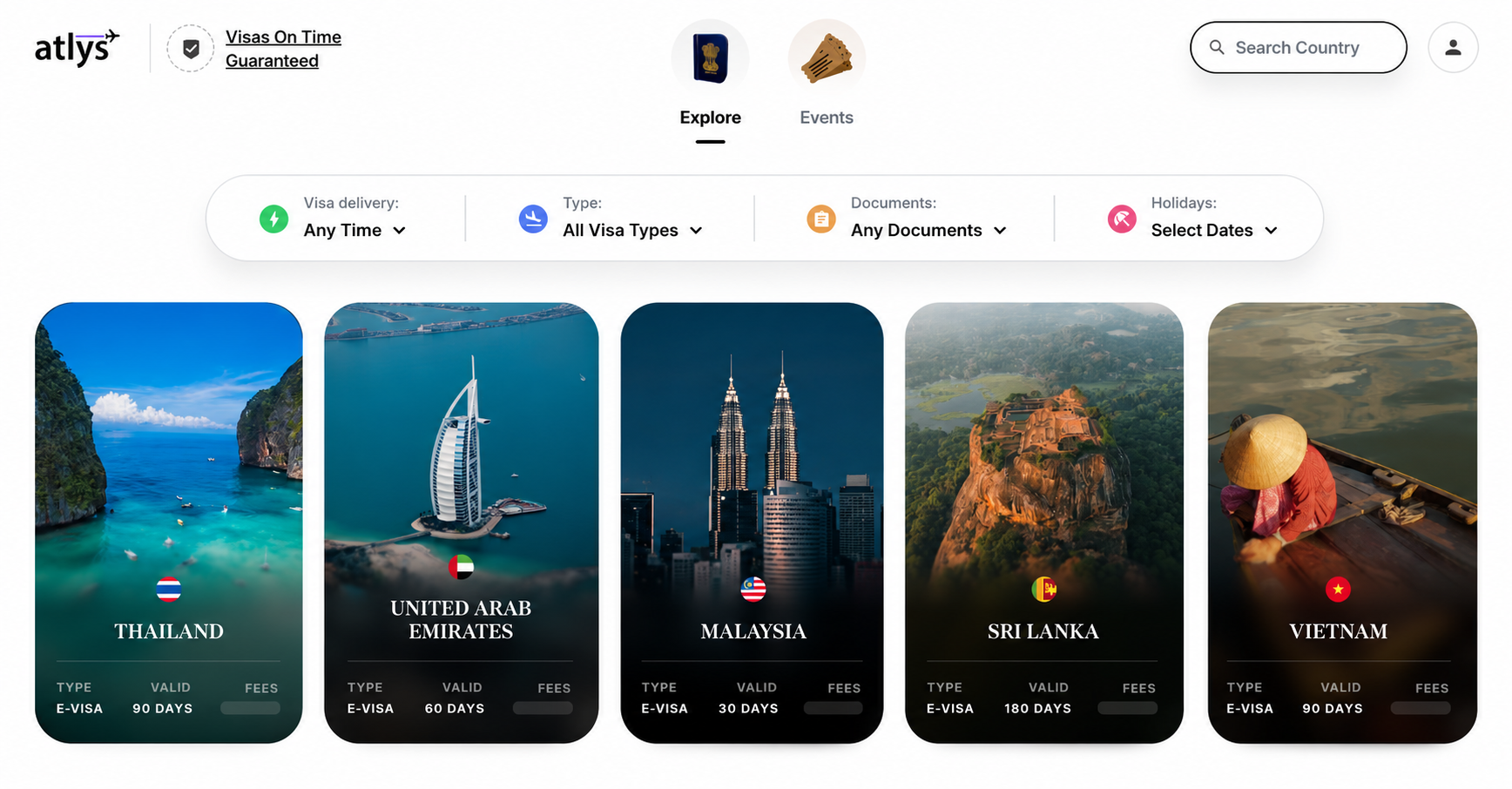
Atlys is a digital visa platform, an app and website that helps travelers find out what visa they need, apply for it, and track it, without dealing directly with confusing government portals or agents. In plain terms, you open the app, tell it where you want to go and what passport you hold, and it shows the visa requirements, the cost, and the steps, then lets you upload documents and submit an application through Atlys. For many electronic visas, the whole thing can be done from your phone in a few minutes, and Atlys handles the submission and keeps you updated until the visa comes back. It covers visas for well over a hundred destinations and is built to feel more like a modern travel app than a bureaucratic form.
What makes Atlys distinctive is the mix of slick, mobile-first design, a mission rooted in travel fairness, and a technology-driven approach to a process that has long been manual and opaque. Its founder built it because he believed a weaker passport should not make travel harder, and the company frames itself as removing the barriers that stop people exploring the world. At the same time, Atlys is a paid middle-man: it charges a fee on top of the government visa fee for the convenience it provides, and it sits between you and the authorities that actually decide your visa. Atlys is, in short, both a truly convenient tool that many travelers find easier than the alternatives and a paid intermediary whose fees, reliability, and handling of problems attract real scrutiny, and much of what this review examines comes from being both at once.
For a traveler, the practical point is that Atlys is an app that makes applying for a visa easier and faster, especially for simple electronic visas, in exchange for a service fee. When people talk about Atlys, they usually mean the visa app that shows requirements instantly and handles the paperwork, popular with frequent travelers and people who find government websites painful. Understanding Atlys means appreciating both how convenient it can be and how seriously some of its practices, around fees, refunds, delays, and support, are questioned, which is the balance this review strikes, treating serious complaints as complaints rather than proven fact.
History and Founding
Atlys was founded around 2020 to 2021 by Mohak Nahta, who came up with the idea while working as an engineer at Pinterest. As an Indian passport holder, he found it much harder to get visas for business trips than his American colleagues did, and he realized that passport strength shaped how easily people could move around the world. His response was to build a digital platform that would let anyone apply for visas more easily, believing a weaker passport should not prevent someone from traveling. Atlys started in the United States, then expanded quickly, and within months of launching in India it had become one of the country’s largest visa processors by volume.
From that start, Atlys grew fast and raised money from prominent investors. It expanded from the United States into India, the United Arab Emirates, the United Kingdom, and Australia, acquired a United Kingdom visa services company to strengthen its European presence, and built tools to predict approval chances. It processed millions of visas, reached a run rate of hundreds of thousands of applications a year, and became the most-funded startup in the visa space, backed by well-known venture firms and, recently, a major online travel company. From one engineer’s frustration at an airport, it became a globally operating platform with ambitions to be the default infrastructure for international travel.
This history matters for two reasons. First, the mission rooted in travel fairness is central to how Atlys presents itself, and understanding that it was built to make travel easier for people with weaker passports explains its appeal and its focus. Second, the pattern of very fast growth and heavy funding explains both Atlys’s ambition and some of the strain the autopsy examines, since scaling a service that handles sensitive documents and time-critical applications across many countries is hard, and rapid growth can outpace the support and reliability that travelers depend on. Both the promise and the growing pains trace back to this founding story.
Leadership
Atlys is led by its founder and chief executive Mohak Nahta, and the leadership helps explain the company.
Mohak Nahta, a former Pinterest engineer, founded Atlys and leads it as chief executive, closely identified with its mission of making travel more accessible regardless of passport strength. He is known for a hands-on, conviction-driven style, including an early habit of helping confused travelers at airports in person. Under his leadership, Atlys has grown quickly, raised significant funding, and pushed a technology-first, increasingly AI-driven approach to visas. The company is still founder-led and relatively young, which brings energy and clear vision but also the challenges that come with scaling a fast-growing startup handling sensitive, high-stakes tasks.
For a traveler or observer, the relevance is twofold. On one hand, Atlys benefits from a founder with a genuine mission, strong conviction, and a clear product vision, which has driven real growth and a well-designed app. On the other hand, a young, fast-scaling, founder-led company handling passports and time-critical visa applications faces real pressure to make its reliability, support, and problem-handling match its growth, which is exactly where many of the complaints in the autopsy arise. The honest framing is that Atlys’s founder-led vision and drive have built a truly useful and popular product, and that living up to the trust travelers place in it, especially when things go wrong, is the central challenge the company faces, both of which are part of the picture.
How Atlys Works
How Atlys works explains both its convenience and where problems can arise.
The process is designed to be simple. You open the app, search for the country you want to visit, and tell it your nationality. Atlys then shows the visa requirements for your situation, the visa types, validity periods, and the total cost, broken into the government fee and Atlys’s own service fee. If you proceed, you upload the required documents, such as your passport and a photo, answer any questions, and submit. Atlys then submits your application, keeps you updated on its status, and delivers the visa when approved, often by email or in the app. It also lets you keep your documents saved so future applications are faster, and it offers a predictive tool that estimates your approval chances and timeline.
For a traveler, this design has clear appeal and clear risks. On one hand, it is truly convenient: seeing your requirements and costs instantly, uploading documents from your phone, and letting Atlys handle the submission is far easier than navigating many government portals, especially for simple e-visas, and the saved-documents and prediction features add real value. On the other hand, because Atlys sits between you and the government, you depend on it to submit correctly, communicate accurately, and deliver on time, and when it makes an error, goes silent, or misjudges a timeline, the consequences fall on you and your trip, which is the root of many complaints. The honest framing is that Atlys’s process makes applying clearly easier and faster, especially for simple visas, while also creating a dependence on the middle-man that matters greatly when something goes wrong. Understanding both the convenience and the dependence helps explain the full picture.
What Atlys Offers
Atlys offers a range of visa services, and knowing them helps you understand what you are paying for.
- Visa requirement lookup: instant information on what visa you need for a destination based on your nationality, with costs and validity periods shown up front.
- Visa applications: submission of visa applications for well over a hundred destinations, with a focus on electronic visas that can be handled quickly through the app.
- Document tools: photo and passport scanning and checking tools that help make sure your documents meet requirements, sometimes usable even if you do not apply through Atlys.
- Status tracking and support: updates on your application’s progress and access to customer support, including help lines, though the quality of this support is a common point of concern.
- On-time guarantee: for many destinations, a promise to refund Atlys’s service fee if the visa is not delivered by the promised date, though the government fee is not refundable.
- Prediction and AI features: tools that estimate approval chances and timelines, with more AI-driven verification and support features being rolled out.
This range shows that Atlys is more than a simple form filler, aiming to guide you from figuring out what you need through to getting the visa in hand. The convenience of instant requirements, easy document upload, and status tracking is the core of what you pay the service fee for, while the guarantee and prediction tools add reassurance in principle. For a traveler, the practical point is that Atlys can truly simplify the visa process, particularly for simple electronic visas, though the value depends on the service working reliably and the support being there when needed, which is where the autopsy focuses. The offering is real and useful, and its worth depends on how well it delivers when it matters.
How Much Atlys Costs
Understanding what Atlys costs matters, because you pay its fee on top of the government’s, and fees are a common source of complaint.
When you apply through Atlys, you pay two things: the government visa fee, which goes to the destination country and every applicant must pay, and Atlys’s own service fee for using the platform. Atlys shows this breakdown before you pay, so you can see how much is the government’s fee and how much is Atlys’s markup, and you can abandon the application before paying if the total looks too high. The service fee varies by destination but has been reported to average roughly the equivalent of twenty-five to thirty dollars per application in some markets. For simple e-visas where the government fee is low, Atlys’s fee can be a large share of the total, which is why some travelers feel the markup is steep for what is essentially form submission.
For a traveler, the cost picture is a real consideration. On one hand, Atlys is transparent enough to show the fee breakdown before payment and lets you walk away, and for a painful or confusing government process, paying a modest fee for a fast, simple experience can be worth it. On the other hand, the service fee is a markup on something you could often do yourself for free on a government site, some travelers report the fees feeling higher or less expected than they anticipated, and for simple visas the convenience may not justify the cost. The honest framing is that Atlys charges a real, visible fee on top of the government fee, which can be worth it for convenience on painful applications but is an avoidable markup for simple ones you could do directly, so the value depends on how much you dislike the government process and how simple your visa is. Checking the fee breakdown and comparing it to applying directly is the sensible move, which the autopsy and verdict return to.
| Government Fee vs Atlys Fee: Know the Difference Every visa has a government fee that goes to the destination country and that you must pay no matter how you apply. Atlys adds its own service fee on top for the convenience of using its app. Atlys shows this breakdown before you pay, so always look at it: see how much is the unavoidable government fee and how much is Atlys’s markup. For a simple electronic visa where the official site is easy, applying directly saves you the service fee. For a confusing or slow government process, Atlys’s fee may be worth it for the simpler experience. Importantly, if a visa is delayed or refused, the government fee is generally not refundable, since it has been paid to the country, which is central to the refund complaints this review covers. |
Who Uses Atlys
Atlys is used by a wide range of travelers, and knowing who relies on it shows its appeal and focus.
Atlys is used by travelers around the world, with strong bases in India, the United States, the United Arab Emirates, the United Kingdom, and Australia, which together make up a large share of its business. It appeals especially to people who travel often and want a faster way to handle visas, and to those who find government visa websites confusing. Its founder’s original focus was on people with weaker passports, who face more visa requirements, though the platform is open to anyone, drawing both first-time applicants and frequent travelers who want speed and saved documents.
This adoption signals that Atlys meets a real need, offering an easier path through a process people dislike, which endorses its core convenience. It also frames the autopsy’s concerns, because a service used for time-critical, high-stakes tasks like visas, by people who may be less familiar with the process, carries real responsibility, and failures in accuracy, timing, or support can seriously disrupt travel plans. For a traveler considering Atlys, the practical point is that it is a popular, widely used tool that truly helps many people, while the concerns this review covers are worth understanding so you can decide whether it fits your specific trip and how to use it safely. The appeal is real, and so is the importance of using it wisely for something as important as a visa.
How Big Atlys Has Become
The scale of Atlys is significant for its space, and the numbers explain why it matters, though they move fast and should be checked against current sources.
Atlys has become the most-funded startup in the visa-processing industry, raising tens of millions of dollars across several rounds from prominent venture capital firms and, recently, a major online travel company, with total funding reported in the mid-seventies to mid-eighties of millions of dollars. It has processed millions of visa applications, reached a run rate of more than seven hundred thousand a year, and become one of the largest visa processors in India by volume. It operates across the United States, India, the United Arab Emirates, the United Kingdom, and Australia, and continues to expand. Its revenue, while still modest in absolute terms, has grown quickly, and it has pushed heavily into AI-driven automation of the visa process.
This scale signals that Atlys is a leading, fast-growing player in digital visa processing, well-funded and widely used. It also frames the autopsy’s concerns, because rapid growth in a business handling sensitive documents and time-critical applications strains reliability and support, and the complaints travelers raise often reflect the gap between fast scaling and consistent service. For a traveler or observer, the practical point is that Atlys is a prominent, well-backed, fast-growing platform whose scale makes its reliability, support, and handling of problems all the more important. The momentum is real, and so is the importance of the service living up to it for the travelers who depend on it.
How Atlys Makes Money
Understanding how Atlys makes money explains its incentives.
Atlys makes money mainly from the service fees it charges travelers on top of the government visa fee, earning a fee each time someone applies through its platform. As its volume grows, so does this fee income, which is why processing more visas and expanding into new markets is central to its business. It is also building partnerships, such as an integration with a major online travel company that can bundle visa services into trip bookings, which opens another channel for applications and fees. Looking ahead, the company and its investors talk about building a valuable data layer around traveler identity and eligibility, suggesting that the information it gathers could support future services beyond single visa fees. For now, though, the core of its revenue is the per-application service fee.
For a traveler, this model explains both Atlys’s pricing and its priorities. The service fee is how the company earns, so it has an incentive to encourage more applications through its platform and to expand its reach, which aligns with growth but also means the fee is a markup you are paying for convenience. The interest in a data layer around traveler identity is worth noting, since it points to the value of the personal information Atlys collects, which connects to the privacy considerations the autopsy examines. The honest framing is that Atlys makes money by charging a service fee per application, plus partnerships and potentially future data-driven services, a clear model whose fee is worth weighing against applying directly, and whose data ambitions are worth being aware of. Understanding that Atlys earns from your application fee, and values your data, helps explain both its pricing and the considerations this review covers.
Part 2: The Autopsy
The autopsy weighs Atlys’s genuine strengths against its real, and in some cases serious, concerns. The app is well designed and truly convenient for many, and the service faces significant complaints about fees, refunds, delays, support, accuracy, and data. Both the convenience and the concerns are real, and because of that, both get full and even-handed treatment, with serious allegations reported as customer complaints rather than proven fact, and balanced against the many positive experiences.
What Atlys Gets Right
The strengths are real and explain why many travelers like Atlys and why it has grown so fast.
A Clean, Fast App
Atlys is widely praised for its clean, well-designed app that makes checking requirements and applying feel simple. For a process people usually dread, the smooth, modern experience is a real strength that many users highlight positively.
Truly Easier for Simple Visas
For simple electronic visas where the government site is confusing or slow, Atlys can be far easier, showing requirements instantly and handling submission in minutes. This convenience is real and is the core reason many travelers choose it.
Broad Destination Coverage
Atlys covers visas for well over a hundred destinations, so travelers can handle many different trips in one place. This breadth is a genuine convenience, especially for frequent travelers who want a single tool.
Helpful Support Agents, Often
Many reviewers name specific Atlys support agents who resolved their issues with patience and skill, sometimes at the last minute. When the support works, it truly helps, and these positive experiences are common in reviews.
Useful Extras
Features like saved documents for faster future applications, photo and passport checking tools, an on-time service-fee guarantee, and approval predictions add real value in principle and set Atlys apart from a plain form.
A Real Mission and Transparency Efforts
Atlys’s mission of making travel easier regardless of passport strength is real, and it shows the fee breakdown before payment and publishes transparency information, which are real efforts toward openness that many services do not make.
These strengths make Atlys a truly useful and popular tool that solves a real problem for many travelers, which is why it has grown so fast and holds a high overall rating. The concerns that follow are serious and important, especially around fees, refunds, and reliability, but they do not erase the fact that Atlys delivers a real, convenient service that many people have used successfully and happily. Both the genuine value and the serious concerns are part of the honest picture.
Fees and Markup Concerns
A common concern about Atlys involves its fees, both the size of the markup and, for some travelers, the feeling that costs were higher or less expected than anticipated, which deserves fair treatment.
Atlys charges a service fee on top of the government visa fee, and while it shows this breakdown before payment, several travelers report frustration with the fees. Some feel the markup is steep for what is essentially form submission, especially for simple electronic visas where the government fee is low and Atlys’s fee is a large share of it. Others report unexpected or additional charges, or feel the total cost was not as clear as it should have been until late in the process. There are also complaints tied to fees and delivery, where travelers felt they were effectively charged for a service that was not delivered as promised. Against this, many other users find the fees reasonable for the convenience and appreciate seeing the breakdown up front, so experiences vary.
The honest framing weighs the real concern against the context. On one hand, the concern is real: Atlys’s fee is a markup on something often available directly for free, some travelers find the cost steep or less transparent than expected, and fee-related frustration is a recurring theme in reviews, so cost is a real consideration. On the other hand, Atlys does show the fee breakdown before payment and lets you walk away, the fee buys genuine convenience for painful applications, and many users find it fair, so it is not hidden in the way some complaints suggest. The fair takeaway is that Atlys’s fees are a real consideration, reasonable for convenience on difficult applications but an avoidable markup for simple ones, with some travelers finding them steeper or less clear than expected. For a traveler, the practical point is to review the fee breakdown, weigh it against doing it yourself, and know that for simple visas the markup may not be worth it.
Refunds and the Guarantee Confusion
The most serious and most damaging concern about Atlys involves refunds, especially the gap between its on-time guarantee and its refund policies, which has caused real financial harm and frustration and deserves careful, prominent treatment.
Atlys promotes an on-time guarantee for many visas, offering to refund its service fee if the visa is not delivered by the promised date, while the government fee is separately non-refundable because it has been paid to the country. In practice, many travelers report serious difficulty getting refunds, describing long delays, repeated promises that a refund is being processed without it arriving, and being passed between multiple agents. Reporting by a news outlet noted that a guarantee shown on some visa pages appeared to contradict the non-refundable terms in Atlys’s own conditions, creating confusion about which policy applies, and some travelers allege that the fine print effectively cancels out what the marketing seems to promise. Others do report receiving their service fee back, sometimes after escalating, so outcomes vary, but the pattern of refund difficulty and policy confusion is a recurring and serious theme.
The honest framing treats this seriously while being fair about what is proven. On one hand, this is a real and serious concern: many travelers report real trouble getting refunds, the apparent contradiction between the guarantee and the non-refundable terms is a legitimate transparency problem noted in reporting, and being unable to get money back after a service failure causes real harm and anger, so this is not a minor issue but a central one. On the other hand, some travelers do receive refunds, part of the confusion stems from the genuine fact that government fees cannot be refunded once paid to a country, and the strongest accusations, such as calling it a scam, are allegations from frustrated users rather than proven findings. The fair takeaway is that Atlys has a real, serious problem around refunds and the clarity of its guarantee, with many travelers reporting difficulty and a documented policy contradiction, even though some do get refunds and government fees are legitimately non-refundable. For a traveler, the practical point is to read the exact refund and guarantee terms, screenshot any promises, understand that government fees are not refundable, and be ready to escalate or dispute a charge if a refund is wrongly denied.
| Important: Understand Refunds and the Guarantee Before You Pay Atlys offers to refund its service fee if a visa is not delivered on time for many destinations, but the government fee is not refundable once paid to the country, and reporting has noted that the guarantee on some pages appears to conflict with the non-refundable terms in Atlys’s conditions. Many travelers report real difficulty getting refunds. Before you pay: read the exact refund and guarantee terms for your specific visa, take screenshots of any delivery-date promises and guarantees, and keep all chat and email records. Understand that the government fee is generally gone even if the visa is delayed or refused. If a refund you are clearly owed is denied, you can dispute the charge with your card issuer and file a complaint with a consumer protection body. Do not rely on the marketing alone; confirm the terms in writing. |
Delays and Missed Delivery Dates
Closely tied to refunds is the concern about delays, where travelers report that Atlys missed promised delivery dates in ways that disrupted or ruined trips, which deserves serious treatment.
While Atlys promotes fast processing and a high on-time rate, a number of travelers report that their visas arrived late or not at all, sometimes past a promised date and too late for their trip, causing lost flights, hotels, and money. Reviews describe applications where communication went quiet for weeks, updates were missing unless the traveler chased repeatedly, and the visa was ultimately delayed or could not be completed, sometimes with a service-fee refund but the larger trip costs lost. As with refunds, this does not describe every experience, and many travelers receive their visas on time or early, but missed delivery dates that cost people their travel plans are a serious and recurring complaint that matters greatly for a time-critical service.
The honest framing weighs the seriousness against the fuller picture. On one hand, this is a real and serious concern: a visa that arrives late can cost a traveler their entire trip, the reports of missed dates and silent communication are numerous and specific, and for a service whose whole value is reliable, timely delivery, this strikes at the core, so it is a major issue. On the other hand, many travelers do receive visas on time or early, some delays stem from government processing that Atlys does not control, and Atlys does offer a service-fee refund in many late cases, so the problem is not universal and not entirely within Atlys’s power. The fair takeaway is that Atlys has a real, serious concern around delays and missed delivery dates that have cost some travelers their trips, even though many applications are on time and some delays are the government’s doing. For a traveler, the practical point is to apply well ahead of your trip, never leave a visa to the last minute through Atlys, and have a backup plan, since a missed date can be far costlier than the fee.
Customer Support Concerns
A frequent concern, which compounds the others, is customer support, especially when something goes wrong, and it deserves fair treatment given the mixed experiences.
Atlys support draws sharply divided reviews. Many travelers praise specific agents by name for patient, effective help, sometimes resolving urgent problems at the last minute. But many others report the opposite: support that is slow or unresponsive, reliance on automated replies, being passed between agents who each promise resolution without delivering, and, at worst, going silent on a pending application until the traveler repeatedly chases. For a service handling time-critical visas, unresponsive support during a problem can turn a delay into a crisis, which is why support is such a common and serious theme. The inconsistency, with some users getting excellent help and others getting silence, suggests support quality that varies rather than being uniformly good or bad.
The honest framing keeps this balanced. On one hand, the concern is real: many travelers report slow, unresponsive, or circular support at exactly the moments that matter most, which compounds the harm of fees, refunds, and delays and is a real weakness for a high-stakes service. On the other hand, many other travelers report excellent, patient help from named agents who saved their trips, so the support is not uniformly bad and can be very good, and the inconsistency may reflect the strain of fast growth. The fair takeaway is that Atlys’s customer support is truly inconsistent, excellent for some and frustratingly unresponsive for others, a real and serious concern for a time-critical service even though good experiences are common. For a traveler, the practical point is to keep your own records, escalate clearly if support goes quiet, and not depend on last-minute help, especially for an important or time-sensitive visa.
Accuracy and the Risk of Unnecessary Applications
A more subtle but important concern involves the accuracy of the visa information Atlys shows, including cases where travelers felt prompted toward visas they may not have needed, which deserves careful treatment.
Some travelers report that Atlys told them they needed a visa when, on checking official sources, they were not sure that was correct, raising a worry about paying for an application that may not have been necessary. In one example, a United States citizen was told they needed a visa for a destination following United Kingdom entry rules, while a United Kingdom government check suggested no visa was required for a short visit. Whether such cases are errors, differences in interpretation, or truly required, they point to the importance of not relying solely on Atlys for the question of whether you need a visa at all. Visa rules are complex and change often, and an app that earns a fee per application has an obvious reason to be scrutinized on this point, even if most of its information is accurate.
The honest framing is careful and fair. On one hand, the concern is legitimate: accuracy is critical, some travelers report being told they needed a visa they were not sure about, and any service that profits per application should be checked on whether it steers people toward unnecessary ones, so verifying requirements independently matters. On the other hand, visa rules truly are complex and vary by nationality and purpose, Atlys’s information is often accurate and helpful, and there is no clear proof of deliberate misdirection rather than the ordinary difficulty of visa rules, so this is a reason for caution rather than an accusation. The fair takeaway is that travelers should not rely on Atlys alone to decide whether they need a visa, since accuracy concerns and the fee-per-application model make independent verification wise, even though its information is often correct. For a traveler, the practical point is to confirm whether you actually need a visa using official government sources before paying for any application, through Atlys or anywhere else.
Data Privacy and Security
A serious underlying concern with any visa app is data privacy, because Atlys handles some of your most sensitive information, and it deserves clear treatment.
To use Atlys, you upload highly sensitive personal data, including your passport, photos, and personal details, and stores this so future applications are faster, and is building what it and its investors describe as a data layer around traveler identity. Atlys states that it uses strong security measures, including encryption and compliance with recognized data protection and payment security standards. However, some reviewers have raised concerns about the sensitivity of the data they hand over to a middle-man, and at least one strongly worded review alleged worries about access to personal and contact data, though such claims are allegations rather than verified findings. For any service holding passport and identity data, the stakes are high, and travelers are right to think about who holds their information and how it is protected.
The honest framing balances the real sensitivity against Atlys’s stated protections. On one hand, the concern is legitimate: Atlys holds extremely sensitive passport and identity data, is building a data layer around traveler identity, and some users are uncomfortable handing this to an intermediary, so privacy is a real and important consideration for a service like this. On the other hand, Atlys states that it uses strong encryption and complies with recognized data protection and payment security standards, handling sensitive data is inherent to any visa service including government portals and agents, and the strongest privacy allegations are unverified user claims. The fair takeaway is that Atlys handles highly sensitive data and is building a traveler-identity data layer, a legitimate privacy consideration, while the company states it applies strong security and compliance, so travelers should weigh the sensitivity and Atlys’s stated protections. For a traveler, the practical point is to be mindful of the sensitive data you share, review Atlys’s privacy policy, and decide whether you are comfortable with an intermediary holding your passport and identity information.
The Mixed Review Picture
An important part of assessing Atlys is making sense of its sharply mixed reviews, which deserves honest treatment.
Atlys holds a high overall rating across review platforms, with thousands of positive reviews praising its ease, speed, and helpful agents, which the company highlights. At the same time, many detailed negative reviews describe serious problems with fees, refunds, delays, and support, some in very strong terms. Some observers note that the volume of glowing short reviews alongside specific, detailed complaints can make the true picture hard to read, and a few reviewers allege that positive reviews are solicited or curated, an unproven claim. The honest reading is that both the many truly satisfied users and the many seriously dissatisfied ones are real, and that Atlys is a service that works smoothly for a lot of people and fails painfully for a meaningful minority, which is exactly why a balanced review matters.
The honest framing holds both sides. On one hand, the high average rating and many positive reviews are real and reflect genuine satisfaction, so Atlys clearly works well for a large number of travelers, and dismissing that would be unfair. On the other hand, the serious, detailed complaints are also real and numerous, the apparent contradiction in refund policy is documented, and the stakes when things go wrong are high, so the negatives cannot be waved away by pointing to the average. The fair takeaway is that Atlys truly satisfies many travelers and truly fails a meaningful minority in serious ways, so both its popularity and its problems are real, and the right response is to understand the risks and use it carefully rather than trust or dismiss it wholesale. For a traveler, a high rating does not guarantee a smooth experience for your specific, important visa, so take sensible precautions regardless.
What You Cannot Fully Verify
In the interest of honesty, here is what is hard to assess definitively about Atlys, and which depends on your situation and on factors that are not fully clear.
- Whether your specific visa will be delivered on time, since it depends on your destination, the government’s processing, and your documents, not only on Atlys.
- How a refund or problem will be handled in your case, since experiences vary widely from excellent to very poor.
- The exact accuracy of every visa requirement shown, which is why independent verification on official sources is wise.
- Some strong allegations in reviews, such as claims of a scam or of solicited reviews, which are user assertions rather than proven facts.
- The precise, current fees, funding, and visa counts, which change fast and should be checked against the latest sources.
This is not a list designed to dismiss a truly useful app so much as a reminder that using Atlys for something as important as a visa involves real dependence and some uncertainty. A review can tell you that Atlys is a well-designed, convenient tool that many travelers use happily, and that it has serious, recurring concerns around fees, refunds, delays, and support that have cost some travelers money and trips. It cannot predict how your specific application will go. The honest guidance is to use Atlys for its genuine convenience where it fits, especially simple electronic visas applied for well ahead of time, while verifying requirements independently, understanding the refund terms, protecting your records, and keeping a backup plan, so you get the benefit with your eyes open to the real risks.
Part 3: The Killcritic
The killcritic is the verdict. Who Atlys suits, who should be cautious, and how it compares to applying directly.
Who Atlys Is For
Atlys suits some travelers well, with the fit depending on your visa, your timeline, and how you weigh the concerns.
People Applying for Simple e-Visas
If you need a simple electronic visa and the government website is confusing or slow, Atlys can make it far easier and faster, which is its core strength. For simple e-visas applied for with time to spare, it is a real convenience.
Travelers Who Dislike Government Portals
If you find official visa websites painful and are happy to pay a modest fee to avoid them, Atlys offers a cleaner, guided experience, which many users value, provided you accept the markup and apply well ahead of your trip.
Frequent Travelers Wanting One Tool
If you travel often and want a single app that stores your documents and handles many destinations, Atlys’s coverage and saved-documents feature add real convenience for repeat use, as long as you use it carefully for each trip.
People Who Want Requirement Guidance
If you are unsure what a destination requires, Atlys can quickly show requirements and costs, which is helpful for planning, as long as you confirm the crucial question of whether you actually need a visa on official sources.
For these travelers, especially those applying for simple e-visas with time to spare, Atlys offers real convenience, provided they verify requirements, understand the fees and refund terms, and keep a safety margin, as this review covers.
Who Should Be Cautious
Others should approach Atlys with real care or consider applying directly, depending on their situation.
Complex or Business Visa Applicants
If your visa is complex, such as a Schengen, business, or multi-document application, Atlys’s automated, self-serve model may not give you the dedicated human handling you need, so consider a specialist visa service or applying directly with expert help.
Time-Critical Travelers
If your trip is soon and a delay would be costly, be very cautious: reports of missed delivery dates make Atlys risky for last-minute visas, so apply far ahead with a backup, or apply directly where you can track it yourself.
The Privacy-Conscious
If you are uncomfortable giving sensitive passport and identity data to an intermediary building a traveler-identity data layer, weigh that carefully, review the privacy policy, and consider applying directly through official channels instead.
Budget-Conscious Simple Applicants
If your visa is simple and cheap to get directly, and you do not mind the government process, applying yourself avoids Atlys’s service fee entirely, so the markup may not be worth it for simple cases you can handle alone.
Atlys vs Applying Directly and Alternatives
The most practical comparison for most people is Atlys against applying directly or using other options, and the honest answer is that Atlys wins on convenience for painful applications and loses on cost and control for simple ones.
| Option | Best For | Trade-offs |
|---|---|---|
| Atlys | Simple e-visas, convenience | Service fee, refund and delay risk |
| Official government portal | Simple, cheap visas direct | Can be confusing, no hand-holding |
| Specialist visa service | Complex, business visas | Higher cost, slower, more manual |
| Travel agent or VFS | In-person help, some visas | Fees, variable quality, less digital |
For most travelers, the choice comes down to how hard your visa is and how much you value convenience. For a simple e-visa where the official site is reasonable, applying directly is cheaper and gives full control, so Atlys’s fee may not be worth it. For a confusing or slow government process, Atlys’s cleaner experience can be worth the fee, as long as you apply with time to spare. For complex or business visas, a specialist service or expert help may serve you better than Atlys’s automated model. Traditional travel agents or official visa centers remain an option for in-person help. The honest take is that Atlys is a strong choice for simple visas and painful government processes when you apply early, and a weaker one for simple cheap visas you could do yourself, complex applications, or time-critical trips. Weigh convenience against cost, control, and the risks this review covers.
Is Atlys Legit and Worth It?
Two questions travelers ask most are whether Atlys is legitimate and whether it is worth it, and the honest answers are nuanced.
Is It Legit?
Yes, Atlys is a legitimate, well-funded company that has processed millions of visas and truly delivers for many travelers, so the strongest accusations calling it an outright scam are frustrated allegations rather than proven fact. It is a real service, not a fraud, though it has serious problems for a meaningful minority of users.
Is It Worth It?
It depends. For simple electronic visas where the government process is painful, and when you apply with time to spare, Atlys’s convenience can be worth its fee. For simple cheap visas you could do yourself, complex applications, or time-critical trips, the fee, refund risk, and delay risk often make it not worth it compared with applying directly.
The Honest Call
Atlys is a legitimate, truly convenient service that works well for many travelers and fails seriously for a meaningful minority, so it is neither a scam nor a safe bet for every situation. It is worth it when your visa is simple, the government process is painful, and you apply early with a backup, and it is often not worth it for simple cheap visas, complex cases, or last-minute trips. The keys are to verify whether you need a visa on official sources, understand the fees and refund terms, apply well ahead, keep records, and have a plan B. Used that way for the right visa, Atlys delivers real convenience; used for the wrong one, it carries real risk.
The Final Verdict
| Atlys Final Rating: 3.5 / 5 A truly useful and popular visa app, Atlys offers a clean, fast experience that makes simple electronic visas far easier than clumsy government portals, covers well over a hundred destinations, and has processed millions of applications with many satisfied users and a high overall rating. It is held back by real and sometimes serious concerns: a service fee that is an avoidable markup for simple visas, a serious and recurring refund problem worsened by an apparent contradiction between its guarantee and its terms, missed delivery dates that have cost some travelers their trips, inconsistent customer support that can go silent when it matters most, accuracy questions around whether some applications are needed, and the sensitivity of the passport and identity data it holds. Truly convenient and legitimate, and a real help for simple visas applied for early, but with serious concerns around refunds, delays, support, and reliability that mean it should be used carefully and never for time-critical or complex visas without a backup. |
Use Atlys if you need a simple electronic visa, find the government process painful, and apply well ahead of your trip with a backup plan. For simple visas applied for early, Atlys offers real convenience, and many travelers use it happily.
Be cautious or apply directly if your visa is complex or a business application, your trip is soon and a delay would be costly, you are uncomfortable sharing sensitive data, or your visa is simple and cheap to get yourself. In those cases, weigh the fee, the refund and delay risks, and the privacy considerations carefully.
Atlys earns genuine credit for building a well-designed, convenient app that solves a real problem and works smoothly for many travelers, which its high overall rating reflects. The 3.5 out of 5 recognizes that real convenience and popularity, tempered honestly by serious, recurring concerns: a markup that is avoidable for simple visas, a real refund problem made worse by an apparent contradiction between the guarantee and the terms, missed delivery dates that have cost some travelers their trips, inconsistent support that can vanish in a crisis, accuracy questions worth independent checking, and the high sensitivity of the data it holds. For convenience on simple visas, Atlys is a real help. The keys to using it well are to verify requirements on official sources, understand the fees and refund terms, apply far ahead of your trip, keep records, and have a backup, so you get the convenience while protecting yourself from the real risks. Legitimate and truly useful for the right visa, but serious enough in its problems that it should be used carefully and never relied on for time-critical or complex applications, Atlys is a good tool with real caveats rather than a service to trust blindly. The convenience is real, and so are the serious concerns, so use it wisely and with your eyes open.
Frequently Asked Questions
This section answers the specific questions people search for about Atlys. Each answer is structured for direct factual extraction.
What is Atlys?
Atlys is a digital visa platform, an app and website founded in 2021 by Mohak Nahta that helps travelers find out what visa they need, apply for it, and track it, for well over a hundred destinations. It shows visa requirements based on your nationality, lets you upload documents and apply from your phone, and delivers the visa once approved, charging a service fee on top of the government visa fee. It is the most-funded visa startup in the world and has processed millions of applications. Atlys is designed to make visas, especially simple electronic ones, faster and easier than using government websites directly.
Is Atlys legit?
Yes, Atlys is a legitimate company, not a scam. It is a well-funded startup backed by prominent investors, has processed millions of visas, and truly delivers for many travelers, holding a high overall rating. That said, it has real and serious concerns that show up repeatedly in reviews, including difficulty getting refunds, missed delivery dates, and inconsistent support, and some frustrated users call it a scam in reviews. Those are allegations from unhappy customers rather than proven fact. The honest position is that Atlys is a real, legitimate service that works well for many but fails seriously for a meaningful minority, so use it carefully.
Is Atlys safe to use?
Atlys is generally safe in the sense that it is a legitimate service that delivers visas for many travelers, and it states that it protects your data with strong encryption and recognized security and compliance standards. The main considerations are the sensitivity of the passport and identity data you hand over to an intermediary, and the service reliability concerns around refunds, delays, and support. To use it safely, verify whether you actually need a visa on official sources, apply well ahead of your trip, understand the refund terms, keep records of all promises and communications, and have a backup plan, especially for important or time-critical visas.
How much does Atlys cost?
Atlys costs the government visa fee, which every applicant must pay to the destination country, plus Atlys’s own service fee for the convenience of using its platform. The service fee varies by destination but has been reported to average roughly the equivalent of twenty-five to thirty dollars per application in some markets, though it differs. Atlys shows the breakdown of government fee versus its own fee before you pay, so you can see the markup and abandon the application if it looks too high. For simple electronic visas, the service fee can be a large share of the total, so it is worth comparing with applying directly, which avoids the fee.
Does Atlys guarantee my visa will be approved?
No, Atlys cannot guarantee your visa will be approved, because visa decisions are made by governments, not by Atlys. What Atlys offers for many destinations is an on-time guarantee, promising to refund its service fee if the visa is not delivered by the promised date, though the government fee is not refundable once paid. Approval depends on your eligibility, your documents, and the destination country’s decision. Atlys provides tools that estimate your approval chances, but these are predictions, not guarantees. Always understand that no service can promise approval, and that Atlys’s guarantee covers its own fee and timing, not the government’s decision or fee.
Can I get a refund from Atlys?
Sometimes, but many travelers report difficulty. Atlys offers to refund its service fee if a visa is not delivered on time for many destinations, but the government fee is generally not refundable because it has been paid to the country. In practice, a significant number of travelers report long delays and trouble getting refunds, and reporting has noted an apparent contradiction between the guarantee on some pages and the non-refundable terms. Others do receive refunds, sometimes after escalating. To protect yourself, read the exact refund terms before paying, screenshot any promises, keep records, and if a refund you are clearly owed is denied, dispute the charge with your card issuer.
Is Atlys worth it?
It depends on your visa and timeline. For simple electronic visas where the government website is confusing or slow, and when you apply with time to spare, Atlys’s convenience can be worth its service fee. For simple, cheap visas you could easily get yourself, complex or business applications, or time-critical trips, the fee plus the refund and delay risks often make it not worth it compared with applying directly or using a specialist. The honest answer is that Atlys is worth it for convenience on painful simple applications done early, and often not worth it for simple cheap visas, complex cases, or last-minute travel, so match it to your specific situation.
Does Atlys actually process visas or just fill forms?
Atlys does more than fill forms, submitting your application to the relevant authorities and managing it through to delivery, but it does not decide your visa, which is up to the government. It gathers your information and documents, submits the application, communicates with you about status, and delivers the approved visa, focusing especially on electronic visas. However, because it is an intermediary, its role depends on submitting correctly and communicating accurately, and it cannot influence the government’s decision or, in many cases, the government’s own processing time. So Atlys handles the application process for you for a fee, but the actual approval and timing ultimately rest with the destination country.
Who owns Atlys?
Atlys was founded by Mohak Nahta, who serves as its chief executive and leads the company, and it is a private, venture-funded startup. Its ownership is shared among its founder, employees, and a group of investors who have funded it across several rounds, including prominent venture capital firms and, more recently, a major online travel company. Because Atlys is private, it is not owned by public shareholders, and the founder remains central to its leadership and direction. It is headquartered in San Francisco with significant operations connected to India, and it is the most-funded company in the visa-processing space.
What countries does Atlys cover?
Atlys covers visas for well over a hundred destinations worldwide, with some sources citing coverage of more than a hundred and twenty to a hundred and fifty countries, focusing especially on electronic visas that can be handled quickly through its app. It is most active in markets including the United States, India, the United Arab Emirates, the United Kingdom, and Australia, and continues to expand into new regions. Because coverage and the specific visas available change as Atlys grows and as countries update their systems, check the app for your specific destination and nationality, and always confirm the official requirements on the destination government’s own sources before applying.
Common Mistakes and Tips When Using Atlys
This section captures the most common mistakes travelers make with Atlys and how to avoid each. Following these helps you get the convenience while protecting yourself from the real risks.
Mistake: Not checking whether you actually need a visa
Mitigation: Always confirm whether your trip requires a visa using the destination government’s official sources before paying for any application. Do not rely solely on any app that earns a fee per application to tell you that you need one, since requirements vary by nationality and purpose and can change.
Mistake: Applying at the last minute
Mitigation: Reports of missed delivery dates make last-minute applications risky. Apply well ahead of your trip, leave a generous safety margin, and never count on a tight turnaround, since a delayed visa can cost you flights and hotels far exceeding any fee.
Mistake: Ignoring the fee breakdown
Mitigation: Atlys shows the government fee and its own service fee before you pay. Always review this breakdown, compare Atlys’s fee to applying directly, and decide whether the convenience is worth the markup, especially for simple electronic visas you could handle yourself for free.
Mistake: Not understanding the refund terms
Mitigation: Read the exact refund and guarantee terms for your specific visa before paying, and understand that the government fee is generally not refundable. Screenshot any delivery-date promises and guarantees, and keep all communications, so you have evidence if you need to dispute a wrongly denied refund.
Mistake: Relying on last-minute support in a crisis
Mitigation: Support can be inconsistent and slow when problems arise. Do not depend on fast help at the last moment, escalate clearly and persistently if your application goes quiet, keep your own records, and have a backup plan for getting the visa another way if needed.
Mistake: Overlooking the sensitivity of your data
Mitigation: You are sharing your passport and identity data with an intermediary. Review Atlys’s privacy policy, be mindful of what you upload, and decide whether you are comfortable with a middle-man holding this information, or whether applying directly through official channels suits you better.
Final Notes on This Review
This review was built using a query fan-out approach designed to answer the questions people actually search for about Atlys, organized into topic clusters that map to how Google’s AI Overview surfaces answers. Every claim is grounded in a source: Atlys’s public information, independent reporting, funding and market data, and a wide range of customer reviews, with serious allegations reported as customer complaints rather than proven fact and balanced against the many positive experiences and Atlys’s high overall rating.
Figures for funding, visa counts, and fees reflect publicly available information as of mid-2026 and change fast. Fees, policies, and coverage can change, and visa rules and decisions are set by governments, not Atlys, so always confirm requirements on official sources and verify current details before relying on them. This review is informational and is not legal or immigration advice. Above all, use Atlys for its genuine convenience where it fits, verify whether you need a visa independently, understand the fees and refund terms, apply well ahead of your trip, keep records, and have a backup plan, so you get the benefit while protecting yourself from the real concerns this review covers.
More brand reviews on brands.run
brands.run publishes honest, independent reviews of brands across every category, from travel and apps to finance, food, and more. Explore the latest reviews on the brands.run homepage.
Review of Atlys | Last updated: June 2026 | Reviewer: brands.run editorial team | Independent review. Figures, fees, and policies change fast, and visa rules are set by governments, so verify current details on official sources before relying on them. Not legal or immigration advice.
Atlys and its product names are trademarks of Atlys, Inc. All product names, logos, and brands are the property of their respective owners. Use of these names here does not imply any affiliation or endorsement. This review is for general informational purposes only and reflects publicly available information and customer feedback as of mid-2026. It is not legal or immigration advice. Serious allegations described are customer complaints and are unproven, and are presented as such alongside positive experiences and Atlys’s high overall rating.