
An honest, deeply researched review of Vefogix covering pricing, the publisher network, service quality, the stats that don’t add up, the Google guidelines question, and the verdict on whether it deserves your SEO budget
Thank you for reading this post, don't forget to subscribe!Published by brands.run | The independent brand review hub
Reviewed Brand: Vefogix | Service: Link Building & Guest Posting | Founded: Apex Web Cube LLC | Headquarters: Sheridan, Wyoming, USA | Website: vefogix.com
brands.run reviews brands across every commercial category, with no affiliation to the companies it covers. For how we test and score, read our review methodology. To weigh Vefogix against every other provider in this space, browse Marketing, SEO and Business Services.
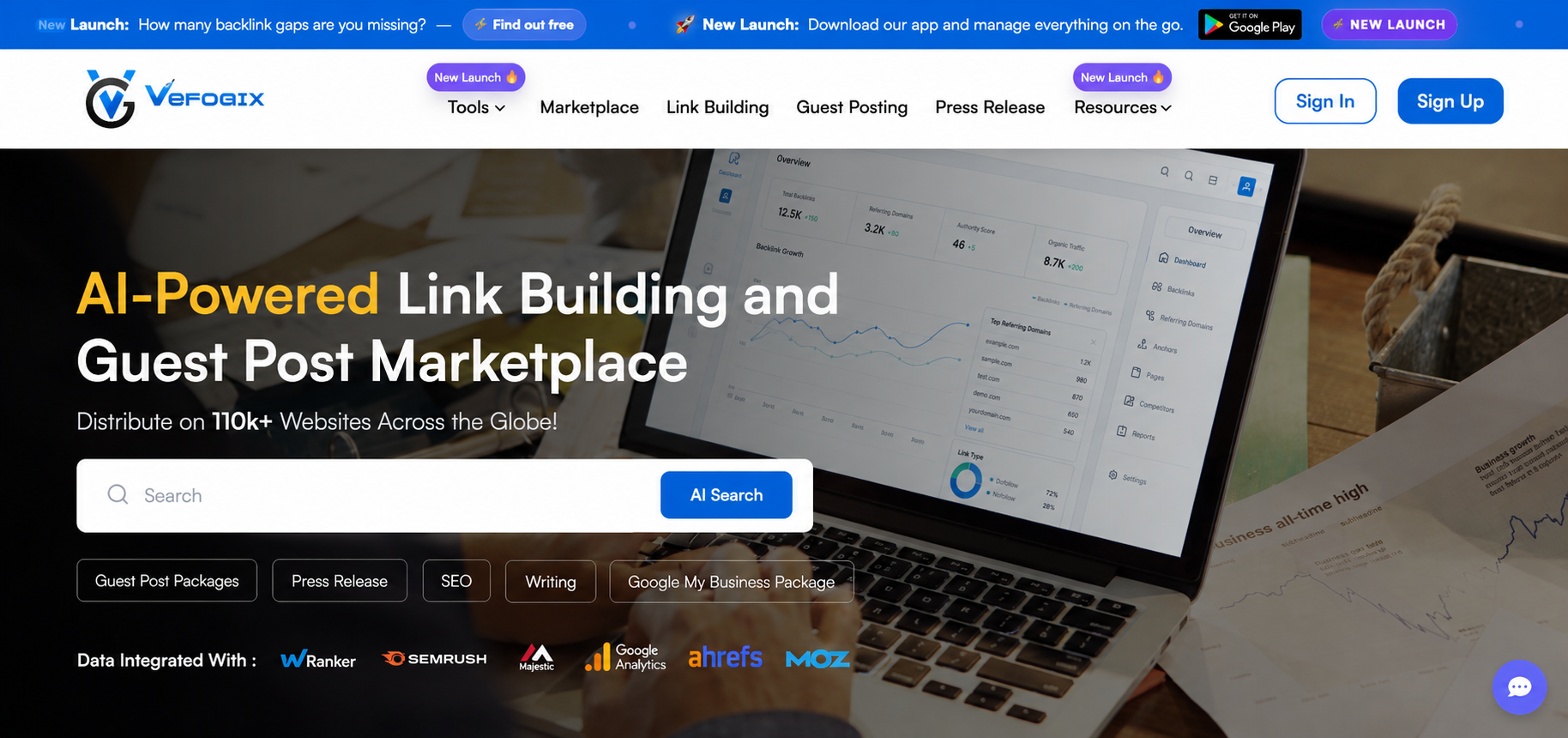
Vefogix is a link building and guest posting service operated under Apex Web Cube LLC, based in Sheridan, Wyoming. It sells backlinks, guest posts, niche edits, press release distribution, and content writing to website owners, SEO agencies, and marketers who want to improve their Google rankings. Entry pricing starts around $5 to $6 per placement. The service claims access to a large network of verified publisher websites across dozens of niches and over 100 countries.
That’s the surface. This review goes underneath it.
It’s built in three parts. Part 1, The Expose, covers what Vefogix actually is beneath the marketing layer: the company, the service catalog, the publisher network, the real pricing, the guarantees, and how a purchase actually works. Part 2, The Autopsy, dissects what works and what’s broken: the inconsistent statistics across Vefogix’s own pages, the agency-versus-marketplace identity confusion, the experience and authority gaps, the publisher data depth problem flagged by an independent reviewer, the Google guidelines question that every link buyer has to understand, and the deindexing risk (including the deindexing of Vefogix’s own blog after a 2026 Google core update). Part 3, The Killcritic, is the verdict: who Vefogix helps, who it fails, and how it compares against Loganix, FatJoe, The HOTH, freelance marketplaces, and doing link building yourself.
If you’re deciding whether to spend money with Vefogix, or trying to understand where it sits in the link building market, this review gives you the honest version.
| Review MethodologyThis review draws on Vefogix’s own product pages at vefogix.com, third-party listings and reviews on Clutch, Trustpilot, and Goodfirms, an independent platform review published by Xamsor, the company’s published guarantees and pricing, and competitor benchmarks across the link building industry. Self-reported figures are labeled as company-stated. Numbers reflect publicly visible information as of June 2026 and may shift over time. |
Part 1: The Expose
The expose section strips away the marketing layer. What is Vefogix actually selling, to whom, at what price, and through what model. No softening, no positioning words.
What Vefogix Actually Is
Vefogix is a link building service. You pay Vefogix, and Vefogix gets a link to your website placed on someone else’s website. That link, in SEO terms, is a backlink. Backlinks are one of the signals Google uses to decide how to rank pages. More high-quality backlinks pointing to your site can, in theory, help your pages rank higher in search results.
Vefogix offers several ways to get those backlinks. Guest posts, where Vefogix writes an article that includes a link to your site and gets it published on a relevant blog. Niche edits, also called link insertions, where your link is added to an article that already exists on a publisher’s site. Press release distribution, where a news-style announcement carrying your link goes out across distribution networks. Content writing, where Vefogix produces the article that surrounds the link. Local citations, where your business gets listed in directories.
You can buy these one placement at a time, starting around $5 to $6 for entry-level sites, or in packages that bundle multiple links per month. Vefogix also offers a white-label option, where agencies resell Vefogix’s work under their own brand.
That’s Vefogix stripped of every marketing word. It’s a way to buy backlinks, with verified metrics shown before you pay and a few guarantees attached.
The Company Behind Vefogix
Vefogix operates under Apex Web Cube LLC, registered at 30 N Gould St, Ste R, Sheridan, Wyoming 82801. On Trustpilot the entity appears as Vefogix LLC. The public contact email is nova@vefogix.com. The company lists Neha Khatri among its founders.
Wyoming LLC registration is common for online businesses because of the state’s privacy and tax structure. It tells you the company is a registered US entity, but the Sheridan address is a registered-agent style address shared by many companies, not a large physical office. That’s normal for this category. Most link building services are lean remote operations, not big buildings full of staff.
What matters for a buyer is less the registration and more the track record. Vefogix has third-party reviews on Clutch (around 13 reviews, mostly rated 4.5 to 5.0), Trustpilot (a 4-star score across roughly 15 reviews), and Goodfirms (positive reviews). Those are real but small samples. We come back to what the sample size means in the autopsy.
The Agency or Marketplace Question
Here is the first honest complication. Vefogix can’t decide what it is, and its own pages say different things.
On some pages, Vefogix calls itself a “global SEO services agency.” On others, it’s a “guest post marketplace” where you browse listings and buy directly. On others still, it’s a “white-label link-building agency,” and on another it’s described as an “AI-powered link building service and guest post marketplace.” An independent reviewer at Xamsor tested it and described it plainly as a guest-posting marketplace with website listings you filter and buy.
The distinction matters to buyers. An agency means a team takes your goals, builds a strategy, and does outreach on your behalf. A marketplace means you log in, filter a list of sites by metrics and price, and place orders yourself. These are different products with different effort levels and different expectations. Vefogix actually offers both: a self-serve marketplace where you pick listings, and a managed service where the team runs campaigns for you. But the messaging blurs them, which makes it harder for a first-time buyer to know what they’re signing up for.
The practical read: if you want to pick your own sites and pay per link, use the marketplace side. If you want someone to run the whole campaign, ask specifically for the managed service and confirm the scope in writing before you pay.
What Link Building Actually Is (And Why People Buy It)
To judge Vefogix, you have to understand the thing it sells. Link building is the practice of getting other websites to link to yours. Google treats a link from site A to site B as a kind of vote: site A is vouching for site B. Pages with more high-quality votes tend to rank higher, all else being equal.
There are roughly three ways to get backlinks. The first is earning them, where you publish something so useful that other sites link to it on their own. This is the gold standard and the hardest to do at scale. The second is manual outreach, where you email site owners and ask them to link to your content, usually offering a guest article in exchange. This works but it’s slow and labor-intensive. The third is paying for placements through a service like Vefogix, where the outreach, negotiation, writing, and publishing are handled for you in exchange for money.
People buy link building because the second method is exhausting and the first is unreliable. A business that needs rankings now, and doesn’t have a team to spend weeks emailing editors who never reply, pays someone to handle it. That’s the entire market Vefogix serves. Whether paying for links is wise, and how Google treats it, is a real question we tackle head-on in the autopsy. For now, the expose just establishes what the product is.
If you’re new to this category, our broader Marketing, SEO and Business Services reviews cover the other major providers and the trade-offs between them.
The Vefogix Service Catalog in Full
Here is everything Vefogix sells, based on its published service pages.
Guest Posts
Vefogix writes an article relevant to a publisher’s blog, includes a contextual link to your site, and gets it published. This is the core product. Pricing scales with the publisher’s domain authority, traffic, and niche, from a few dollars on entry sites to several hundred on high-authority sites.
Niche Edits (Link Insertions)
Instead of a new article, your link gets added to a relevant article that’s already published and already has some authority. These can work faster than guest posts because the page is already indexed, though they depend on the publisher’s willingness to edit existing content.
Press Release Distribution
A news-style announcement about your business, carrying your link, distributed across press networks. This is more about visibility and brand mentions than ranking power, since most press release links are nofollow, a distinction we explain later.
Content Writing
Vefogix’s writers produce the articles. For buyers who don’t want to write their own guest post drafts, content is included in most placements rather than charged as a separate upcharge, which matters because hidden content fees are a common way link prices get inflated elsewhere.
Local Citations
Listings of your business name, address, and phone number in directories. Useful for local SEO, less relevant for national or global ranking campaigns.
White-Label and Private Label
Agencies can resell Vefogix’s link building under their own brand. The agency’s client never sees Vefogix. This is a meaningful part of the business, since many small SEO agencies outsource their link building rather than build an in-house outreach team.
How the Vefogix Publisher Network Works
Vefogix’s value depends on its inventory of publisher websites. Here’s how that inventory is built and used.
Publishers (people who own websites and blogs) sign up to Vefogix, submit their sites, and pass a moderation step. Once approved, they set their own pricing and assign categories to each site. When a buyer orders a placement, the publisher gets a task, reviews the details, and accepts it. The publisher uploads the content, shares the live URL, and the buyer reviews and approves it. If the buyer doesn’t respond, the post auto-approves after 14 days, and the publisher gets paid.
On the buyer side, you browse or filter the available sites by metrics: domain authority, domain rating, organic traffic, spam score, niche, and price. You see these numbers before you buy, which is one of Vefogix’s genuine strengths. You pick the sites that fit your campaign and budget, place the order, and the system coordinates the placement.
This two-sided structure is why the “marketplace” label keeps appearing. Underneath the agency language, the core engine is a marketplace matching buyers to publisher inventory. The managed service is a layer on top where Vefogix’s team makes the picks and runs the campaign for you.
Vefogix Pricing: The Real Numbers
Vefogix pricing works on two models: per placement, and monthly packages.
Per-Placement Pricing
- Entry level: From $5 to $6 per placement on low-authority sites. Some country-specific pages list placements from $4.
- Mid range: $100 to $200 per post on DA 40 to 50 sites with real traffic.
- Premium: $300 to $700 or more for high-authority, high-traffic editorial links on DA 70+ sites.
- Full spread: Vefogix’s own guidance puts guest post pricing anywhere from $5 to over $1,000 per post depending on authority, traffic, niche relevance, do-follow status, content inclusion, and turnaround speed.
Package Pricing
Vefogix’s published package guidance mirrors the broader market: starter packages around $300 to $800 per month, standard packages $800 to $2,500, and enterprise programs $2,500 to $10,000 or more. For context, the company notes that traditional link building agencies often charge $130 to $428 per link once you factor in their retainer costs, which is the comparison Vefogix uses to position its per-placement marketplace as cheaper.
The headline to remember: Vefogix competes on price at the entry level. A $5 to $6 starting point is among the lowest advertised in the category. Whether a $5 link is worth buying is a different question, and the answer is usually no for sites that cheap, because real traffic and authority cost more. The value sits in the middle tiers, where you can find DA 40 to 50 sites with genuine traffic at prices below what a full-service agency charges.
| Pricing Reality CheckThe $5 entry price is a marketing anchor, not where ranking value lives. Links that cheap are almost always on sites with little real traffic. For backlinks that actually move rankings, budget $100 to $300 per placement on sites with verified organic traffic in your niche. The smart Vefogix play is to filter hard on traffic and relevance, not to chase the lowest price per link. |
The Vefogix Guarantees
Vefogix attaches several guarantees to its placements, visible on its service and country pages.
- Indexation: Placements are stated to be indexed by Google within 14 days of going live. Indexation means the page actually appears in Google’s database, which matters because an unindexed link passes little to no value.
- Free replacement: If a link drops or goes nofollow within the first 90 days, Vefogix replaces it free. This addresses the “ghost link” problem, where placements vanish shortly after delivery but still get counted in reports.
- Anchor balance: Vefogix targets a roughly 30/70 anchor-to-no-anchor balance, meaning most links use branded or generic anchor text rather than exact-match keywords. This is a safety practice, because an over-optimized anchor profile is a known trigger for Google penalties.
- Verified metrics: DA, DR, Ahrefs traffic, and spam score are shown before purchase, so you’re not buying blind.
These guarantees sit clearly above the floor for this category. Plenty of cheap link sellers skip indexation checks entirely and count dead links in their delivery numbers. The 90-day replacement and the indexation commitment are real buyer protections, assuming they’re honored, which is where third-party reviews and your own tracking matter.
What’s Included vs What’s Not
Included in a Standard Vefogix Placement
- Publisher outreach and negotiation
- Content writing for guest posts (in most cases, not as an upcharge)
- Contextual link placement with your target URL and anchor
- Verified metrics shown before purchase
- Indexation within 14 days
- Free replacement if the link drops or goes nofollow within 90 days
- A delivery report with the live URL
Not Included or Out of Scope
- Guaranteed keyword rankings (no ethical provider can promise these, and Vefogix’s own blog says so)
- On-page SEO fixes to your own site
- Technical SEO audits as part of a link order
- Recovery from existing Google penalties
- Links on sites outside the available inventory
- Any guarantee that links will never be devalued by future Google updates
The scope is honest in one important way: Vefogix’s published content explicitly states that no ethical link building agency can guarantee specific keyword positions, and that any service promising page one in 30 days is either misrepresenting itself or using risky tactics. That’s a correct and responsible thing to say, and it’s worth crediting.
How a Vefogix Purchase Actually Works
Here is the buying flow step by step on the marketplace side.
- Sign up for a free Vefogix account. There’s no monthly minimum to browse.
- Open the inventory and filter by the metrics that matter: niche, domain authority, domain rating, organic traffic, spam score, country, and price.
- Shortlist sites that fit your campaign. The strongest filter is real organic traffic in your niche, not the lowest price.
- Add placements to your order and specify your target URL and preferred anchor text (keeping anchors mostly branded or generic for safety).
- Pay for the order. Funds are held while the placement is produced.
- Vefogix coordinates with the publisher, who writes or accepts the content and publishes it with your link.
- You receive the live URL and review the placement.
- Approve the placement, or it auto-approves after 14 days. The publisher gets paid from the held funds.
- Track indexation and link status. If a link drops or goes nofollow within 90 days, request the free replacement.
For the managed service, steps 2 through 4 are handled by Vefogix’s team based on a strategy you agree on up front. Either way, the friction points come from inventory data depth (how much you can actually tell about a site before buying) and from verifying that delivered links stay live and indexed, both of which we examine next.
The Vefogix Publisher Side: How Sites Earn
Vefogix is two-sided, so it’s worth understanding the publisher experience, because it shapes inventory quality.
Website owners join as publishers, submit their sites for moderation, and once approved, set pricing and categories. They receive placement tasks, accept the ones they want, publish the content, and get paid after buyer approval or 14-day auto-approval. Publishers can reject any guest post that doesn’t fit their site’s standards, which is meant to protect editorial quality. Vefogix advertises earning potential of $5 to $500 per post for publishers depending on the site.
This matters to buyers because the inventory is only as good as the publishers who join. A network built on real blogs with real audiences delivers links that hold value. A network padded with low-traffic sites built mainly to sell links delivers placements that look fine in a report and do little for rankings. The metrics filter (traffic, spam score) is your defense here, which is why the depth and freshness of those metrics, examined in the autopsy, is so important.
Niches and Country Coverage
Vefogix advertises coverage across a wide range of niches and countries, with programmatic location pages for specific markets (for example, dedicated pages for cities and countries like Berlin and Angola). These location pages localize the pitch and list how many approved sites are available for that market, sometimes a handful, sometimes dozens.
The country-page strategy is a common SEO play: create a page for every location to capture searches like “link building services in [city].” It works for visibility, but the actual inventory behind each location varies a lot. A buyer targeting a major English-language market will find more usable inventory than one targeting a small or non-English market, where the available sites may be few and of mixed quality.
Guest Posts vs Niche Edits: Which Vefogix Product to Buy
Two of Vefogix’s core products solve the same goal differently. Understanding the difference helps you spend wisely.
A guest post is a brand-new article published on a publisher’s site with your link inside it. The advantages are control (the article is written around your link and anchor) and naturalness (a fresh, relevant article reads as legitimate editorial). The drawback is time, because the page is new and has to be indexed and accumulate its own authority before it passes much value.
A niche edit inserts your link into an existing article that’s already indexed and may already rank. The advantage is speed and inherited authority, because you’re attaching to a page that already has standing. The drawback is fit, because the existing article wasn’t written for your link, so the placement can feel less contextual, and not every publisher allows edits to old content.
The practical guidance: use guest posts when you want maximum control and a clean, contextual placement, and you can wait for the value to build. Use niche edits when you want faster impact and the existing article is a strong topical match for your link. Most balanced campaigns use both.
The Metrics Vefogix Shows You
Vefogix displays several metrics per site before purchase. Knowing what each one means protects you from buying weak links.
- Domain Authority (DA): A Moz score from 1 to 100 predicting ranking strength. Useful as a rough gauge, but it can be inflated, so never buy on DA alone.
- Domain Rating (DR): An Ahrefs score similar to DA, based on the site’s backlink profile. Same caution applies.
- Organic Traffic: The estimated monthly search traffic the site receives. This is the single most important number. A site with real organic traffic is a real site. A high-DA site with near-zero traffic is usually a manipulated metric.
- Spam Score: A Moz estimate of how spammy a site looks. Lower is better. High spam score is a reason to skip a site regardless of its DA.
The honest limitation, raised by independent reviewer Xamsor, is that Vefogix shows the basic key metrics but lacks deeper data like traffic trends over time and geographic distribution of that traffic. That’s a real gap, because a site with declining traffic or traffic from the wrong country can look fine on a single snapshot. We expand on this in the autopsy.
Vefogix Turnaround Times
Turnaround depends on the product and the publisher. Niche edits tend to be faster because the page exists. Guest posts take longer because content has to be written, approved, and published. The 14-day auto-approval window built into the workflow gives a rough sense of the outer edge of a normal placement cycle.
Faster turnaround usually costs more, a pattern Vefogix acknowledges in its own pricing guidance, where 48-hour publication carries a premium. For most campaigns, expecting one to three weeks per placement is realistic. If a provider promises dozens of high-quality links in days, that’s a warning sign in any link building service, not just this one.
Vefogix Press Release Distribution Explained
Vefogix’s press release service distributes a news-style announcement carrying your brand and link across press networks. This is worth understanding clearly because buyers often misread what it does.
Press release links are almost always nofollow, meaning they tell Google not to pass ranking value. So a press release campaign is not primarily a ranking play. What it does deliver is brand visibility, potential pickups by news sites, and unlinked or nofollow brand mentions, which can support overall brand signals and indirectly help. If you buy press release distribution expecting it to move keyword rankings the way a do-follow guest post does, you’ll be disappointed. Buy it for visibility and brand presence, not for direct link equity.
The Vefogix Dashboard and Reporting
Beyond buying, the platform experience comes down to the dashboard: how you manage orders, track placements, and read reports. This shapes whether the service saves you time or adds friction.
On the buyer side, the dashboard holds your inventory browsing and filtering, your order management, and your delivery reports. When a placement is delivered, you get the live URL, and the report records the publisher URL, anchor text, and target URL. For ongoing campaigns, this becomes your running record of what was placed where.
The honest assessment, informed by the independent Xamsor review, is that the filtering and data layer is functional but not best-in-class. The metrics shown are the basics, the filters could be sharper, and traffic figures need fresher updates. For a buyer running a handful of placements, this is fine. For an agency managing dozens of links across multiple clients, the reporting is serviceable but you’ll likely keep your own tracking sheet alongside it to capture do-follow status, indexation dates, and link health over time. The platform gives you the delivery record. It doesn’t fully replace your own monitoring.
The practical workflow most serious buyers adopt: use the Vefogix dashboard to browse, order, and pull the delivery report, then log each placement in your own tracker with the metrics that matter to you, and re-check link status monthly. That combination covers the gap between what the platform reports and what you actually need to manage a campaign responsibly.
How to Measure Whether Vefogix Is Working
Buying links is only half the job. Knowing whether they’re delivering return is the other half, and it’s where most buyers go wrong by judging too soon or by the wrong signal.
Do not measure success by the number of links delivered. Delivery is an output, not an outcome. A report showing 20 placed links tells you Vefogix did the work, not that your rankings improved. Measure instead by the signals that reflect actual impact.
- Keyword rankings for target pages: Track the specific pages your links point to, over 8 to 16 weeks, not days. Link impact is slow, especially for guest posts on fresh pages that need time to be indexed and gain authority.
- Organic traffic to linked pages: Watch whether the pages receiving links see organic traffic growth in Google Search Console, the most direct evidence that rankings improved.
- Referring domain growth: Confirm in Ahrefs or Semrush that the links are actually counted in your backlink profile and that your referring-domain count is rising at a natural pace.
- Link survival and indexation: Check that placements stay live, do-follow, and indexed. Claim the 90-day replacement for any that drop.
Set expectations before you spend. Link building is a months-long input, not a switch. If you judge a Vefogix campaign at week two and see nothing, that’s normal and not a failure. If you judge it at week 16 and target pages haven’t moved at all despite quality placements, that’s a signal the links weren’t strong enough, the pages have other problems, or the keywords are too competitive for the link volume bought. Diagnose before you decide the service failed, because the cause is often on-page or competitive rather than the links themselves.
Vefogix vs uSERP
uSERP is a premium, authority-focused link building agency known for high-DA editorial placements and a revenue-impact orientation. The comparison clarifies where Vefogix sits on the price-quality spectrum.
| Factor | Vefogix | uSERP |
| Positioning | Volume and value | Premium authority |
| Pricing | Low entry, per-listing | High retainer |
| Link quality ceiling | Mid to upper-mid | Very high editorial |
| Self-serve picking | Yes | No, fully managed |
| Best for | Budget-conscious SEOs | Funded brands chasing top-tier links |
uSERP wins on the quality ceiling and a managed, revenue-focused approach for brands that can pay for it. Vefogix wins on price and self-serve control. These serve different budgets entirely. If you have enterprise budget and want the highest-authority editorial links handled end to end, uSERP. If you’re optimizing for value and want to pick placements yourself, Vefogix.
Vefogix vs Editorial.link
Editorial.link is a managed link building service focused on editorial, white-hat placements with a hands-off model. It’s another useful reference point for the managed end of the market.
| Factor | Vefogix | Editorial.link |
| Model | Marketplace + managed | Fully managed |
| Control over site selection | High, self-serve | Lower, handled for you |
| Entry pricing | From $5-$6 | Higher per-link |
| Transparency | Metrics per site shown | Curated, agency-selected |
| Best for | Hands-on buyers on a budget | Buyers wanting it fully handled |
Editorial.link wins for buyers who want a fully managed, curated experience and will pay more per link for it. Vefogix wins for buyers who want to see metrics, pick their own sites, and control spend at a lower entry point. The choice comes down to whether you want control and lower prices, or hands-off curation at a premium.
Link Velocity: How Fast Should You Buy?
One question buyers rarely ask but should is pace. How many links, how fast? Vefogix’s country pages mention smooth link velocity with no spikes that trigger algorithmic review, and that principle is worth understanding regardless of provider.
Link velocity is the rate at which your site gains backlinks. A natural profile grows steadily. A site that suddenly gains hundreds of links in a week, then nothing, looks manufactured to Google’s systems. Buying a large batch of links all at once and pointing them at one page is one of the more common self-inflicted wounds in paid link building.
The safer approach is to spread placements over time, vary the pages you link to rather than hammering a single URL, and keep the overall pattern looking like organic growth. For a new or low-authority site, a slow ramp matters more than for an established site that already earns links naturally. Whatever volume you buy through Vefogix or anywhere else, pace it. A steady drip of quality links beats a one-time flood, both for safety and for how the value actually compounds over time.
Part 2: The Autopsy
The autopsy is where the marketing layer ends and the operational reality begins. Vefogix has real strengths and real problems. Both get stated plainly here, because a review that softens the problems is worthless.
What Vefogix Gets Right
The strengths first, because they’re real and verifiable.
Low Entry Pricing That’s Real
A $5 to $6 starting price is among the lowest advertised in the category. For buyers who want to test the platform or build foundational links on a tight budget, the barrier to entry is low. There are no monthly minimums to browse, and signup is free.
Metrics Shown Before Purchase
You see DA, DR, organic traffic, and spam score before you pay. That transparency is a real advantage over services that sell opaque packages where you don’t know what sites you’re getting until after delivery.
Buyer Protections That Beat the Floor
The 14-day indexation commitment and the 90-day free-replacement guarantee are above what many cheap link sellers offer. The ghost-link problem (links that vanish but still get counted) is real across the industry, and these guarantees directly address it.
Content Usually Included
Content writing is bundled into most placements rather than charged as a surprise upcharge. Hidden content fees are a common way advertised link prices balloon by 30 to 50 percent elsewhere, so bundling is buyer-friendly.
Responsible Public Messaging on Guarantees
Vefogix’s own published content states clearly that no ethical provider can guarantee keyword positions and that cheap PBN-style bulk packages are spam. That’s the correct message, and many competitors don’t say it.
Decent Third-Party Reviews
Across Clutch, Trustpilot, and Goodfirms, the ratings sit in the 4 to 4.5 range, with specific named project reviews on Clutch describing on-time delivery and good communication. The samples are small, but the signal is positive.
The Statistics That Don’t Add Up
Here is the single biggest credibility problem, and it’s the kind of thing this framework exists to catch. Vefogix’s headline statistics are inconsistent across its own pages and third-party listings.
Look at the publisher and website counts alone. Vefogix’s homepage has advertised 87,000+ verified websites. Other Vefogix pages and materials cite 90,000+ verified publishers. Figures as high as 109,000 and 113,000 appear in some places. Meanwhile, independent reviewer Xamsor tested the platform in early 2026 and counted roughly 31,000 website listings. A third-party industry roundup described Vefogix as trusted by 5,000+ brands across 150+ countries, while Vefogix’s own pages say 10,000+ brands. Niche counts swing between 50+ and 80+. Country counts swing between 100+ and 150+.
Those are not small rounding differences. A network described as anywhere from 31,000 to 113,000 sites, and a customer base described as anywhere from 5,000 to 10,000 brands, signals that the numbers are marketing estimates rather than audited figures. For a buyer, the takeaway isn’t that Vefogix is lying, it’s that the headline stats should be treated as directional, not literal. Judge the platform on the inventory you can actually filter and verify when you log in, not on the number in the banner.
| What This Means for YouIgnore the headline publisher count entirely. It varies too much across sources to trust as a precise figure. When you log in, filter by real organic traffic and niche relevance, and judge Vefogix on the quality of the sites you can actually see and buy. The inventory you can verify is the only number that matters for your campaign. |
This is also the clearest fix Vefogix could make. Picking one verified, regularly updated figure for publishers, brands, niches, and countries, and using it consistently everywhere, would remove a real and unnecessary credibility drag. Until that happens, the inconsistency is a fair mark against the brand, and stating that is exactly the job of an honest review.
The Identity Confusion Problem
As covered in the expose, Vefogix describes itself as an agency on some pages and a marketplace on others. In the autopsy, this is worth scoring as a real weakness, not just a quirk.
Identity confusion costs conversions and trust. A buyer who arrives expecting a managed agency and lands on a self-serve marketplace feels a mismatch, and vice versa. It also muddies the value proposition: an agency competes on strategy and outcomes, a marketplace competes on inventory and price, and trying to be both in the same breath weakens both pitches. The underlying product (a marketplace engine with an optional managed layer) is fine. The messaging needs to pick a lead identity per page and commit to it.
The Experience and Authority Gap
This is a candid one. Vefogix, like many services in this space, is thin on the experience and authority signals that both Google and informed buyers increasingly look for.
Consider what’s missing. There are few named, credentialed authors behind the content and the reviews. The headline statistics, as covered, can’t be independently verified. The case studies and reviews, while real, are limited in number and depth. There’s little visible evidence of the team, their backgrounds, or their track record beyond the company’s own claims. In a market where trust is the whole game, these gaps matter.
This isn’t unique to Vefogix. Most link building services run lean and anonymous. But “everyone does it” isn’t a defense in a review whose job is to tell you the truth. The brands that will win as Google leans harder on experience and trust signals are the ones that put real names, real verifiable results, and real transparency behind their claims. Vefogix has room to do more here, and saying so is the point of the exercise.
The Publisher Data Depth Problem
Independent reviewer Xamsor, after testing the platform, identified a specific limitation worth taking seriously: Vefogix shows the basic key metrics for publisher sites but lacks deeper data, specifically traffic trend history and geographic distribution of traffic, and noted that traffic metrics need more frequent updates and that the filters could be better.
Why this matters in practice. A single traffic snapshot can hide a declining site. A site that pulled 10,000 visits a month a year ago and 1,000 today might still show a flattering historical figure. Geographic distribution matters too: if you’re targeting the US market and a site’s traffic is mostly from an unrelated country, the link is worth far less to you than the headline traffic number suggests. Without trend lines and geo data inside the platform, you have to verify these yourself in Ahrefs or Semrush before buying, which removes some of the convenience the marketplace is supposed to provide.
The fix is straightforward and worth flagging: deeper, fresher, more filterable metrics would materially improve buyer confidence and the quality of the links people actually select.
The Google Guidelines Question Every Buyer Must Understand
No honest review of any link building service can skip this. Buying links sits in tension with Google’s own published guidelines.
Here are the facts. Google’s link spam policies state that links intended to manipulate rankings, including links bought for the purpose of passing ranking value, violate its guidelines. Google’s stated position is that paid links should use the rel=”sponsored” or rel=”nofollow” attribute so they don’t pass PageRank. A do-follow link that you paid for, placed specifically to improve rankings, is by Google’s definition outside the rules.
Now the reality. A very large portion of the SEO industry buys links anyway, because they work often enough and because Google’s enforcement is inconsistent. Google catches and devalues some paid-link networks and misses others. The risk is real but probabilistic: most buyers never face a manual penalty, some do, and a broad algorithm update can devalue a chunk of paid links overnight without any individual penalty at all.
Vefogix positions itself as white-hat and emphasizes editorial placements on real sites with real traffic, which is lower-risk than buying spammy PBN links. But “lower risk” is not “no risk,” and no provider, Vefogix included, can change the fact that paid do-follow links exist in tension with Google’s stated rules. The honest guidance to any buyer is this: understand that you’re operating in a gray area, weight your spend toward high-quality, traffic-rich, topically relevant placements, keep your anchor profile natural, diversify your link sources, and never bet your entire SEO strategy on bought links alone. Treat them as one input among many, not the whole plan.
The Deindexing Risk, Including Vefogix’s Own
This connects directly to the previous point, and there’s an uncomfortable but instructive fact to include: Vefogix’s own blog was deindexed by Google following a 2026 core update. The pages that were meant to demonstrate Vefogix’s SEO expertise lost their Google visibility.
That’s worth sitting with, because it’s the most honest possible illustration of the category’s central risk. If a link building company’s own content can get caught by a Google update, that tells you something true about how fragile rankings built on aggressive tactics can be, for anyone. It’s not proof that Vefogix’s service doesn’t work. It is proof that nobody in this space is immune to Google’s algorithm, and that any strategy overweighted toward manipulable signals carries real downside.
For a buyer, the lesson is risk management, not avoidance. Links can help. They can also be devalued. Build your SEO on a foundation of useful content, sound technical health, and a diversified, natural-looking link profile, and treat any single tactic, including paid links from any provider, as one part of a portfolio rather than the whole bet. A review that buried this while lecturing readers about risk would have no standing to give that advice. This one states it plainly.
Support Experience and Communication
Third-party reviews are mostly positive on Vefogix’s communication. Clutch reviews specifically praise on-time delivery and good communication throughout projects. That’s a real and credited strength.
On the other side, Trustpilot carries at least one complaint about unwanted marketing messages, which Vefogix publicly denied sending, stating it only contacts people who signed up and that the messages in question weren’t from them. Whether that’s a spoofing issue, a mistaken attribution, or an outreach process that felt aggressive to the recipient, it’s a data point worth noting. Aggressive or mis-attributed outreach is a reputational risk in a category already fighting a spammy image.
The net read on support: responsive and communicative for paying clients based on available reviews, with a minor flag around outreach and messaging that’s worth watching.
The Small Sample Size Caveat
Vefogix’s third-party reviews are positive, but the samples are small. Roughly 13 reviews on Clutch and around 15 on Trustpilot is not a large body of evidence. Small samples can be positive for real reasons (a good but young or low-volume service) or for less reassuring ones (selective solicitation of happy clients).
This cuts both ways and the honest framing is to say so. A handful of strong reviews is encouraging but not conclusive. It’s enough to suggest the service delivers for many clients. It’s not enough to treat the platform as a long-established, heavily-vetted institution. Weigh it accordingly, and lean on your own tracking of delivered links rather than star ratings alone.
Pricing Transparency vs Real Cost
Vefogix’s per-listing pricing is transparent in the sense that you see a price per site before buying. But the advertised $5 entry anchor creates an expectation gap. The links that actually move rankings cost far more than $5, and a buyer who anchors on the lowest advertised price will either overspend on volume that does nothing or feel misled when real results require $100-plus placements.
The transparency that matters is per-site metrics plus price, which Vefogix does provide. The transparency that’s missing is a clearer signal that cheap links are cheap for a reason. To Vefogix’s credit, its educational content does say this. The marketing headlines, with their $5 anchors, pull in the opposite direction. That tension is worth naming.
Part 3: The Killcritic
The killcritic is the verdict. No diplomatic framing and no punches pulled. Who Vefogix helps, who it fails, and how it stacks up against the alternatives.
Who Vefogix Actually Helps
Vefogix is the right choice for specific buyer profiles. If you fit one of these, the platform earns its place in your budget.
Small and Mid-Size Businesses Building Links on a Budget
You need backlinks to compete, you don’t have an agency retainer’s worth of budget, and you want to pick placements yourself. The marketplace model and low entry pricing fit. Filter for real traffic, buy in the middle tiers, and you can run a respectable link campaign for far less than a full-service agency charges.
SEO Agencies That Outsource Link Building
You run an agency, you don’t want to build an in-house outreach team, and you need to deliver links to clients under your own brand. The white-label option is built exactly for this. You get inventory and fulfillment without the overhead of hiring writers and outreach staff.
Marketers Who Want to Pick Their Own Sites
You know SEO, you understand metrics, and you’d rather filter inventory and choose placements yourself than hand a campaign to a black box. The self-serve marketplace gives you that control with the metrics visible up front.
Buyers Who Want Content Included
You don’t want to write guest post drafts or pay surprise content fees. Vefogix bundling content into most placements suits you.
Businesses Testing the Waters
You want to try paid link building without a monthly commitment. Free signup, no minimums, and per-placement buying let you start small and scale only if it works for you.
For these profiles, Vefogix’s strengths (price, transparency on metrics, buyer protections, content inclusion) outweigh its weaknesses (inconsistent stats, shallow inventory data, the category’s inherent gray-area risk).
Who Should Avoid Vefogix
Other buyers will be poorly served. If you fit one of these, look elsewhere or rethink the approach entirely.
Anyone Expecting Guaranteed Rankings
If you want a promise that you’ll hit page one, no honest provider can give it, and Vefogix says so itself. If a guarantee of rankings is your requirement, you’re shopping for something that doesn’t legitimately exist.
Brands That Can’t Tolerate Any Google Risk
If your business cannot survive the possibility of a Google devaluation of paid links, then paid link building from any provider, Vefogix included, is the wrong strategy. Invest in earned links and content instead.
Buyers Who Want Deep, Audited Inventory Data
If you need traffic trend history, geographic breakdowns, and constantly fresh metrics inside the platform before buying, Vefogix’s current data depth will frustrate you. You’ll be verifying everything in Ahrefs anyway.
Buyers Chasing the $5 Link
If your plan is to buy hundreds of $5 links and rank, you’ll waste money. Cheap links on no-traffic sites do little or nothing. This isn’t a Vefogix-specific failing, it’s a misunderstanding of how link value works, but it’s a reason this platform won’t deliver what you’re hoping for.
Enterprises Needing a Full Strategic Partner
If you want a senior strategist owning your entire off-page program with deep accountability and bespoke reporting, a marketplace-first service is a mismatch. A premium full-service agency, at premium prices, fits that need better.
Vefogix vs Loganix
Loganix is a well-established, premium-leaning link building and SEO service. The comparison is price and positioning.
| Factor | Vefogix | Loganix |
| Entry pricing | From $5-$6/link | Higher per-link minimums |
| Model | Marketplace + managed | Productized service |
| Self-serve site picking | Yes | Limited |
| Brand maturity | Younger, smaller footprint | Long-established |
| White-label | Yes | Yes |
| Best for | Budget and control | Done-for-you premium |
Loganix wins on brand maturity and a more hands-off premium experience. Vefogix wins on entry price and self-serve control. If budget is tight and you want to pick placements, Vefogix. If you want an established name handling it for you and you’ll pay more, Loganix.
Vefogix vs FatJoe
FatJoe is one of the largest and best-known resellers of link building and content, popular with agencies.
| Factor | Vefogix | FatJoe |
| Recognition | Growing | Very widely known |
| Agency reseller focus | Yes | Yes, strong |
| Self-serve marketplace | Yes | Productized ordering |
| Entry pricing | Lower starting point | Mid-market |
| Inventory transparency | Metrics shown per site | Tier-based ordering |
| Best for | Filtering your own sites | Standardized agency reorders |
FatJoe wins on recognition and a streamlined, standardized ordering process that agencies trust for predictable reorders. Vefogix wins for buyers who want to filter inventory by metric and price themselves rather than order from fixed tiers. Both serve the agency reseller market.
Vefogix vs The HOTH
The HOTH is a large, well-known SEO and link building provider with a broad productized catalog.
| Factor | Vefogix | The HOTH |
| Catalog breadth | Links, guest posts, PR, content | Very broad SEO catalog |
| Brand recognition | Growing | Established |
| Pricing | Low entry, per-listing | Productized packages |
| Self-serve picking | Yes | Package-based |
| Best for | Hands-on link buyers | One-stop productized SEO |
The HOTH wins on catalog breadth and being a recognized one-stop shop for productized SEO. Vefogix wins for buyers focused specifically on links and guest posts who want to choose sites by metric. If you want broad SEO services bundled, The HOTH. If you want focused, self-selected link buying, Vefogix.
Vefogix vs Fiverr and Upwork
The most common real-world alternative isn’t another agency, it’s a freelance marketplace. Many buyers’ instinct is to find a cheap link seller on Fiverr or a freelancer on Upwork.
Freelance marketplaces win on raw price and flexibility. You can find someone offering links for almost nothing. The catch is that the cheapest gigs are overwhelmingly PBN links, link-farm placements, and spam that can actively hurt your site, and quality is wildly inconsistent because there’s no standard. You’re vetting each seller from scratch with little protection.
Vefogix wins on standardization and protection: visible per-site metrics, content included, indexation and replacement guarantees, and a curated (if imperfect) inventory rather than an open free-for-all. You’ll usually pay more than the cheapest Fiverr gig, but you’re far less likely to buy something that damages your rankings. For anyone who can’t personally vet a freelancer’s link sources in detail, the structure is worth the premium.
Vefogix vs Doing It Yourself
The last comparison is against manual, in-house link building: doing the outreach yourself.
Cost
DIY outreach has no per-link fee, but it costs time and tools. You’ll need an outreach tool, email-finding software, and many hours per link earned. For a solo founder or a small team, that time has real opportunity cost. Vefogix converts that time into a per-placement fee.
Quality and Relationships
DIY, done well, can build genuine editorial relationships and earn links that are impossible to buy. It’s the higher ceiling. But the floor is low: most DIY outreach campaigns stall because editors don’t reply, and beginners often land weak links anyway. Vefogix delivers a predictable mid-tier result without the relationship-building upside.
Scale and Speed
DIY doesn’t scale without hiring. Vefogix scales with your budget. If you need volume on a timeline, paid placement wins on speed. If you’re playing a long game and want the strongest possible links, DIY relationship building wins on quality.
The honest verdict: DIY is better if you have time, skill, and a long horizon, and you want the highest-quality earned links. Vefogix is better if you need predictable, mid-tier links at scale without spending your weeks on outreach. Most sophisticated SEO programs do both, earning their best links manually and buying mid-tier volume to fill out the profile.
The Final Verdict
| Vefogix Final Rating: 3.5 / 5A legitimate, competitively priced link building service with real buyer protections and decent third-party reviews, held back by inconsistent headline statistics, shallow in-platform inventory data, and the gray-area risk inherent to all paid link building. Worth using for the right buyer profile, with eyes open about both the platform’s specific gaps and the category’s inherent risks. |
Use Vefogix if you’re a budget-conscious business or an agency that wants to pick placements by metric and price, you want content included and basic buyer protections, you understand that real ranking value costs more than $5 a link, and you treat paid links as one input in a diversified SEO strategy rather than the whole plan.
Don’t use Vefogix if you expect guaranteed rankings, you can’t tolerate any Google risk, you need deep audited inventory data inside the platform, you’re chasing $5 links as a strategy, or you want a senior strategist owning your entire off-page program.
The entry pricing is real and low. The metrics-before-purchase transparency is a genuine strength. The buyer protections beat the category floor. But the headline stats vary too much across sources to trust literally, the in-platform data could be deeper, and no provider can remove the gray-area risk that comes with paying for do-follow links. Score it as a solid, fairly priced option for buyers who understand exactly what they’re buying, not as a magic ranking button.
To see how Vefogix compares against everything else we’ve reviewed in this space, browse our full Marketing, SEO and Business Services category, and read our companion reviews of WeblinkBuzz and GuestPostSale, two other providers in the same category.
Frequently Asked Questions
This section answers the specific questions buyers search for when researching Vefogix. Each answer is structured for direct factual extraction.
Is Vefogix legit?
Yes. Vefogix is a registered US business operating under Apex Web Cube LLC in Sheridan, Wyoming, with third-party reviews on Clutch (around 4.5 to 5.0 across about 13 reviews), Trustpilot (4 stars across roughly 15 reviews), and Goodfirms. An independent reviewer at Xamsor tested the platform and confirmed it functions as described. It’s a real service, though its headline statistics vary across sources and should be treated as directional.
How much does Vefogix cost?
Vefogix pricing starts around $5 to $6 per placement on entry-level sites and ranges up to $300 to $700 or more for high-authority, high-traffic links. Mid-tier placements on DA 40 to 50 sites with real traffic typically run $100 to $200. Monthly packages range from roughly $300 for starters to $2,500 or more for enterprise programs. The links that actually move rankings cost well above the $5 entry anchor.
What does Vefogix sell?
Vefogix sells guest posts, niche edits (link insertions), press release distribution, content writing, and local citations. It also offers a white-label option so agencies can resell its link building under their own brand. The core product is buying backlinks placed on publisher websites.
Is Vefogix a marketplace or an agency?
Both, which is part of the confusion. Vefogix runs a self-serve marketplace where you filter publisher sites by metrics and buy placements yourself, and a managed service where its team runs campaigns for you. Its own pages describe it inconsistently as an agency, a marketplace, and a white-label provider. If you want to pick your own sites, use the marketplace side. If you want it handled for you, ask specifically for the managed service.
Are Vefogix backlinks safe for Google?
They’re lower-risk than spammy PBN links because Vefogix emphasizes editorial placements on real sites with verified traffic and targets a natural anchor profile. But all paid do-follow links exist in tension with Google’s published link spam guidelines, which say paid links should be nofollow or sponsored. The risk is real but probabilistic. Treat paid links as one part of a diversified strategy, not your entire SEO plan.
How many publishers does Vefogix have?
This is unclear, and it’s the platform’s biggest credibility gap. Vefogix’s own pages cite figures from 87,000 to 113,000 publishers or websites, while an independent test in early 2026 counted roughly 31,000 listings. Treat the headline number as directional. Judge the platform on the inventory you can actually filter and verify when you log in.
Does Vefogix guarantee rankings?
No, and that’s the correct answer. Vefogix’s own published content states that no ethical link building provider can guarantee specific keyword positions, and that any service promising page one in 30 days is misrepresenting itself or using risky tactics. Any provider that does guarantee rankings should be treated with suspicion.
Does Vefogix replace links that drop?
Yes. Vefogix states that placements are indexed within 14 days and that any link which drops or goes nofollow within the first 90 days is replaced free. This addresses the ghost-link problem where placements vanish after delivery but still get counted in reports. Track your links to make sure the guarantee is honored.
Is content writing included with Vefogix?
In most cases, yes. Content writing for guest posts is bundled into the placement rather than charged as a separate upcharge. This matters because hidden content fees are a common way advertised link prices get inflated by 30 to 50 percent elsewhere.
What metrics does Vefogix show before purchase?
Vefogix shows domain authority (DA), domain rating (DR), organic traffic, and spam score per site before you buy. The most important of these is organic traffic, because it indicates a real site. The known limitation is that Vefogix doesn’t show traffic trends over time or geographic distribution, so verify those in Ahrefs or Semrush for important placements.
Does Vefogix offer white-label services?
Yes. Agencies and businesses can resell Vefogix’s guest posting and link building under their own brand. The end client never sees Vefogix. This is built for SEO agencies that want to deliver links without building an in-house outreach and content team.
How long does Vefogix take to deliver?
Turnaround varies by product. Niche edits are faster because the page already exists. Guest posts take longer because content must be written, approved, and published. A realistic expectation is one to three weeks per placement, with a 14-day auto-approval window built into the workflow. Faster turnaround usually costs more.
Is Vefogix good for agencies?
Yes, agencies are a core market. The white-label option, per-listing pricing, and metrics-visible inventory make it practical for agencies to fulfill client link building without in-house staff. Agencies should filter hard on traffic and relevance and verify inventory data independently for client-facing campaigns.
What is the difference between a guest post and a niche edit on Vefogix?
A guest post is a new article published with your link inside it, offering control and contextual placement but taking time to build value. A niche edit inserts your link into an existing, already-indexed article, offering faster impact and inherited authority but less contextual control. Most balanced campaigns use both.
Does Vefogix work for local SEO?
Partly. Vefogix offers local citations (directory listings of your business name, address, and phone) which support local SEO, and it has location-specific pages for many markets. But its core strength is editorial backlinks for broader ranking campaigns. For a purely local campaign, citations plus a few locally relevant links are the relevant pieces.
Are Vefogix press release links do-follow?
Almost always no. Press release links are typically nofollow, meaning they don’t pass direct ranking value. Vefogix’s press release service is best used for brand visibility and mentions, not for moving keyword rankings the way a do-follow guest post does.
Who owns Vefogix?
Vefogix operates under Apex Web Cube LLC, registered in Sheridan, Wyoming, and appears on Trustpilot as Vefogix LLC. Neha Khatri is listed among its founders. The public contact email is nova@vefogix.com.
Is Vefogix better than Fiverr for backlinks?
For most buyers, yes. Fiverr’s cheapest link gigs are overwhelmingly PBN and link-farm spam that can hurt your site, with no standardization and high risk. Vefogix offers visible per-site metrics, included content, indexation and replacement guarantees, and a curated inventory. You’ll pay more than the cheapest gig but are far less likely to buy something that damages your rankings.
Can Vefogix hurt my website?
Any paid link building carries some risk, because Google can devalue paid links. Vefogix lowers that risk by focusing on real sites with verified traffic and natural anchors, but no provider can eliminate it. Protect yourself by buying only high-quality, relevant, traffic-rich placements, keeping anchors natural, diversifying sources, and never relying on bought links as your only SEO tactic.
Does Vefogix have a refund or replacement policy?
Vefogix’s main protection is the 90-day free replacement for links that drop or go nofollow, plus the 14-day indexation commitment. Funds for a placement are held until the work is delivered and approved, or auto-approved after 14 days. For specific refund terms on undelivered work, confirm directly with Vefogix before ordering.
Common Buyer Mistakes and How to Avoid Them
This section captures the most common ways buyers waste money on any link building platform, Vefogix included, and how to avoid each.
Mistake: Buying the cheapest links
Mitigation: Ignore the $5 anchor. Filter by real organic traffic in your niche and buy mid-tier placements ($100 to $300) on sites with genuine audiences. Cheap links on no-traffic sites do nothing for rankings and waste your budget.
Mistake: Trusting DA alone
Mitigation: Domain authority can be inflated. Always check organic traffic and spam score alongside DA, and verify traffic trends in Ahrefs for important placements. A high-DA site with near-zero traffic is usually a manipulated metric.
Mistake: Over-optimizing anchor text
Mitigation: Keep most anchors branded or generic, in line with Vefogix’s roughly 30/70 anchor balance. Stuffing exact-match keyword anchors is a known penalty trigger. Let your anchor profile look natural.
Mistake: Treating bought links as the whole strategy
Mitigation: Build on a foundation of useful content and sound technical SEO. Use paid links as one input among many, alongside earned links, digital PR, and on-page work. The deindexing risk is real, including for providers themselves, so never bet everything on one tactic.
Mistake: Not tracking delivered links
Mitigation: Keep your own record of every placement: live URL, anchor, target, do-follow status, and indexation. Check periodically that links stay live and indexed, and claim the 90-day replacement if any drop. Don’t rely solely on the provider’s delivery report.
Mistake: Misreading press releases as ranking links
Mitigation: Buy press release distribution for brand visibility and mentions, not for keyword rankings. Most press release links are nofollow. Use do-follow guest posts and niche edits for ranking power.
Red Flags When Buying Any Backlink
Whether you buy through Vefogix or anywhere else, the same warning signs separate a placement that helps from one that wastes money or causes harm. Use this as a checklist before you spend.
- No real organic traffic: A site with a high authority score but almost no monthly search traffic is usually a manipulated metric, not a real audience. Skip it regardless of DA.
- Bulk packages of cheap links: Any “100 links for $100” style offer is selling private blog network or link-farm spam. The risk to your site outweighs any short-term gain.
- Guaranteed rankings: No legitimate provider can promise a specific position. A ranking guarantee is a sign of either dishonesty or risky tactics.
- Sites that sell links on every topic: A publisher that will place a casino link next to a finance link next to a health link, all on the same site, is a link shop, not a real editorial property. Relevance and editorial standards matter.
- No metrics shown before purchase: If you can’t see traffic, authority, and spam score before buying, you’re buying blind. This is one area Vefogix handles better than opaque package sellers.
- Exact-match anchor pressure: If a provider pushes you to use keyword-heavy anchor text on every link, that’s a penalty trigger, not an optimization. Keep anchors mostly branded or generic.
Vefogix clears some of these red flags by design: it shows metrics before purchase, bundles real content, and its own published guidance warns against guaranteed rankings and cheap bulk packages. It can still surface low-traffic sites in its inventory, which is why the traffic filter is your most important tool. Run every prospective placement, on any platform, through this list before you pay.
Final Notes on This Review
This review was built using a query fan-out approach designed to answer the questions buyers actually search for about Vefogix, organized into topic clusters that map to how Google’s AI Overview surfaces answers. Every claim is checked against a source: Vefogix’s own product pages, third-party listings and reviews on Clutch, Trustpilot, and Goodfirms, an independent platform review by Xamsor, and published industry benchmarks. Self-reported figures are labeled as company-stated, and the statistics that can’t be independently verified are flagged as exactly that.
This review was held to the standard we apply to every brand we cover: state the weaknesses plainly rather than bury them, and flag any claim that can’t be independently verified as exactly that. Read our methodology to see how we test and score, and browse the rest of our brand reviews to compare.
Figures reflect publicly visible information as of June 2026. Pricing, inventory, statistics, and policies change over time. For current pricing and live inventory, check vefogix.com directly. For Google’s position on paid links, refer to Google’s published link spam guidelines.
About brands.run
brands.run is the independent brand review hub covering brands across every commercial category, from SaaS and fintech to home services and consumer goods. Reviews are built on primary research, third-party sources, and published data, with full disclosure of any commercial relationships. Explore more reviews on our homepage or in the Marketing, SEO and Business Services category.
Review of Vefogix | Last updated: June 2026 | Reviewer: brands.run editorial team | Independent review.
Vefogix is operated by Apex Web Cube LLC. All product names, logos, and brands are property of their respective owners. Use of these names does not imply affiliation or endorsement.