
An honest, deeply researched review of WebLinkBuzz covering how it works, the verified site database, pricing transparency, the Chrome extension, the real SEO risk of buying links, and the verdict on whether it deserves your budget
Thank you for reading this post, don't forget to subscribe!Published by brands.run | The independent brand review hub
Reviewed Brand: WebLinkBuzz | Sector: SEO and Link Building | Headquarters: Weblinkbuzz Ltd | Website: weblinkbuzz.com
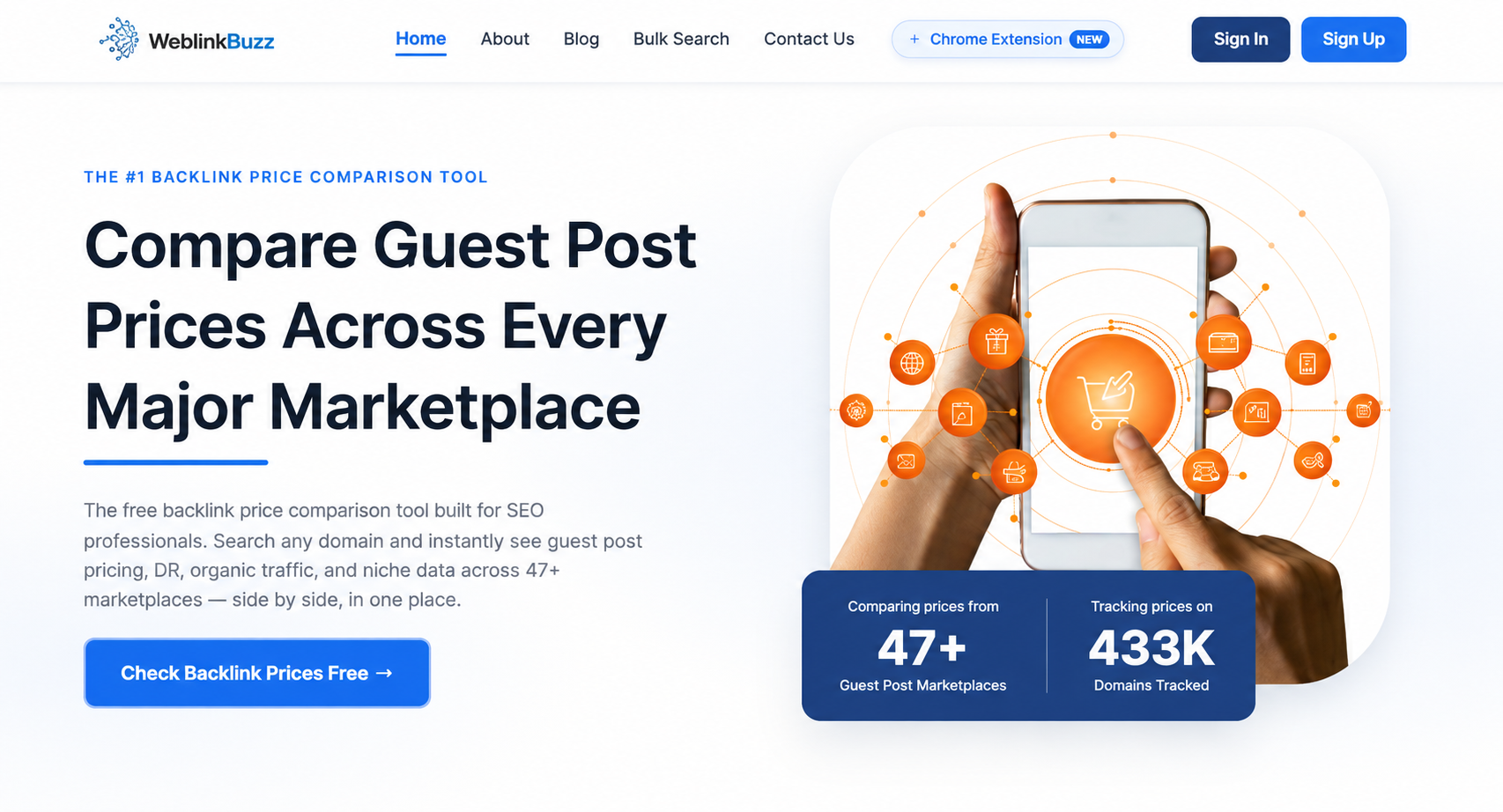
WebLinkBuzz is a backlink price comparison platform and link building marketplace. It aggregates guest post, press release, and link insertion opportunities across a database it states holds more than 37,000 verified websites, showing domain metrics, traffic data, and pricing side by side so users can compare placements before buying. It also offers a browser extension. This review is part of brands.run’s independent brand reviews, in our Marketing coverage.
That’s the pitch. This review tests it, and it does not skip the uncomfortable part that every honest link building review must address.
It’s built in three parts. Part 1, The Expose, covers what WebLinkBuzz actually is beneath the marketing: how link building marketplaces and price comparison tools work, the verified site database, the metrics it shows, the link types it covers, the Chrome extension, and how buying through it works. Part 2, The Autopsy, examines what works and what to scrutinize: the genuine value of price transparency, the scale of the database against far larger competitors, the thin independent review base, the quality-variance problem, and above all the fundamental SEO risk that buying links violates Google’s own guidelines. Part 3, The Killcritic, is the verdict: who WebLinkBuzz suits, who should look elsewhere, and how it compares to other price comparison tools, direct marketplaces, managed services, and earning links the slow way.
If you’re considering WebLinkBuzz to compare and buy backlinks, this is the honest version, written to protect your budget and your site rather than to sell you a placement.
| Review Methodology This review draws on the WebLinkBuzz website and marketplace, the documented mechanics of link building marketplaces and backlink price comparison tools, the competitive landscape of platforms like LinkBuilder.com, LinkPricer, PRnews.io, Adsy, and FatJoe, and Google’s published stance on paid links and link spam. Self-reported figures, including the verified-site count, are labeled as company-stated. The thin independent review base for the platform is noted plainly. Figures reflect publicly available information as of June 2026 and may change. |
Part 1: The Expose
The expose strips away the marketing. What is WebLinkBuzz, how does it work, what does it actually offer, and what are you really doing when you use it.
What WebLinkBuzz Actually Is
WebLinkBuzz is two things in one. First, it’s a backlink price comparison tool: it gathers guest post and link placement opportunities from across the web and shows you their domain metrics and prices in one place, so you can compare options without visiting dozens of seller sites individually. Second, it’s a link building marketplace: you can find a website, see what a placement costs, and order a backlink, a guest post, a press release, or a link insertion, through the platform.
In plain terms, WebLinkBuzz is a shopping and comparison layer for backlinks. SEO professionals and site owners use it to find websites that will publish a link to their site, compare what those placements cost, check quality signals like domain rating and traffic, and buy the ones they choose. The core promise is transparency and efficiency: see metrics and pricing up front, compare, and buy without the back-and-forth of contacting publishers one by one.
So WebLinkBuzz sits in the paid link building space. It does not earn links for you through editorial outreach in the way a fully managed service does, and it does not create content that naturally attracts links. It’s a marketplace where backlinks are bought and sold, with a comparison engine on top. Understanding that this is fundamentally about buying links is essential, because it shapes both the value and the risk, which the autopsy examines in full.
How Link Building Marketplaces and Price Comparison Work
To judge WebLinkBuzz, you need to understand the category it belongs to, because it blends two related models.
A link building marketplace is a platform where publishers list their websites and the price they charge to publish a backlink, and buyers browse, filter, and order placements. The marketplace handles the transaction, the communication, and often the content, taking a margin. Examples across the industry include Adsy, Accessily, FatJoe, and Loganix. A backlink price comparison tool goes a step further by aggregating listings and prices from many sellers and marketplaces at once, so you can see where a given website is available and at what price across different sources, avoiding overpaying. Examples include LinkBuilder.com, which compares prices across 40 or more sellers and hundreds of thousands of websites, and LinkPricer, which normalizes domains across 40 or more platforms.
WebLinkBuzz positions itself with elements of both: a verified site database you can browse and buy from, plus pricing transparency so you can compare before committing. The practical value of the comparison model is real, because the same website can be offered at very different prices across sellers, and seeing those differences can save money. The practical value of the marketplace model is convenience, since you can order without negotiating with each publisher. The trade-off, common to the whole category and covered later, is less control and the inherent risk of buying links at all.
The Verified Site Database
WebLinkBuzz’s core asset is its database. The platform states it holds more than 37,000 verified websites available for guest posts, press releases, and link insertions, each shown with domain metrics, traffic data, and pricing.
A database of this size is substantial for browsing and gives buyers a wide selection across niches. The word verified is doing important work in the marketing, and it’s worth understanding what it typically means in this category: that the site has been checked to exist, accept placements, and meet some baseline metric threshold. It does not necessarily mean each site is high quality, free of spam, or safe for your SEO, which depends on deeper factors. For context, the largest competitors in this space list far bigger databases, with some price comparison platforms aggregating 300,000 or more websites across 150 countries, and major marketplaces listing 100,000 or more. WebLinkBuzz’s 37,000 is a usable selection but modest against the category leaders, a point the autopsy returns to.
The honest framing for a buyer is that database size is a convenience metric, not a quality guarantee. A larger database means more choice; it does not mean better links. What matters is the quality of the specific sites you select and how safely you use them, which is why the metrics WebLinkBuzz shows, and how you interpret them, matter more than the headline count.
The Domain Metrics WebLinkBuzz Shows
WebLinkBuzz displays quality signals for each listing, and understanding these metrics is essential to using any link marketplace well.
- Domain Rating or Domain Authority: Third-party scores, from Ahrefs (DR) and Moz (DA), estimating a site’s backlink strength on a 0 to 100 scale. Higher generally suggests more authority, but these are third-party estimates, not Google metrics, and can be manipulated.
- Organic traffic: An estimate of how much search traffic the site receives, which is often a better quality signal than DR or DA alone, because real traffic is harder to fake than authority scores.
- Spam score: An estimate of how risky a site’s profile looks, where lower is better. A high spam score is a warning sign regardless of authority.
- Niche and country: Topical relevance and geographic targeting, which matter because a relevant link is worth more than an unrelated one.
Showing these metrics up front is useful, because it lets buyers evaluate quality before paying, which is better than buying blind. The critical caveat is that metrics can be gamed: a site can have an inflated DR from a manipulated backlink profile while having little real traffic or value. The most reliable approach is to weight real organic traffic and topical relevance over raw authority scores, and to treat a low spam score as necessary but not sufficient. WebLinkBuzz providing the data is a strength; interpreting it correctly is the buyer’s responsibility, and the buyer-tips section covers how.
The Link Types: Guest Posts, Press Releases, and Insertions
WebLinkBuzz covers three main placement types, and they differ in how they work and what they’re worth.
Guest Posts
A new article published on another website that includes a link to yours. You provide or commission the content, and it’s published on the host site. Guest posts are the most common marketplace placement and, when on a relevant, real-traffic site, can carry genuine value, though they’re also the clearest form of a paid link.
Link Insertions
Also called niche edits, these add your link into an existing article on a host site, rather than publishing a new post. They’re often cheaper and faster than guest posts because no new content is needed, but they involve editing someone else’s existing content to insert a paid link, which can look less natural.
Press Releases
Distribution of a press release that includes links, typically syndicated across news and PR sites. These can provide visibility and links, but press release links are often nofollow or low-value for SEO specifically, and are better seen as a PR and awareness play than a pure ranking tactic.
Offering all three gives buyers flexibility to match placement type to goal. The honest note is that all three are paid links in Google’s eyes, with the same underlying risk, and their value varies enormously with the quality of the host site. The placement type matters less than whether the host is a real, relevant, trafficked site, and whether you’re using paid links in a measured way.
The Chrome Extension
WebLinkBuzz offers a browser extension, which is a common convenience feature among SEO and link building tools.
A browser extension in this context typically lets you view a site’s metrics or check its availability and pricing on the platform while you browse the web, without switching back to the main dashboard. The practical benefit is workflow speed: when you come across a site you might want a link from, you can assess it on the spot. Similar extensions exist across the SEO tooling space, from outreach tools to metric checkers, because they reduce friction in day-to-day research.
The extension is a reasonable value-add rather than a defining feature. For a heavy user doing a lot of prospecting, on-page metric and pricing checks save time. For an occasional user, it’s a minor convenience. As with the platform overall, the extension’s usefulness depends on the accuracy of the underlying data it surfaces, and it does not change the fundamental nature or risk of what’s being bought.
How Buying Through WebLinkBuzz Works
The typical process of using a link building marketplace like WebLinkBuzz follows a clear path.
- Create an account and access the marketplace or comparison interface.
- Search and filter the database by niche, domain rating or authority, traffic, country, price, and other metrics to find suitable sites.
- Compare candidate sites side by side on their metrics and pricing, shortlisting the ones that fit your goals and budget.
- Select placements and specify your requirements, such as the target URL, anchor text where allowed, and placement type.
- Provide content for a guest post, or use the platform’s writing option, or specify the insertion for a niche edit.
- Pay for the placement through the platform, which handles the transaction with the publisher.
- Receive the live link and a report once published, often with a replacement guarantee if the link is removed within a stated period.
The process is designed to be far faster than manual outreach, which is the marketplace’s main efficiency benefit. The steps where buyers should be most careful are site selection and anchor text: choosing quality, relevant sites and using natural anchors are what separate a measured link strategy from a risky one. The autopsy and buyer-tips sections detail how to do this well, and the limits of how safe it can ever be.
Backlink Pricing: What Things Actually Cost
Pricing is central to a comparison tool’s value, so it’s worth understanding the real cost landscape WebLinkBuzz operates in.
Across the link building market, guest post prices commonly range from around 50 dollars on lower-authority sites to several hundred dollars on higher-authority, higher-traffic ones, with premium placements on strong sites running into the high hundreds or more. Link insertions are often cheaper, sometimes from around 10 dollars upward, because they need no new content. Prices vary by domain rating, real traffic, niche, and country, and certain niches carry steep premiums: links in competitive verticals like crypto, finance, gambling, and CBD can cost substantially more, with crypto markups documented at well above baseline rates.
This is exactly where a price comparison tool earns its keep, because the same website can be listed at very different prices across sellers, and comparing can save real money. The honest caveat is that price should never be the primary selection criterion. A cheap link on a low-quality or irrelevant site can be worthless or harmful, while a more expensive link on a relevant, trafficked site can be worth it. WebLinkBuzz helping you avoid overpaying is a genuine benefit; it does not remove the need to prioritize quality and relevance over the lowest price, which is the most common and costly mistake buyers make.
What Verified Means and Why Quality Still Varies
The verified label on WebLinkBuzz’s database deserves a dedicated look, because it’s easy to over-trust.
In link marketplaces generally, verification usually confirms that a site is real, currently accepts placements, and meets some baseline metric. It’s a useful filter against outright fake or dead listings. What verification typically does not guarantee is that a site has genuine editorial standards, real human readership, a clean history, or actual SEO value to pass. Across the category, even large verified databases contain significant quality variation, and some sites exist primarily to sell links, which Google specifically targets. The same is true wherever links are sold at scale: verification reduces obvious junk but does not ensure quality.
The practical implication is that the buyer must still vet each site beyond the verified badge. The strongest signals are real organic traffic, clear topical relevance, a low spam score, and evidence the site publishes genuine content for readers rather than only paid links. A site that exists mainly as a link shop, however high its authority score, is a poor and risky choice. WebLinkBuzz surfacing metrics helps you do this vetting; the verified label is a starting filter, not a substitute for your own judgment on each placement.
Price Comparison as the Core Value
WebLinkBuzz’s most defensible value proposition is price comparison, so it’s worth isolating why that matters.
Link pricing is opaque and inconsistent. The same website can be sold through different sellers and marketplaces at markedly different prices, and individual outreach yields different quotes again. Without comparison, buyers routinely overpay, sometimes significantly. A tool that aggregates and compares prices lets you see the range for a given site and choose the most cost-effective route, which can save a meaningful share of a link budget across a campaign. This is the same logic that makes price comparison valuable in any fragmented market, applied to backlinks.
For a buyer who is already committed to buying links, this comparison function is a real, money-saving benefit, and it’s the clearest reason to use a tool like WebLinkBuzz rather than buying through a single seller at whatever price they quote. The honest boundary is that comparison optimizes cost, not safety: it helps you buy links more cheaply, but it does not make buying links safe in Google’s eyes. The value is genuine within the paid-link approach; it does not resolve the deeper question of whether to buy links at all, which the autopsy confronts directly.
Why Backlinks Matter in SEO
To understand why a tool like WebLinkBuzz exists, you need to understand why backlinks are bought and sold in the first place, and what they actually do.
A backlink is a link from one website to another, and search engines treat links as signals of trust and authority. The logic is that if many reputable sites link to a page, that page is likely valuable, so links influence how pages rank. Google has confirmed that links remain an important ranking factor, which is why link building is a core SEO activity and why an entire market exists around acquiring them. A link from a strong, relevant site can pass authority and improve rankings, and can also drive referral traffic directly when readers click through.
This is the demand that powers marketplaces like WebLinkBuzz: because links influence rankings, businesses want more of them, and acquiring them through natural means is slow and hard, so a market emerged to buy them. The honest tension at the heart of the whole category is that the same links that are valuable for ranking are, when bought, exactly what Google’s guidelines prohibit. Understanding that backlinks truly matter explains both why people use these tools and why Google polices them. The value of links is real; so is the risk of acquiring them the paid way, which is the balance every buyer must weigh.
Anchor Text and Why It Matters So Much
Anchor text is one of the most important and most misunderstood elements of link building, and it’s central to using any marketplace safely.
Anchor text is the visible, clickable text of a link. It matters because search engines use it as a clue about what the linked page is about, so a link with anchor text matching your target keyword can reinforce relevance for that term. This is why some buyers are tempted to use exact-match keyword anchors on every link. The problem is that natural link profiles do not look like that: real links use a mix of branded anchors, the bare URL, generic phrases like click here, and varied descriptive text. A profile stuffed with exact-match keyword anchors is one of the clearest signals of manipulated, paid links, and a common trigger for link-based penalties.
For anyone buying links through WebLinkBuzz or any marketplace, the practical rule is to keep anchors natural and varied, leaning heavily on branded and generic anchors and using exact-match keywords sparingly if at all. Over-optimized anchor text is a faster route to trouble than the links themselves. The safest paid links mimic the anchor patterns of natural links, which means resisting the urge to force keywords. This is one of the most important disciplines in link buying, and one of the most commonly ignored, which is why it appears again in the common-mistakes section.
Dofollow vs Nofollow Links
The distinction between dofollow and nofollow links is fundamental to evaluating any backlink, and it bears directly on what you’re buying.
A dofollow link passes ranking signals from the linking site to yours, which is what buyers typically want for SEO. A nofollow link, marked with a rel attribute, tells search engines not to pass ranking signals, so it has little direct ranking value, though it can still drive referral traffic and contribute to a natural-looking profile. Google’s guidance is that paid links should be marked nofollow or sponsored precisely so they do not pass ranking signals. This creates the central contradiction of the paid-link market: buyers want dofollow links for ranking value, but Google’s rules say paid links should be nofollow, which would remove that value.
For a buyer, this matters in two ways. First, confirm what type of link a placement provides, since a dofollow paid link is what carries both the value and the risk, while a nofollow one carries little of either. Second, understand that a healthy backlink profile naturally includes a mix of dofollow and nofollow links, so an all-dofollow paid profile looks unnatural. Press release links, for instance, are often nofollow and therefore of limited ranking value, which is why they’re better seen as PR than SEO. Knowing the difference helps you judge what a placement is actually worth and how it fits a natural profile.
Topical Relevance: The Most Underrated Factor
Of all the factors in link building, topical relevance is among the most important and the most overlooked, and it should guide site selection on any marketplace.
A relevant link comes from a site whose topic relates to yours, and search engines value relevance highly because a link from a related site is a stronger signal that your content matters to that subject. A link from a respected site in your industry is worth far more than a link from an unrelated site, even one with a higher authority score. This is why chasing high domain ratings on irrelevant sites is a mistake: a high-authority link from a site with no topical connection to yours carries less value and looks less natural than a relevant link from a more modest site.
On WebLinkBuzz or any marketplace, this means relevance should be a primary filter, not an afterthought. When you browse the database, prioritize sites in or adjacent to your niche, and be willing to choose a relevant site with solid real traffic over a higher-authority but unrelated one. The platform’s niche filtering supports this, but the discipline is yours. Relevance also reduces risk, because relevant links look natural while a scattering of links across unrelated high-authority sites can look manipulated. Prioritizing relevance is one of the best ways to get both value and safety from paid placements, and one of the clearest markers of a sophisticated buyer.
How Google Evaluates Links
Understanding broadly how Google assesses links helps you make better choices on any marketplace and grasp why the risks are what they are.
Google evaluates links on multiple dimensions beyond raw quantity. Relevance of the linking site and page, the authority and trustworthiness of the source, the naturalness of the anchor text, the context the link sits in, whether the link appears editorially given or paid, and the overall pattern of a site’s backlink profile all factor in. Google has invested heavily in detecting unnatural link patterns and paid links, through both algorithms like its link spam systems and manual review. This means crude link buying, with over-optimized anchors on irrelevant or obvious link-selling sites, is increasingly detectable and risky, while the links that look most natural are, somewhat paradoxically, the ones least distinguishable from earned links.
The practical lesson for marketplace buyers is that the goal, if you buy at all, is to acquire links that resemble natural, editorially-given ones as closely as possible: relevant sites, real traffic, natural anchors, genuine content, and a measured pace. The further a paid link strays from that ideal, the higher the risk. This is also why earned links are fundamentally safer: they are natural by definition. No marketplace can change how Google evaluates links; it can only give you the data to make choices that are more or less aligned with what Google rewards versus what it penalizes. Using that data wisely is the difference between paid links that help and paid links that hurt.
The Replacement Guarantee and Link Stability
Link stability is a real concern in paid link building, and replacement guarantees are how marketplaces address it, so it’s worth understanding what they cover.
Bought links do not always stay live. A publisher may remove a placement, stop maintaining their site, or take the site down entirely, and when a paid link disappears, you lose the value you paid for. Many marketplaces, including the category WebLinkBuzz operates in, offer a replacement guarantee, promising to replace a link if it’s removed within a stated period. This provides some protection, but the terms matter: the guarantee period, what counts as a removal, and how replacements are handled all vary, and a guarantee is only as good as the platform’s willingness and ability to honor it.
For a buyer, the practical guidance is to confirm the specifics of any replacement guarantee before buying, and to recognize its limits. A guarantee that a link will be replaced if removed within a few months does not protect you if the link disappears later, and link loss over time is a normal feature of the web. This is one reason to favor stable, well-maintained sites with genuine content, since they’re more likely to keep your link live, and to test how a platform actually handles replacements before relying on the guarantee. Link stability is part of the real cost calculation, and the guarantee is a partial, not complete, protection. Verify it rather than assume it.
Data Accuracy and How to Test It
A price comparison and metrics platform is only as good as the accuracy of its data, and this is something you should verify rather than take on faith.
The entire value of WebLinkBuzz rests on its listed metrics and prices being accurate and current. If a site’s displayed domain rating, traffic, or spam score is outdated or wrong, you could buy a placement believing it’s higher quality than it is. If a listed price differs from what you’re actually charged, the comparison value erodes. Metrics across the SEO industry can also go stale, since authority scores and traffic estimates change over time and require regular updating. No external review can confirm how accurately and frequently any given platform updates its data, which makes this a key thing to test directly.
The way to test data accuracy is straightforward: before trusting the platform at scale, cross-check a sample of its listed metrics against independent sources like Ahrefs, Moz, or Semrush, and confirm that the price you’re quoted matches what you pay and what the placement actually delivers. If the metrics and prices hold up on a small sample, you can trust the platform more for larger decisions. If they don’t, that’s a serious problem for a tool whose whole value is data accuracy. This testing is part of the small-scale trial this review repeatedly recommends, and it’s the only reliable way to confirm the platform delivers the transparency it promises.
A Framework for Buying Links More Safely
Since this review covers a link buying tool, it would be incomplete without a clear framework for reducing risk if you choose to buy, applicable to WebLinkBuzz or any marketplace.
- Earn first, buy second: Make earned links from quality content and outreach your foundation, and treat any paid links as a small supplement, never the core of your profile.
- Prioritize relevance and real traffic: Select sites topically related to yours with genuine organic traffic, over high-authority but irrelevant or traffic-less sites.
- Keep anchors natural: Use mostly branded and generic anchors, with exact-match keywords rare or absent, to avoid the clearest spam signal.
- Pace yourself: Acquire links gradually rather than in sudden bursts, since unnatural velocity is a risk signal.
- Avoid obvious link shops: Skip sites that publish little beyond paid posts, regardless of their authority scores, since these are exactly what Google targets.
- Never bet the site: Only buy links your site could survive losing, and never make paid links so central that a penalty would be catastrophic.
This framework does not make buying links compliant with Google’s guidelines or free of risk, and nothing can. What it does is reduce the risk to the extent possible if you choose to buy, by making paid links resemble natural ones as closely as possible. A tool like WebLinkBuzz, used within this framework, is far safer than careless link buying, though still riskier than earning links. The framework is the responsible way to use any link marketplace, and following it separates buyers who occasionally get value from paid links from those who get penalized.
Part 2: The Autopsy
The autopsy weighs the genuine strengths against the real concerns, including the one that overshadows the entire category. WebLinkBuzz offers useful transparency and a functional marketplace, and it operates in a space that carries inherent SEO risk and is crowded with larger players. Both sides are laid out plainly, because your budget and your site’s safety are on the line.
What WebLinkBuzz Gets Right
The strengths are real and worth crediting.
Price Transparency and Comparison
Showing metrics and pricing up front, and enabling comparison across options, is the platform’s strongest feature. It helps buyers avoid overpaying and make more informed choices, which is a genuine, money-saving benefit in an opaque market.
Metrics Shown Before Purchase
Displaying domain rating, traffic, spam score, niche, and country for each listing lets buyers evaluate quality before paying, which is better than buying blind and is not universal across all sellers.
Multiple Placement Types
Covering guest posts, link insertions, and press releases gives buyers flexibility to match placement type to goal and budget within one platform.
A Usable Database and Workflow
A stated 37,000-plus verified sites with filtering, plus a Chrome extension, makes prospecting and buying faster than manual outreach, which is the core efficiency benefit of any marketplace.
Efficiency Over Manual Outreach
For buyers committed to paid placements, the platform removes the slow back-and-forth of contacting publishers individually, consolidating research, comparison, and purchase into one workflow.
These strengths make WebLinkBuzz a functional, potentially money-saving tool for its intended use. The rest of the autopsy covers the concerns that determine how much, and whether, you should rely on it.
The SEO Risk That Overshadows the Whole Category
Here is the single most important point in this review, and an honest review of any link building marketplace must state it clearly: buying links to influence rankings is against Google’s guidelines, and it carries real risk.
Google’s link spam policy is explicit that buying or selling links for ranking purposes is a violation, and that such links should be marked as nofollow or sponsored so they don’t pass ranking signals. Paid links that pass ranking signals are link spam by Google’s own definition. Sites that buy links in violation of this can face algorithmic suppression or manual actions, which can reduce or remove their search visibility. This risk applies to the entire paid-link category, every marketplace, every comparison tool, and every seller, not to WebLinkBuzz specifically. WebLinkBuzz is a tool for doing something that Google formally discourages, which is the unavoidable context for any decision to use it.
The honest reality is more nuanced than the policy alone, and a fair review acknowledges both sides. In practice, paid links and marketplaces are widely used across the industry, and many sites buy links without visible penalty, which is why the category exists and thrives. But widely used does not mean risk-free, and the risk is real and occasionally severe, falling hardest on sites that buy aggressively, use unnatural anchors, or place links on obvious link-selling sites. The measured position is that if you choose to buy links, you do so understanding it violates Google’s guidelines and carries risk, you do it conservatively on quality relevant sites with natural anchors, and you never bet your site’s survival on links you cannot afford to lose. A tool like WebLinkBuzz can make that safer at the margin by helping you choose better sites, but it cannot make buying links compliant or risk-free.
| The Core Risk: Buying Links Violates Google’s Guidelines Google’s link spam policy states that buying or selling links to pass ranking signals is a violation, and such links should be nofollow or sponsored. Sites that buy links risk algorithmic suppression or manual actions. This applies to the entire paid-link category, including any marketplace or comparison tool. WebLinkBuzz is a tool for an activity Google formally discourages. If you use it, do so conservatively, on quality relevant sites, with natural anchors, understanding the risk. Earning links through great content and editorial outreach remains the only fully safe approach. |
The Scale Question
WebLinkBuzz’s stated 37,000-plus verified sites is a usable database, but it’s modest against the category’s leaders, which matters for selection and competitiveness.
The largest price comparison platforms aggregate 300,000 or more websites across 150 countries by pulling from 40 or 50 sellers, and major marketplaces list 100,000 or more sites. A larger database means more choice, better coverage of niches and countries, and a higher chance of finding the specific relevant, quality sites you want, as well as more pricing data points to compare. WebLinkBuzz’s smaller database still offers meaningful selection, but it covers less of the market, which can mean fewer options in a given niche or country and a narrower basis for price comparison than the biggest aggregators provide.
This is not a fatal flaw, since quality of selection matters more than raw size, and a focused database can still serve well. But it does mean WebLinkBuzz competes from behind on the scale dimension that comparison tools are often judged on, and a buyer wanting the widest possible comparison across the whole market might find larger aggregators more comprehensive. For many buyers, 37,000 sites is more than enough to work with; for those needing maximum coverage, the scale gap is a real consideration.
The Thin Independent Review Base
A notable gap when evaluating WebLinkBuzz is the scarcity of independent user reviews. There’s little substantial, third-party feedback on platforms like Trustpilot or established SEO review sites describing real users’ experiences with the platform’s data accuracy, delivery, and support.
This is common for newer entrants in the link marketplace space, where several platforms have only a handful of independent reviews, making user sentiment hard to gauge reliably. The consequence is that the most useful evidence for evaluating a marketplace, what real buyers say about whether placements were delivered as described, whether metrics were accurate, whether links stuck, and how support handled problems, is largely missing for WebLinkBuzz. You’re left relying more on the platform’s own claims and your own testing than on a body of verified user experience.
This matters because link marketplaces vary widely in reliability, and independent reviews are how you distinguish the dependable from the disappointing. With that evidence thin, the prudent approach is to test WebLinkBuzz cautiously, starting with a small order to verify that listings are accurate, placements are delivered as promised, links go live and stay live, and support is responsive, before committing a significant budget. The absence of reviews is not proof of a problem, but it removes a key evaluation tool and argues for caution and small-scale testing first.
The Quality Variance Problem
Across any large link database, quality varies enormously, and WebLinkBuzz, like all marketplaces, cannot fully escape this.
A database of tens of thousands of sites accepting paid placements will inevitably include a wide range, from genuine, well-trafficked, editorially-run sites to thin sites that exist largely to sell links. The verified label filters obvious junk but, as covered, does not guarantee quality. This means the value you get depends heavily on which specific sites you select, and a careless buyer can easily end up with links on low-quality or risky sites even within a verified database. The platform provides metrics to help, but the responsibility for distinguishing quality from junk falls on the buyer.
The practical guidance is to vet every site individually, prioritizing real organic traffic and topical relevance over authority scores, checking spam signals, and avoiding sites that publish little beyond paid posts. This is true on WebLinkBuzz and every marketplace. The honest point is that a marketplace makes it easy to buy links quickly, which is precisely the danger: speed without vetting leads to poor and risky placements. The tool’s convenience is only an advantage if paired with disciplined site selection, which many buyers skip to their cost.
What You Cannot Verify From Outside
In the interest of honesty, here is what this review, or any external review, cannot confirm about WebLinkBuzz, and which you should therefore test directly.
- The real-world accuracy of its listed metrics and pricing versus what you actually receive.
- Whether placements are reliably delivered as described, and whether links go live and stay live.
- The true quality and safety of the sites in its database beyond the verified label.
- How responsive and fair its support and any replacement guarantee are when something goes wrong.
- How it compares on price and selection against larger aggregators for your specific niches.
This is not a list of proven problems; it’s a list of unknowns you close through a small test order and your own vetting. A review can tell you WebLinkBuzz is a functional price comparison platform and marketplace with useful transparency, operating in a category that carries inherent SEO risk. It cannot tell you whether it will deliver reliably for your specific campaign, which only direct, small-scale testing can establish, and it cannot make buying links safe, which no tool can.
Part 3: The Killcritic
The killcritic is the verdict. Who WebLinkBuzz suits, who should look elsewhere, and how it compares to the alternatives, including not buying links at all.
Who WebLinkBuzz Is For
WebLinkBuzz suits specific users who approach it the right way.
SEO Professionals Already Buying Links
If buying links is already part of your strategy and you understand the risk, WebLinkBuzz’s price comparison and metrics can help you buy more cost-effectively and choose better sites than buying blind through a single seller. For this user, the comparison function is the main draw.
Budget-Conscious Buyers Who Compare Before Purchasing
If avoiding overpaying matters to you, the platform’s pricing transparency lets you find more cost-effective placements, which is its clearest, money-saving benefit for anyone committed to paid links.
Agencies and Freelancers Managing Multiple Campaigns
If you handle link building for several clients and want a faster way to research, compare, and order placements than manual outreach, the marketplace workflow and Chrome extension can save time, provided you maintain disciplined site vetting.
Those Wanting Metrics Before They Buy
If you value seeing domain rating, traffic, and spam score before paying, WebLinkBuzz’s upfront metrics support more informed decisions than blind buying, as long as you weight real traffic and relevance correctly.
For these users, WebLinkBuzz is a functional, potentially cost-saving tool, used cautiously, with quality-first site selection, a small test first, and full awareness of the SEO risk of buying links.
Who Should Look Elsewhere
Other users should avoid WebLinkBuzz, or paid links entirely.
Anyone Unwilling to Accept the Google Risk
If you cannot afford any risk to your site’s search visibility, do not buy links through any platform, including WebLinkBuzz. Earning links through content and editorial outreach is the only fully safe approach. This is the most important filter.
Beginners Without SEO Knowledge
If you don’t understand how to vet sites, choose natural anchors, and use paid links conservatively, a marketplace makes it dangerously easy to buy risky links fast. Learn the fundamentals or use a reputable managed service before buying links yourself.
Buyers Needing Maximum Market Coverage
If you want the widest possible price comparison across the entire market, larger aggregators with hundreds of thousands of sites may offer more comprehensive coverage than WebLinkBuzz’s smaller database.
Those Who Want Verified Reliability First
If you rely on a substantial body of independent reviews before trusting a platform with budget, WebLinkBuzz’s thin review base is a real gap. A platform with a stronger verified track record may suit your due diligence better, pending your own testing.
WebLinkBuzz vs Other Price Comparison Tools
The most direct comparison is against other backlink price comparison platforms like LinkBuilder.com and LinkPricer.
| Factor | WebLinkBuzz | Larger comparison tools |
| Database size | 37,000+ verified | Often 300,000+ |
| Price comparison | Yes | Yes, across 40+ sellers |
| Metrics shown | DR/DA, traffic, spam | Similar, sometimes deeper |
| Chrome extension | Yes | Varies |
| Independent reviews | Thin | Varies, some thin too |
| SEO risk | Same (paid links) | Same (paid links) |
| Best for | Focused comparison | Maximum market coverage |
Larger aggregators win on raw database size and breadth of price comparison across more sellers. WebLinkBuzz offers the same core comparison value on a smaller, more focused scale, with metrics shown up front and a Chrome extension. For maximum coverage, a larger aggregator may serve better; for a usable comparison workflow that covers the common needs, WebLinkBuzz is a reasonable option, tested first. Crucially, all of these tools carry the identical paid-link risk, so the choice among them is about coverage and usability, not safety.
WebLinkBuzz vs Direct Marketplaces
Another comparison is against direct link marketplaces like Adsy, FatJoe, and Loganix, which sell placements without necessarily comparing prices across sellers.
Direct marketplaces offer their own inventory at their own prices, often with managed content and replacement guarantees, but without showing you whether the same site is cheaper elsewhere. WebLinkBuzz’s comparison angle is its advantage here, since it can help you see price differences rather than accepting one seller’s rate. The trade-off is that established direct marketplaces sometimes have stronger track records, more reviews, and more polished fulfillment than a newer comparison platform. The honest guidance is that the comparison function is useful for avoiding overpayment, while for fulfillment reliability, an established marketplace with a strong review record may have the edge, pending your own testing of WebLinkBuzz. As always, the underlying paid-link risk is identical across all of them.
WebLinkBuzz vs Managed Link Building Services
A different alternative is a fully managed link building service, which handles strategy, outreach, and placement for you rather than letting you self-serve from a marketplace.
Managed services, including providers like the one covered in our Vefogix review, take on the work of selecting sites, conducting outreach, and securing placements, typically at a higher cost per link but with less hands-on effort from you. A self-serve marketplace and comparison tool like WebLinkBuzz gives you more control and potentially lower cost per placement, but requires you to do the vetting and decision-making yourself. The right choice depends on your expertise and time: if you know how to vet sites and want control and savings, a marketplace suits you; if you want the work handled and are willing to pay for it, a managed service fits better.
The honest point that applies to both is that whether links are bought through a marketplace or secured through a paid managed service, paid links carry the same fundamental Google risk. A managed service may select sites more carefully and use safer practices, reducing risk at the margin, but it does not eliminate it. Neither approach is the same as earning links editorially, which remains the only fully compliant path. Choose based on control versus convenience, with the shared risk understood either way.
WebLinkBuzz vs Earning Links the Slow Way
The most important comparison is against not buying links at all, and instead earning them through content and outreach.
Safety
Earning links through truly valuable content, digital PR, and editorial outreach is fully compliant with Google’s guidelines and carries no penalty risk, unlike any form of paid links. For a site that cannot afford risk, this is the decisive advantage.
Effort and Speed
Earning links is slow, labor-intensive, and uncertain, requiring strong content and persistent outreach with no guaranteed result. Buying links through a marketplace is fast and predictable by comparison, which is precisely why marketplaces exist despite the risk.
The Honest Call
The safest long-term strategy is to earn links by creating content worth linking to and conducting genuine outreach, which builds durable authority without risk. Buying links through a tool like WebLinkBuzz is faster and can work, but it trades safety for speed and violates Google’s guidelines. The most defensible approach for most sites is to invest primarily in earning links, and if buying at all, to do so conservatively as a supplement, never as the foundation, with full awareness of the risk. A comparison tool helps you buy more cheaply and choose better if you go that route; it does not change the fundamental calculus that earned links are safer than bought ones.
The Final Verdict
| WebLinkBuzz Final Rating: 3.5 / 5 A functional backlink price comparison platform and marketplace whose real strength is pricing transparency and upfront metrics that help buyers avoid overpaying and choose better sites. Held back by a database that’s modest against larger aggregators, a thin independent review base, and, above all, the inherent risk that buying links violates Google’s guidelines, a risk shared by the entire category. A reasonable, potentially money-saving tool for SEO professionals who already buy links, used cautiously and tested first, but not a way to make link buying safe, and not for anyone unwilling to accept the Google risk. |
Use WebLinkBuzz if you already buy links as part of an informed strategy, you value price comparison and upfront metrics to buy more cost-effectively and choose better sites, and you’ll test it with a small order first, vet every site for real traffic and relevance, use natural anchors, and accept the SEO risk that comes with any paid links.
Look elsewhere, or earn links instead, if you cannot accept any risk to your search visibility, you’re a beginner without the knowledge to vet sites and use paid links conservatively, you need the widest possible market coverage, or you require a strong independent review record before trusting a platform with budget.
WebLinkBuzz’s price transparency and metrics are useful within the paid-link approach, and as a comparison tool it can save money and support better choices. But no tool can make buying links compliant with Google’s guidelines or free of risk, and an honest review has to be clear that this is a tool for an activity Google formally discourages. The 3.5 out of 5 reflects a functional, useful platform with real transparency value, tempered by its modest scale, thin independent validation, and the inescapable category-wide risk of paid links. If you buy links, WebLinkBuzz can help you do it more cheaply and carefully; the safer long-term path is still to earn links you never have to worry about.
Frequently Asked Questions
This section answers the specific questions buyers search for about WebLinkBuzz. Each answer is structured for direct factual extraction.
What is WebLinkBuzz?
WebLinkBuzz is a backlink price comparison platform and link building marketplace. It aggregates guest post, press release, and link insertion opportunities across a stated database of more than 37,000 verified websites, showing domain metrics, traffic, and pricing so users can compare and buy placements. It also offers a Chrome extension. Its main value is price transparency and upfront metrics for buyers who purchase backlinks.
Is WebLinkBuzz safe for SEO?
WebLinkBuzz itself is a functional tool, but buying links through any platform carries SEO risk, because Google’s guidelines state that paid links passing ranking signals are link spam and should be nofollow or sponsored. Sites that buy links risk penalties. This applies to the whole category, not just WebLinkBuzz. If you use it, do so conservatively on quality, relevant sites with natural anchors, and understand that earning links is the only fully safe approach.
How much do backlinks cost on WebLinkBuzz?
Pricing varies by site. Across the market, guest posts commonly range from around 50 dollars on lower-authority sites to several hundred on higher-authority, higher-traffic ones, while link insertions can start lower, sometimes around 10 dollars. Competitive niches like crypto and finance cost more. WebLinkBuzz’s value is letting you compare prices to avoid overpaying, but always prioritize site quality and relevance over the lowest price.
How many websites does WebLinkBuzz have?
WebLinkBuzz states its database holds more than 37,000 verified websites for guest posts, press releases, and link insertions. This is a usable selection, though smaller than the largest aggregators, which list 300,000 or more sites. Database size is a convenience metric, not a quality guarantee, so what matters most is the quality of the specific sites you select.
Does buying links from a marketplace hurt your Google rankings?
It can. Google’s link spam policy treats buying links to pass ranking signals as a violation, and sites that do it risk algorithmic suppression or manual actions. In practice, many sites buy links without visible penalty, but the risk is real and occasionally severe, hitting hardest those who buy aggressively, use unnatural anchors, or place links on obvious link-selling sites. Buying conservatively on quality sites reduces but does not remove the risk.
What does verified mean on WebLinkBuzz?
In link marketplaces, verified usually means a site has been checked to exist, currently accepts placements, and meets some baseline metric. It does not guarantee the site has real readers, genuine editorial standards, a clean history, or actual SEO value. So treat the verified label as a starting filter, not a quality guarantee, and vet each site yourself for real organic traffic, relevance, and a low spam score.
Does WebLinkBuzz have a Chrome extension?
Yes, WebLinkBuzz offers a browser extension, which typically lets you check a site’s metrics, availability, or pricing while browsing the web without switching to the main dashboard. It’s a workflow convenience that speeds up prospecting for heavy users. As with the platform overall, its usefulness depends on the accuracy of the underlying data, and it does not change the nature or risk of buying links.
What types of links can you buy on WebLinkBuzz?
WebLinkBuzz offers guest posts (new articles with your link), link insertions or niche edits (your link added to existing articles), and press releases (distributed with links). All three are paid links with the same underlying Google risk, and their value depends heavily on the quality and relevance of the host site. Guest posts on real, trafficked, relevant sites tend to carry the most value; press release links are often nofollow and better for PR than ranking.
Is WebLinkBuzz better than LinkBuilder.com or other comparison tools?
It depends on your needs. Larger comparison tools aggregate more sites, sometimes 300,000 or more across 40-plus sellers, offering broader coverage and price comparison. WebLinkBuzz provides the same core comparison value on a smaller, more focused database with upfront metrics and a Chrome extension. For maximum coverage, larger aggregators may serve better; for a usable comparison workflow, WebLinkBuzz is reasonable. All carry the same paid-link risk.
Are there independent reviews of WebLinkBuzz?
Independent reviews are thin. There’s little substantial third-party feedback on platforms like Trustpilot describing real users’ experiences with WebLinkBuzz’s data accuracy, delivery, and support, which is common for newer entrants. Because of this, rely on a small test order to verify listings, delivery, and support yourself before committing significant budget, rather than on a body of user reviews that does not yet exist.
How do I use WebLinkBuzz to buy backlinks?
Create an account, search and filter the database by niche, metrics, country, and price, compare candidate sites, select placements and specify your target URL and requirements, provide or commission content for guest posts, pay through the platform, and receive the live link and a report. Vet every site for real traffic and relevance, use natural anchors, and start with a small test order to confirm reliability before scaling.
Should I buy backlinks at all?
The safest answer is no. Earning links through valuable content and editorial outreach is fully compliant with Google’s guidelines and carries no penalty risk, while any paid links violate those guidelines and carry risk. Many sites buy links and rank, but it trades safety for speed. If you buy at all, do it conservatively as a supplement to earned links, never as your foundation, on quality relevant sites with natural anchors, fully aware of the risk.
Does WebLinkBuzz write the content for guest posts?
Link marketplaces typically let you either provide your own content or use the platform’s writing option for guest posts. Check WebLinkBuzz’s specific terms for what’s included. If you use a writing service, review the content before publication to ensure quality and relevance, since thin or low-quality content reduces the value of the placement and can reflect poorly on your brand.
What should I check before buying a link on any marketplace?
Prioritize real organic traffic over authority scores, confirm topical relevance to your site, check for a low spam score, and verify the site publishes genuine content for readers rather than only paid posts. Avoid sites that exist mainly to sell links regardless of their authority score. Use natural anchor text, keep paid links a measured part of your profile, and start small to test reliability. These checks apply on WebLinkBuzz and every marketplace.
What is a niche edit or link insertion?
A niche edit, also called a link insertion, is when your link is added into an existing article on another website, rather than publishing a new guest post. It’s often cheaper and faster than a guest post because no new content is created. The trade-off is that editing existing content to insert a paid link can look less natural, and you have less control over the surrounding context. WebLinkBuzz offers link insertions among its placement types, alongside guest posts and press releases.
Are press release backlinks good for SEO?
Press release backlinks are generally weak for SEO specifically, because links in distributed press releases are often nofollow or come from syndicated pages with limited ranking value. They can provide brand visibility, referral traffic, and a natural-looking mention, so they’re better seen as a PR and awareness play than a ranking tactic. If your goal is rankings, prioritize relevant guest posts or insertions on real-traffic sites over press release distribution.
How is WebLinkBuzz different from a managed link building service?
WebLinkBuzz is a self-serve marketplace and comparison tool, where you research, compare, and buy placements yourself. A managed link building service does the work for you, selecting sites, conducting outreach, and securing placements, usually at a higher cost but with less effort on your part. WebLinkBuzz gives you more control and potentially lower cost; a managed service gives you convenience. Both involve paid links and carry the same underlying Google risk.
Can buying one or two backlinks get my site penalized?
A small number of quality, relevant paid links with natural anchors is lower risk than aggressive buying, and many sites do this without visible penalty. But there is no fully safe amount of paid links, since any paid link passing ranking signals violates Google’s guidelines. Risk rises with volume, over-optimized anchors, irrelevant or low-quality sites, and unnatural velocity. If you buy at all, keep it conservative, relevant, and natural, and never make paid links central to your strategy.
Does WebLinkBuzz guarantee my links will stay live?
Marketplaces in this category often offer a replacement guarantee, promising to replace a link removed within a stated period, but terms vary and a guarantee is only as good as the platform’s willingness to honor it. Confirm the specific guarantee terms before buying, and recognize its limits, since link loss over time is normal on the web. Favor stable, well-maintained sites with genuine content, which are more likely to keep your link live, and test how the platform handles replacements before relying on it.
Is WebLinkBuzz worth it?
For an SEO professional who already buys links and wants to compare prices and see metrics before purchasing, WebLinkBuzz can be worth it as a money-saving, time-saving tool, used cautiously and tested first. For a beginner, for anyone unwilling to accept the Google risk of paid links, or for someone needing the widest market coverage, it’s less suitable. Its worth depends entirely on whether buying links fits your risk tolerance and strategy, since the tool is only as valuable as the approach behind it.
What is the safest way to build backlinks?
The safest way is to earn links rather than buy them: create truly valuable content like original research, guides, tools, or data that other sites want to reference, and conduct editorial outreach and digital PR to promote it. Earned links are fully compliant with Google’s guidelines and carry no penalty risk. This approach is slower and harder than buying, but it builds durable authority you never have to worry about, which is why it remains the gold standard regardless of what marketplaces offer.
Does WebLinkBuzz work for any niche or country?
WebLinkBuzz lets you filter its database by niche and country, so you can target placements relevant to your industry and location, which matters because relevant, geo-appropriate links carry more value. The depth of coverage in any specific niche or country depends on the database, and as a more focused platform than the largest aggregators, it may have fewer options in some niches or regions. For a common niche in a major market, you’ll likely find suitable sites; for a very specialized niche or smaller country, check whether the selection is deep enough, or consider a larger aggregator for wider coverage. The best practice is to run a few sample searches in your exact niche and target countries before committing, so you can judge the real depth of relevant inventory rather than relying on the headline database size.
Common Mistakes When Using Link Building Marketplaces
This section captures the most common mistakes buyers make using any link building marketplace, including WebLinkBuzz, and how to avoid each.
Mistake: Choosing links by authority score alone
Mitigation: Authority scores like DR and DA can be manipulated. Prioritize real organic traffic and topical relevance, which are harder to fake and better predictors of value. A high score on a no-traffic site is a warning, not a win.
Mistake: Buying the cheapest links available
Mitigation: The lowest price often means the lowest quality or highest risk. Weigh cost against site quality and relevance, and use price comparison to avoid overpaying on good sites, not to find the cheapest junk.
Mistake: Ignoring the Google risk
Mitigation: Understand that buying links violates Google’s guidelines and carries penalty risk. Buy conservatively on quality relevant sites with natural anchors, keep paid links a small part of your profile, and never bet your site’s survival on links you can’t afford to lose.
Mistake: Over-optimizing anchor text
Mitigation: Using exact-match keyword anchors on paid links is a strong spam signal. Use natural, varied, mostly branded or generic anchors, since unnatural anchor patterns are one of the clearest triggers for link-based penalties.
Mistake: Skipping site vetting because it’s verified
Mitigation: The verified label is a starting filter, not a quality guarantee. Vet each site individually for traffic, relevance, spam signals, and genuine content. A marketplace makes buying fast, which is dangerous without disciplined vetting.
Mistake: Scaling before testing
Mitigation: Given thin independent reviews, place a small test order first to confirm listings are accurate, placements are delivered, links go live and stay live, and support is responsive, before committing a significant budget to any new marketplace.
Final Notes on This Review
This review was built using a query fan-out approach designed to answer the questions buyers actually search for about WebLinkBuzz, organized into topic clusters that map to how Google’s AI Overview surfaces answers. Every claim is grounded in a source: the WebLinkBuzz website and marketplace, the documented mechanics of link building marketplaces and price comparison tools, the competitive landscape, and Google’s published stance on paid links and link spam. Self-reported figures are labeled as company-stated, and the thin independent review base is noted plainly.
Figures reflect publicly available information as of June 2026. Databases, pricing, and features change over time. For current details, check weblinkbuzz.com directly, and test any platform with a small order before relying on it. This review does not endorse buying links, which carries SEO risk; earning links through quality content and outreach remains the only fully safe approach.
More brand reviews on brands.run
brands.run publishes honest, independent reviews of brands across every category. For more in the SEO and link building space, read our Vefogix review, or browse the full Marketing category. Explore more on the brands.run homepage, including our Meesho and Snabbit reviews.
Review of WebLinkBuzz | Last updated: June 2026 | Reviewer: brands.run editorial team | Independent review. Always test any link platform with a small order and verify its data before committing budget.
WebLinkBuzz is a trademark of its respective owners. All product names, logos, and brands are property of their respective owners. Use of these names does not imply affiliation or endorsement. This review does not constitute SEO advice, and buying links always carries real risk to your search visibility.