
An honest, deeply researched review of SpaceX, covering reusable rockets, Starlink internet, the Starship program, the record IPO, the safety and environmental concerns, Musk’s control, the xAI merger, and the verdict for 2026
Thank you for reading this post, don't forget to subscribe!Published by brands.run | The independent brand review hub
Reviewed Brand: SpaceX | Sector: Space, Satellites, and AI | Headquarters: Starbase, Texas, USA | Website: spacex.com
SpaceX is the company that changed spaceflight, the maker of reusable rockets, the operator of the Starlink satellite internet network, and as of 2026 a newly public company carrying one of the largest valuations in the world. Founded in 2002 by Elon Musk to make space travel cheaper and ultimately settle Mars, SpaceX now spans rocket launches, global internet, human spaceflight, and, after a 2026 merger, artificial intelligence. This review is part of brands.run’s independent brand reviews, covering the companies and platforms that shape how we live and connect.
For sheer achievement, SpaceX is extraordinary. It launches more rockets than the rest of the world combined, it pioneered reusable boosters that slashed the cost of orbit, its Dragon capsule is the only American vehicle carrying astronauts to the space station, and Starlink brought fast internet to millions who had little or none. That record earns real credit. But SpaceX in 2026 is also under serious scrutiny: a Starship program marked by repeated test explosions and schedule slips, a worker-safety record regulators and journalists have flagged, documented environmental problems at its Texas site, labor-law findings, questions about Starlink and the night sky and its use of customer data, a consolidated business running at a loss with its founder warning of bankruptcy risk, and a governance structure that concentrates enormous control in one person. An honest review holds both the historic accomplishment and the serious concerns together.
This review has three parts. The Expose covers what SpaceX is: its history, rockets, Starship, Starlink, the AI merger, scale, and how it makes money. The Autopsy weighs what it gets right, the reusability revolution and Starlink’s reach, against the test failures, the safety and environmental concerns, the labor questions, the financial risk, and the concentration of control. The Killcritic is the verdict: who its products suit, who should be cautious, how Starlink compares, and how to think about the company and its stock.
If you are wondering whether Starlink is worth it, what the Starship explosions mean, whether SpaceX is safe and responsible, who really controls the company, or how to think about its record-breaking stock, this is the honest version, written to help you understand it with your eyes open and to handle the contested parts fairly.
| Review Methodology This review draws on SpaceX’s public information, independent reporting and analysis, public financial filings and market data, regulatory actions, and user feedback. Where figures like valuation, revenue, and the stock price are cited, they reflect the most recent public data and move very fast, so verify current numbers before relying on them. Serious matters such as worker safety, environmental concerns, and labor findings are reported factually, alongside SpaceX’s responses, and politically charged topics around its founder are treated neutrally. This review is informational and not investment advice. Products, prices, and the company’s status change frequently, so confirm current details before subscribing or investing. |
Part 1: The Expose
The expose lays out what SpaceX actually is: where it came from, what it builds, the rockets and the satellites, the AI turn, how big it has become, and how it makes money.
What SpaceX Actually Is
SpaceX, formally Space Exploration Technologies, is an American company headquartered at its Starbase site in Texas that designs and launches rockets, operates a global satellite internet network, and, since a 2026 merger, develops artificial intelligence. In plain terms, it does several big things at once: it flies rockets carrying satellites, cargo, and astronauts for itself and for customers like NASA and the United States military; it runs Starlink, thousands of satellites beaming internet to homes, businesses, ships, and remote places worldwide; and it now owns an AI business with a chatbot and a social platform. The founding purpose, set by Elon Musk, was to reduce the cost of space travel enough to make humanity a multi-planet species, with settling Mars as the long-term goal.
What makes SpaceX distinctive is the mix of audacious ambition, real technical breakthroughs, and the outsized role of its founder. It achieved what many thought impossible, landing and reusing rockets, while dramatically undercutting the cost of spaceflight and reshaping the industry. At the same time, it is tightly bound to Elon Musk, who controls it, leads its engineering, and shapes its direction, which means the company’s fortunes and reputation are deeply tied to one person. SpaceX is, in short, both one of the most successful and important technology companies of its era and a company whose concentration of power, aggressive pace, and real-world impacts attract serious scrutiny, and much of what this review examines comes from being both at once.
For most people, SpaceX touches their lives in two ways: through the spectacle of its rockets and space missions, or directly through Starlink if they are a customer. It is now broader than just rockets and Starlink, spanning launch, connectivity, and AI. Understanding SpaceX means appreciating both how revolutionary its core achievements are and how seriously its safety, environmental, labor, financial, and governance choices are questioned, the balance this review tries to strike.
History and Founding
SpaceX was founded in 2002 by Elon Musk, funded with much of the fortune he made from an early online payments company. His aim was to drastically cut the cost of reaching space, partly out of frustration that no one was seriously pursuing Mars, and the early years were a struggle. Its first rocket failed on its first three attempts, nearly bankrupting the company, before a successful fourth flight in 2008 saved it and led to a pivotal NASA contract. From there SpaceX developed the Falcon 9, its workhorse, and pursued the breakthrough that would define it: landing and reusing boosters, first achieved in the mid-2010s, transforming the economics of spaceflight.
Building on that, SpaceX expanded rapidly. It began carrying cargo and then astronauts to the space station for NASA, the first private company to do so. It grew Starlink into the largest satellite constellation ever built, its biggest revenue source. It began developing Starship for the Moon, Mars, and beyond. And in 2026 it acquired Musk’s AI company in an all-stock deal and went public in one of the largest market debuts in history. From a near-bankrupt startup, it became one of the most valuable companies in the world.
This history matters for two reasons. First, the reusability breakthrough is the foundation of everything SpaceX does, and understanding that the company’s central achievement was making rockets reusable explains its cost advantage and its dominance. Second, the arc from near-failure to extraordinary success, driven by a willingness to take big risks and tolerate failure along the way, explains both the company’s culture of rapid, aggressive development and some of the concerns the autopsy examines, since the same risk tolerance that enabled its breakthroughs also shows up in test explosions, schedule pressure, and questions about safety and impact. Both the triumph and the friction trace back to this founding story.
Leadership
SpaceX is led by Elon Musk and Gwynne Shotwell, and understanding their roles helps explain the company.
Elon Musk is the founder, chief executive, and chief engineer, deeply involved in technical and strategic decisions, and controls the company through his ownership and voting power. He is also one of the most prominent and polarizing figures in the world, leading several other companies and active in public and political life, so SpaceX is closely associated with him and affected by his choices. Gwynne Shotwell, president and chief operating officer, is widely credited with running the day-to-day business and its crucial commercial and government operations. This pairing of visionary founder and respected operational leader has been central to SpaceX’s success.
For a user or observer, the relevance is twofold. On one hand, SpaceX benefits from truly capable, ambitious leadership that has driven historic achievements, with Shotwell in particular earning respect for steady execution. On the other hand, the company’s tight identification with Elon Musk is a double-edged thing: his vision and drive have been essential, but his control, his polarizing public profile, and the concentration of power in his hands are themselves sources of concern, which the autopsy examines. The honest framing is that SpaceX’s leadership has been a major strength behind its success, and that the dominance of a single, controversial founder is also a genuine risk factor that is part of understanding the company, both of which are real.
The Rockets: Falcon and Dragon
At the core of SpaceX’s business are its rockets and spacecraft, and knowing the main ones helps you understand what the company actually does.
- Falcon 9: the workhorse rocket that carries most of the company’s launches, famous for landing its booster back on the ground or a ship at sea so it can be reused, which is the key to SpaceX’s low costs and high launch rate.
- Falcon Heavy: a larger, more powerful version made of three Falcon cores, used for heavier payloads and more demanding missions, also partly reusable.
- Dragon: the capsule that rides atop a Falcon 9 to carry cargo and, importantly, astronauts to and from the International Space Station, making SpaceX the only American provider of crewed spaceflight to the station.
- Starlink launches: a large share of Falcon 9 flights carry batches of the company’s own Starlink satellites, which is how SpaceX built and keeps replenishing its internet constellation.
These vehicles are the foundation of SpaceX’s dominance. The reusable Falcon 9 in particular is a real engineering triumph that lets the company launch far more often and cheaply than rivals, which is why it carries so much of the world’s commercial and government launch business. Dragon’s role carrying astronauts is historic, restoring an American capability that had lapsed. For an observer, the practical point is that SpaceX’s rockets work extraordinarily well and reliably at their core job, the bedrock of its strong reputation and revenue, even as the newer, far more ambitious Starship program is where the risk and controversy concentrate. The proven success of Falcon and Dragon is real and should not be overshadowed by the growing pains of Starship.
Starship: The Big Bet
The most ambitious and most scrutinized part of SpaceX is Starship, the giant rocket intended to define the company’s future, and understanding it explains both the excitement and the concern.
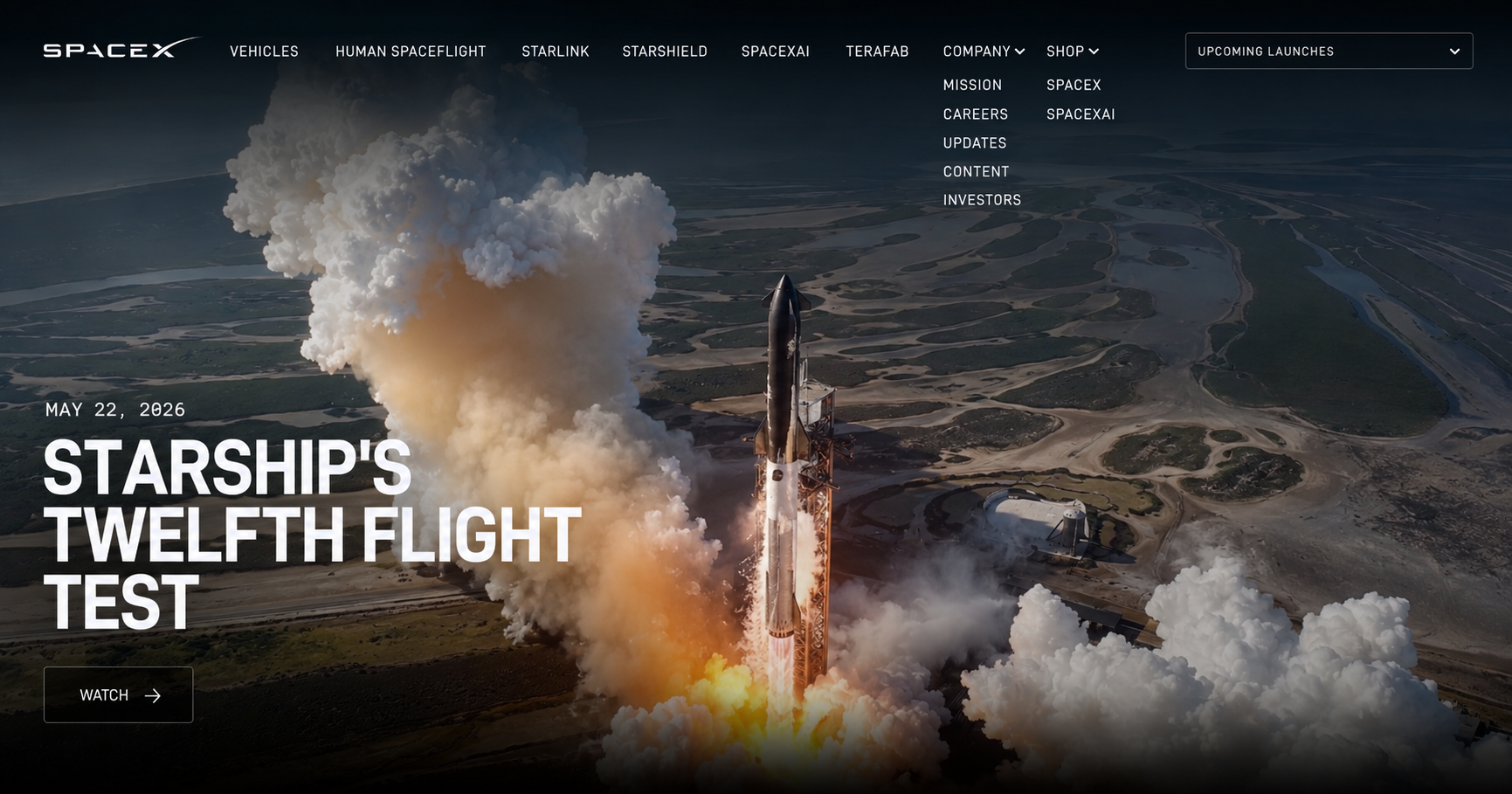
Starship is the largest and most powerful rocket ever built, designed to be fully reusable and to carry very large payloads and, eventually, many people to the Moon, Mars, and beyond. It is central to SpaceX’s vision and to plans including a contract to land NASA astronauts on the Moon. SpaceX develops it using a rapid, iterative test-and-learn approach, flying prototypes, accepting that many will fail, and learning quickly. This has produced dramatic milestones, including catching a returning booster with the launch tower’s arms, alongside test flights that have ended in explosions, which is partly by design but also a sign of how hard the challenge is.
The honest framing holds the promise and the problems together. On one hand, Starship is a truly audacious and potentially transformative project, its successes are remarkable feats of engineering, and the test-and-learn approach that produces visible failures has also produced rapid progress that more cautious methods might not, so the explosions are not simply failures but part of a deliberate, fast development path. On the other hand, the program has experienced repeated setbacks, has reportedly fallen behind schedule, with the planned Moon landing slipping, and has drawn federal scrutiny over both timelines and safety, so the challenges are real and consequential, not just cosmetic. The fair takeaway is that Starship is a bold, important program with real achievements and real difficulties, that its development style means visible failures are expected, and that whether it meets its ambitious goals on a reasonable timeline remains an open and high-stakes question. For an observer, the practical point is to view Starship as a remarkable work in progress whose ultimate success is not yet proven, and which carries both enormous potential and real risk for the company.
Starlink: The Revenue Engine
The part of SpaceX that most directly touches ordinary people, and that drives most of its revenue, is Starlink, the satellite internet network, and understanding it explains much of the company’s business.
Starlink is a network of thousands of low-orbit satellites providing high-speed internet to homes, businesses, vehicles, ships, and remote locations across more than 160 countries and markets, with over ten million customers. Its key advantage is fast, relatively low-latency internet where cable and fiber cannot easily or affordably reach, which has been transformative for rural and remote users, for connectivity at sea and in disaster zones, and increasingly for direct-to-phone service. It is SpaceX’s largest revenue source and only consistently profitable segment, funding the company’s costlier ambitions, and SpaceX builds and launches the satellites itself, an advantage rivals struggle to match.
For a user, Starlink’s appeal is concrete and real. On one hand, it truly solves a hard problem, bringing usable, fast internet to people and places long underserved, which is a meaningful benefit that has changed lives and opened up connectivity where little existed, and its performance and coverage are strong for satellite internet. On the other hand, Starlink has real considerations the autopsy examines, including its cost relative to ground options where those exist, the impact of its satellites on astronomy and the night sky, the crowding of orbit, and questions about how it uses customer data, so it is not without downsides. The honest framing is that Starlink is a truly valuable, often best-in-class option for those without good alternatives, that it has been transformative for connectivity, and that it carries real considerations around cost, impact, and data that users should weigh, which the later sections address. For now, the key point is that Starlink is both SpaceX’s most important business and a truly useful service for millions.
The xAI Merger and AI Ambitions
A major and relatively new dimension of SpaceX is artificial intelligence, following its 2026 acquisition of Elon Musk’s AI company, and understanding it helps explain the company’s current shape and some new concerns.
In early 2026, SpaceX acquired xAI, Musk’s AI company, in an all-stock deal that made it a wholly owned subsidiary, bringing an AI chatbot, the social media platform it owned, and AI infrastructure under SpaceX. The stated rationale is to combine space and satellite capabilities with AI, including building AI data centers in space to overcome the power and cooling limits of facilities on Earth. The merger broadened SpaceX into AI and social media and consolidated several of Musk’s ventures under one balance sheet ahead of the listing. It also added significant costs, since the AI business consumes large amounts of capital, contributing to the company’s consolidated losses.
The honest framing notes both the strategic logic and the concerns. On one hand, there is a genuine strategic rationale: combining AI with satellite and launch capabilities could open new possibilities, consolidating Musk’s ventures may create synergies, and ambitions like space-based data centers, while speculative, fit SpaceX’s pattern of pursuing hard, futuristic goals. On the other hand, the merger drew scrutiny on several fronts, including that it was reportedly structured in part to manage debt and legal exposure tied to the AI company’s ownership of the social platform, that it added a heavily loss-making business to SpaceX’s books, and that it further concentrated Musk’s overlapping interests, raising conflict-of-interest and governance questions. The fair takeaway is that the AI merger is a bold strategic move with real potential and real complications, that it broadened and complicated the company, and that its wisdom and its conflicts are truly debated. For an observer, the practical point is that SpaceX is now an AI and social media company as well as a space company, which adds both ambition and risk to the picture.
How Big SpaceX Has Become
The scale of SpaceX is enormous, and the numbers explain why it matters so much, even if they move fast and should be checked against current sources, especially after its public listing.
By 2026, SpaceX had gone public in what was reported as the largest IPO in history, carrying a valuation in the trillions of dollars and briefly trading among the world’s most valuable companies before its stock pulled back from early highs. It launches more rockets than the rest of the world combined, set repeated annual launch records, and operates the only American crewed spacecraft serving the space station. Starlink has surpassed ten million customers. Revenue had grown into the high tens of billions of dollars, driven mainly by Starlink, though on a consolidated basis, including heavy spending and its AI business, it was running at a net loss. Its founder, who retains majority control, was widely expected to become the world’s first trillionaire.
This scale signals that SpaceX is one of the most important and powerful companies in the world, central to spaceflight, to global connectivity, and increasingly to AI, with resources and capabilities that rivals struggle to match. It also frames the autopsy’s concerns, because a company this dominant, this central to critical infrastructure, this aggressive in its spending and ambitions, and this tightly controlled by one person inevitably attracts intense scrutiny over its finances, its impacts, and its governance. For an observer or potential investor, the practical point is that SpaceX is a truly dominant and historically significant company, and also one whose enormous valuation, consolidated losses, concentration of control, and real-world impacts make it a complex and much-debated proposition, which the later sections examine. The dominance is real, and so is the scrutiny that comes with it.
How SpaceX Makes Money
Understanding how SpaceX makes money explains its priorities and why Starlink has become so central.
SpaceX earns from several sources. The largest is Starlink subscriptions, its main revenue engine and only reliably profitable segment. Next is its launch business, the fees it charges to carry satellites and cargo for commercial customers and for government customers like NASA and the military, including national-security missions. Its newer AI business adds some revenue but consumes far more capital than it brings in. The company also has large government contracts for crewed flights and lunar hardware. The common thread is that Starlink’s growing income, plus launch fees and government work, fund the enormous investments in Starship and AI, which is why Starlink’s success matters to the whole enterprise.
For an observer, this revenue model explains a great deal. Starlink’s profitability effectively subsidizes the rest of the company, including the loss-making Starship development and AI business, which is why SpaceX has pushed to grow Starlink subscribers and, more recently, to raise prices and monetize its existing base. The reliance on government contracts ties the company closely to NASA and the military, which is both a stable revenue source and a source of some controversy. The honest framing is that SpaceX makes money chiefly from Starlink subscriptions and from launching things for commercial and government customers, and uses that income to fund hugely expensive bets on Starship and AI, which is why it runs at a consolidated loss despite strong revenue. Understanding that Starlink pays the bills helps explain both the company’s priorities and the financial risk the autopsy examines, since the whole structure depends on Starlink continuing to grow and on the expensive bets eventually paying off.
| Why SpaceX Runs at a Loss Despite Huge Revenue SpaceX brings in tens of billions of dollars, mostly from Starlink, yet on a consolidated basis it has been running at a net loss. The reason is its enormous spending: developing Starship is hugely expensive, and the AI business it acquired burns large amounts of capital. In effect, Starlink’s profits are funding ambitious, costly bets on the future. This is a deliberate strategy, and many fast-growing technology companies spend heavily before turning a profit, but it carries real risk, and the company’s founder has himself warned of bankruptcy risk if key goals, like a high Starship flight rate, are not met. For an investor, the practical point is that SpaceX is a high-ambition, high-spending, high-risk proposition whose profitability depends on its big bets succeeding. |
Part 2: The Autopsy
The autopsy weighs SpaceX’s genuine strengths against its real, documented concerns. Its core achievements are historic and its products often best-in-class, and the company faces serious questions about test failures, worker safety, environmental impact, labor practices, finances, and the concentration of control. Both the accomplishment and the concerns are real, and because of that, both get full and even-handed treatment, with sensitive and contested matters handled factually and without taking a political side.
What SpaceX Gets Right
The strengths are real, historic, and explain why SpaceX is so dominant and admired.
The Reusability Revolution
SpaceX achieved what others could not, landing and reusing rocket boosters, which dramatically cut the cost of reaching space. This is a true, historic engineering breakthrough that reshaped the entire industry and remains the foundation of the company’s dominance.
Unmatched Launch Dominance
SpaceX launches more rockets than the rest of the world combined, with a reliability and cadence no rival approaches. For customers needing access to space, it offers proven, frequent, relatively affordable launches, which is a real and dominant strength.
Transformative Connectivity
Starlink brings fast internet to millions in places traditional providers cannot reach, from rural homes to ships to disaster zones. This is a truly valuable, often life-changing service that solves a hard problem, and it is best-in-class among satellite options.
Restoring Human Spaceflight
SpaceX’s Dragon capsule is the only American vehicle carrying astronauts to the space station, restoring a capability the country had lost. This is a historically significant achievement and a reliable, proven crewed system.
Relentless Innovation
SpaceX develops new technology at a pace that has repeatedly redefined what is possible in aerospace, from reusability to giant rockets. Its willingness to attempt hard things and iterate quickly is a real strength that keeps it ahead.
Enabling the Space Economy
By making launch cheaper and more frequent, SpaceX has enabled a wave of satellites, science, and commercial activity in space that would not otherwise be possible. Its impact on the broader space economy is real and largely positive.
These strengths make SpaceX a truly historic and dominant company whose core achievements have reshaped spaceflight and connectivity. The concerns that follow are serious and important, but they do not erase the fact that SpaceX accomplished things many thought impossible and delivers real, often best-in-class value, which is why it commands such a central place in the industry and in millions of lives.
Starship Test Failures and Schedule
The most visible concern about SpaceX is the Starship program’s pattern of test failures and its schedule slips, which deserve fair, factual treatment given how they are often portrayed.
Starship development has involved a long series of test flights, several of which have ended in explosions, breakups, or other failures, and prototypes have also been lost in ground testing. SpaceX uses a deliberate test-and-learn approach that accepts failures as part of rapid development, so many of these outcomes are expected and even informative rather than simple disasters. However, the program has reportedly fallen behind schedule, with the planned use of Starship to land astronauts on the Moon slipping, and a federal watchdog has warned that the program is significantly behind and has yet to demonstrate it can safely carry astronauts. Federal officials have expressed concern about both the timeline and the implications for national space goals, and the repeated high-profile explosions, whatever their development logic, carry reputational and practical consequences.
The honest framing separates the development philosophy from the genuine concerns. On one hand, the test-and-learn approach is legitimate and has worked: visible failures are an accepted part of how SpaceX develops quickly, the program has achieved remarkable milestones alongside the failures, and judging an iterative test campaign by its explosions alone misunderstands the method. On the other hand, the schedule slips are real and consequential, the program is reportedly well behind where it needs to be for major commitments, the technical challenges remaining are substantial, and federal scrutiny over timelines and safety reflects legitimate concern, so the difficulties are not merely cosmetic. The fair takeaway is that Starship’s failures are partly by design and accompanied by real progress, while its schedule problems and unproven readiness for crewed flight are genuine concerns with real stakes. For an observer, the practical point is to neither dismiss the explosions as mere theater nor treat them as proof of failure, but to recognize Starship as a hard, important program that is making progress while running behind its ambitious goals, with its ultimate success still to be proven.
Worker Safety Concerns
A serious and sobering concern involves worker safety at SpaceX’s facilities, which has been documented by regulators and journalists and deserves careful, factual treatment.
Investigative reporting has documented many worker injuries across SpaceX’s operations over the years, including serious injuries and at least one death, and injury rates at its main Starship facility substantially higher than the aerospace-manufacturing average. In 2026, a contractor died in a fall at the Starbase complex, and federal workplace-safety regulators opened an investigation. These reports raise concerns that the company’s fast-paced, high-pressure culture and aggressive timelines may come at a cost to worker safety, and federal officials have flagged safety at Starbase alongside the schedule. Spaceflight manufacturing is inherently hazardous, but the documented injury rates and the recent fatality have raised real questions about its safety practices.
The honest framing treats this seriously and with appropriate gravity. On one hand, these are real, documented concerns: a worker died, regulators are investigating, and reporting indicates injury rates above industry norms, which together point to genuine safety issues that matter enormously for the people involved and are not excused by the difficulty of the work. On the other hand, spaceflight manufacturing is inherently dangerous, injury statistics require careful interpretation, and the company operates at a scale and pace that makes comparisons complex, though none of that diminishes the seriousness of a death or the importance of the regulatory scrutiny. The fair takeaway is that SpaceX faces real, documented worker-safety concerns, including a fatality and above-average injury rates, that warrant serious attention and the ongoing regulatory investigation, and that the human cost of its aggressive pace is a legitimate and important part of an honest assessment. For an observer, the practical point is that behind the impressive achievements are real questions about the wellbeing of the workers who build them, which deserve to be taken seriously rather than overlooked.
Environmental Concerns
Another serious area of concern involves the environmental impact of SpaceX’s operations, especially at its Texas launch site, which has drawn regulatory action and lawsuits and deserves balanced, factual treatment.
SpaceX’s Starbase facility sits beside sensitive coastal wetlands that host birds, sea turtles, and other wildlife, and its operations there have drawn repeated environmental concerns. Documented issues include wastewater discharge that drew formal notices of violation, a launch-related fire in protected habitat, the destruction of protected shorebird nests and eggs from a test, and complaints about noise, debris, dust, and restricted beach access affecting nearby communities. Environmental groups have filed lawsuits, and agencies have taken enforcement actions and conducted reviews. SpaceX says it complies with mitigation measures and invests in protections, and regulators have at times approved increased activity subject to conditions, but the intense activity beside a sensitive habitat remains contested.
The honest framing presents this even-handedly, as the impacts are documented but the overall balance is debated. On one hand, the environmental concerns are real and substantiated: regulators have issued violations, a test destroyed protected wildlife, fires and pollution have occurred, and nearby communities have experienced genuine disruption, so this is not mere symbolism but documented harm that has drawn legal and regulatory consequences. On the other hand, SpaceX has implemented mitigation measures, such as water deluge systems to reduce launch impacts, regulators have allowed operations to continue under conditions after review, and the broader question of how to weigh local environmental costs against the benefits of space access involves real tradeoffs on which reasonable people differ. The fair takeaway is that SpaceX’s operations have caused documented environmental harm and drawn genuine regulatory and legal scrutiny, that the company has taken some mitigating steps and disputes the worst characterizations, and that the tension between its activities and the sensitive environment around them is real and unresolved. For an observer, the practical point is that the company’s achievements have come with real environmental costs, particularly locally, that deserve to be part of an honest picture rather than dismissed.
Labor Practices and the Workforce
Beyond physical safety, SpaceX has faced concerns about its labor practices and treatment of employees, which deserve factual treatment.
Labor regulators have alleged that SpaceX acted unlawfully in dismissing a group of employees who had circulated an open letter about workplace culture and the conduct of its leadership, issuing a complaint over the firings. In response, SpaceX has challenged the constitutionality of the labor regulator itself rather than primarily contesting the facts, a notably aggressive strategy. These matters raise concerns about how the company handles internal dissent and worker rights, and fit a picture of an intense, demanding culture credited by some with driving achievement and criticized by others as harsh.
The honest framing keeps this factual and in proportion. On one hand, the labor concerns are real: a regulator alleged unlawful firings of employees who raised concerns, and the company’s response of attacking the regulator’s legitimacy is aggressive and raises questions about its attitude toward worker rights and dissent. On the other hand, these are allegations and ongoing legal matters rather than settled findings, demanding cultures are common in high-performing technology and aerospace companies, and the legal questions the company raises are part of a broader, legitimate debate about regulatory authority. The fair takeaway is that SpaceX faces real concerns about its labor practices and its handling of internal dissent, that its aggressive legal posture is notable, and that these matters are part of an honest picture of the company’s culture, while remaining contested and unresolved. For an observer, the practical point is that the same intense culture that helps drive SpaceX’s achievements also raises genuine questions about how it treats the people who work there.
Starlink, the Night Sky, and Your Data
Starlink, for all its benefits, carries its own set of concerns, from its impact on astronomy to questions about customer data, which deserve clear treatment.
As Starlink has grown to thousands of satellites, astronomers have raised serious concerns that they interfere with observations, leaving streaks across telescope images and affecting radio astronomy, and that the sheer number contributes to orbital crowding, collision and debris risk, and metals left in the atmosphere on re-entry. Separately, SpaceX updated Starlink’s privacy terms to allow customer data, reportedly including audio, video, and shared files, to help train AI models, on an opt-out basis without a simple toggle, raising privacy concerns. These sit alongside Starlink’s real benefits and reflect the downsides of a massive satellite network and of folding an AI business into a connectivity service.
The honest framing balances the real benefits against the real concerns. On one hand, the concerns are genuine: the impact on astronomy is documented and worries the scientific community, orbital crowding and debris are legitimate long-term risks, and using customers’ potentially sensitive data to train AI, especially on an opt-out basis that is not easy to control, is a real privacy concern that customers should know about. On the other hand, Starlink provides genuine, often essential connectivity benefits, SpaceX has taken some steps to reduce satellite brightness and to coordinate with astronomers, and the data and orbital concerns, while real, are part of broader industry-wide challenges rather than unique failings. The fair takeaway is that Starlink is truly valuable but carries real concerns around astronomy, orbital sustainability, and customer data that users and society should weigh, and that the data-for-AI change in particular is something customers should be aware of and act on if it concerns them. For a customer, the practical point is to enjoy Starlink’s benefits while understanding its broader impacts and checking the privacy settings to opt out of data uses you are not comfortable with.
| Heads Up for Starlink Customers: Data Used for AI Training SpaceX updated Starlink’s privacy terms to allow customer data, reportedly including audio, video, and shared files, to be used to help train AI models, on an opt-out basis that has been described as lacking a simple toggle. If you use Starlink and are not comfortable with your data being used this way, review the current privacy policy and account settings, follow the opt-out process the company provides, and be mindful of what sensitive information passes through the service. As always, verify the current terms directly, since policies change, and contact support if the opt-out path is unclear. |
Financial Sustainability and the Stock
For a newly public company carrying an enormous valuation, SpaceX’s financial picture is a serious consideration, especially for anyone thinking about its stock, and it deserves clear, factual treatment as information rather than advice.
Despite strong, growing revenue from Starlink, SpaceX has been running at a consolidated net loss, reflecting enormous spending on Starship and the heavy capital consumption of its AI business, with very large further investments planned. Its founder has warned of a real risk of bankruptcy if key goals, such as a high Starship flight rate, are not met. The company went public at one of the largest valuations in history, and its stock, after an initial surge that briefly placed it among the world’s most valuable companies, pulled back sharply from early highs, reflecting the uncertainty around such an ambitious valuation. Analysts note it assumes strong execution across multiple difficult frontiers at once and is extremely high relative to comparable companies.
The honest framing presents this as genuine risk, neutrally and without giving advice. On one hand, the financial concerns are real: the company loses money on a consolidated basis, spends enormously, faces its founder’s own bankruptcy-risk warning, and carries a valuation so high it assumes near-flawless execution across space, connectivity, and AI, which is a demanding bar, and the stock’s early volatility underscores the uncertainty. On the other hand, Starlink is truly profitable and growing, heavy spending before profitability is common for ambitious technology companies, the company has a history of overcoming financial peril and executing on hard goals, and its dominant position gives it real strengths. The fair takeaway is that SpaceX is a high-ambition, high-spending, high-valuation company with real financial risk and a demanding path to justifying its worth, balanced by genuine strengths and a track record of beating the odds, so its financial future is truly uncertain and much debated. For anyone considering its stock, the practical point is that this is a volatile, high-risk, high-potential proposition, and decisions should involve careful research and, ideally, professional financial advice, since this review is informational and not a recommendation.
Governance and the Musk Factor
Underlying many considerations is the concentration of control in Elon Musk and the governance structure of the company, which deserve neutral, factual treatment given how polarizing the topic is.
SpaceX is controlled by Elon Musk through special high-vote shares that, after the listing, give him the large majority of voting power, making it a controlled company in which ordinary shareholders have limited influence. Observers note the structure effectively prevents anyone but Musk from removing him as chief executive and chairman, which legal scholars call unusual, since normally a board can remove a chief executive. This sits alongside his leadership of several other companies, his polarizing public profile, and the overlapping interests created by folding his AI and social media ventures into SpaceX. Supporters see his control and vision as essential; critics see the concentration of power and lack of independent checks as a real governance risk.
The honest framing presents this neutrally, as it is truly contested and politically charged. On one hand, the governance concerns are real and substantive: enormous control concentrated in one person, a structure that insulates him from removal, limited power for other shareholders, and overlapping interests across his ventures are legitimate governance risks that many investors and experts take seriously, independent of any view of Musk personally. On the other hand, founder control is common in technology companies, Musk’s vision and involvement have been central to SpaceX’s historic achievements, and concentrated control can enable bold long-term bets that diffuse ownership might not, so reasonable people weigh it differently. The fair takeaway is that SpaceX’s governance concentrates exceptional control in a single, polarizing founder with limited external checks, which is a genuine consideration that supporters and critics weigh very differently, and which this review presents as a factual feature rather than taking a side on Musk himself. For an observer, the practical point is that investing in or relying on SpaceX means accepting that its direction rests heavily on one person, for better and worse.
What You Cannot Fully Verify
In the interest of honesty, here is what is hard to assess definitively about SpaceX, and which depends on judgment and on how the future unfolds.
- Whether Starship will achieve its ambitious goals on a reasonable timeline, since the program is making progress but is reportedly behind schedule and unproven for crewed flight.
- How the worker-safety and labor matters will resolve, since investigations and legal challenges are ongoing rather than settled.
- Whether the enormous valuation will hold up over time, which depends on execution across space, connectivity, and AI that no one can guarantee.
- How the environmental tensions at its sites will be balanced over time, and whether mitigation keeps pace with expanding activity.
- The exact, current figures for valuation, revenue, losses, and the stock price, which move extremely fast, especially after the public listing, and should be checked against the latest sources.
This is not a list designed to diminish truly historic achievements so much as a reminder that SpaceX is operating at the frontier, where outcomes are uncertain and the stakes are high. A review can tell you that SpaceX has reshaped spaceflight and connectivity and delivers real, often best-in-class value, and that it faces serious, documented concerns around safety, environment, labor, finances, and governance. It cannot predict whether its biggest bets will succeed, how its valuation will fare, or how its various challenges will resolve. The honest guidance is to credit SpaceX’s real and historic accomplishments, use its products like Starlink for their genuine value while weighing their downsides, and approach its stock and its future with clear eyes about both the enormous potential and the real risks.
Part 3: The Killcritic
The killcritic is the verdict. Who SpaceX and Starlink suit, who should be cautious, and how Starlink compares to the alternatives.
Who SpaceX and Starlink Are For
SpaceX’s products and role suit many users and needs well, with the fit depending on what you need and how you weigh the concerns.
People Without Good Internet Options
If you live or work somewhere that cable and fiber cannot reach well, Starlink is often the best option available, delivering fast, usable internet where little existed. For rural, remote, mobile, and maritime users, it is truly valuable and frequently the clear choice.
The Space Industry and Its Customers
If you are a satellite operator, a space agency, or a company needing access to space, SpaceX offers proven, frequent, relatively affordable launches unmatched by rivals. For reaching orbit reliably, it is the dominant and often best choice.
Those Who Value Connectivity Resilience
If you need internet that works during disasters, in the field, or beyond the reach of ground networks, Starlink provides resilient connectivity that has proven its worth in emergencies and remote operations, which is a real and meaningful benefit.
Believers in the Long-Term Vision
If you support the push toward cheaper space access, expanded human spaceflight, and ambitious goals like lunar and Mars exploration, SpaceX is the leading force driving that vision forward, with real achievements to its name.
For these users, especially those needing connectivity where alternatives are poor and customers needing access to space, SpaceX offers real, often best-in-class value, provided they weigh the broader considerations this review covers.
Who Should Be Cautious
Others should approach SpaceX, Starlink, or its stock with real care, depending on their circumstances and concerns.
People With Good Wired Internet
If you already have access to good cable or fiber internet, Starlink is usually more expensive and not necessarily better for typical home use, so weigh whether its cost makes sense when solid wired options exist, since it shines mainly where alternatives are poor.
The Privacy-Conscious
If you are concerned about data privacy, be aware of Starlink’s policy allowing customer data to help train AI, review the privacy settings and opt out if you wish, and be mindful of sensitive information passing through the service, given the data concerns this review covers.
Cautious or Risk-Averse Investors
If you are considering SpaceX stock and prefer lower risk, weigh the enormous valuation, the consolidated losses, the bankruptcy-risk warning, and the volatility carefully, and seek professional financial advice, since this is a high-risk, high-potential proposition rather than a safe holding.
Communities Near Launch Sites
If you live near a SpaceX launch site, the environmental and disruption concerns, from noise to debris to habitat impact, are real and worth engaging with through local processes, given the documented effects on nearby areas.
Starlink vs the Alternatives
The most practical comparison for most people is Starlink against other internet options, and the honest answer is that Starlink wins where alternatives are poor and is less compelling where they are good.
| Option | Best For | Trade-offs |
|---|---|---|
| Starlink | Rural, remote, mobile, maritime | Cost, hardware, sky and data concerns |
| Cable and fiber | Homes with good coverage | Unavailable in many rural areas |
| Other satellite (legacy) | Some remote users | Slower, higher latency than Starlink |
| Emerging satellite rivals | Future competition | Less mature, smaller networks so far |
| Fixed wireless and 5G | Some suburban and rural spots | Coverage and capacity vary widely |
For most users, the choice comes down to what is available where they live. Where good cable or fiber exists, it is usually cheaper and at least as good for typical home use, so Starlink is not the obvious pick. But where wired options are absent, slow, or unreliable, Starlink is frequently the best choice, outperforming older satellite services and reaching places nothing else does. Newer satellite competitors are emerging but remain less mature, so Starlink currently leads in satellite internet. Fixed wireless and cellular options work in some areas but vary widely. The honest take is that Starlink is the strongest option for the underserved and a real breakthrough for remote connectivity, while being less compelling where solid wired internet is available, so the right choice depends heavily on your location and alternatives. For those without good options, Starlink is often truly the best available, which is a real achievement.
Is Starlink Worth It
A practical question many people ask is simply whether Starlink is worth the cost, and the honest answer depends on your situation.
The Real Value
For people without good alternatives, Starlink is often truly worth it, delivering fast, usable internet where little or none existed, which can be transformative for work, education, and daily life, easily justifying the cost when the alternative is poor connectivity.
The Cost Consideration
Starlink requires buying equipment and paying a monthly fee that is often higher than wired internet, and prices have been rising, so for those with good cheaper alternatives the value is less clear, making it mainly worthwhile where other options fall short.
The Honest Call
For the underserved, those in rural, remote, mobile, or maritime situations, Starlink is frequently worth it and often the best or only good option, delivering real, sometimes life-changing value. For those with access to solid, cheaper wired internet, it is usually not necessary for typical use, though it can serve as a backup or for specific needs. The key is to weigh Starlink’s genuine benefits against its equipment and subscription costs and against your available alternatives, and to factor in the data and other considerations this review covers. The fair framing is that Starlink is truly worth it for those who lack good alternatives and less essential for those who have them, so its value depends heavily on your location and needs rather than being universal, and for many underserved users it is a real and worthwhile breakthrough.
The Final Verdict
| SpaceX Final Rating: 3.5 / 5 A truly historic and dominant company, SpaceX reshaped spaceflight with reusable rockets, launches more than the rest of the world combined, restored American crewed spaceflight, and brought transformative internet to millions through Starlink. It is held back not by a lack of achievement, which is real and historic, but by serious, documented concerns: a Starship program behind schedule with repeated test failures, a worker-safety record including a fatality and above-average injury rates under investigation, documented environmental harm and lawsuits at its launch site, labor-law allegations, real financial risk with consolidated losses and a bankruptcy-risk warning, Starlink’s impact on astronomy and its use of customer data, and a governance structure concentrating exceptional control in one polarizing founder. Truly revolutionary and often best-in-class, but with real concerns around safety, environment, labor, finances, and control that mean it should be admired for its achievements and weighed honestly on its risks. |
Use SpaceX’s products, especially Starlink, if you need connectivity where alternatives are poor or access to space, and you weigh the broader considerations. For the underserved and for space customers, SpaceX offers real, often best-in-class value, and its core achievements are real and historic.
Be cautious if you already have good wired internet, are privacy-conscious about Starlink’s data use, are a risk-averse investor weighing its stock, or live near a launch site affected by its operations. In those cases, weigh the costs, the data and environmental concerns, and the financial risks carefully.
SpaceX earns genuine and substantial credit for achievements that reshaped spaceflight and connectivity and that many thought impossible. The 3.5 out of 5 reflects that real, historic, often best-in-class accomplishment, tempered honestly by serious, documented concerns: a Starship program running behind schedule with repeated explosions, a worker-safety record including a fatality and above-average injury rates now under investigation, documented environmental harm and legal action at its launch site, labor-law allegations and an aggressive response to them, genuine financial risk with consolidated losses and the founder’s own bankruptcy warning, Starlink’s effects on astronomy and its use of customer data, and a governance structure that concentrates exceptional control in one polarizing person. For engineering achievement and for the real value of its products, SpaceX is exceptional. The keys to thinking about it well are to credit its genuine accomplishments, use its products for their real value while weighing the downsides, protect your data, and approach its stock and its future with clear eyes about both the enormous potential and the serious risks. Admired for what it has achieved and assessed honestly on its concerns, SpaceX is a historic company doing real, important things, while carrying genuine risks and impacts that deserve to be taken seriously rather than waved away, and that balance is the honest verdict. The accomplishment is real, and so are the serious caveats, so judge it with both in view.
Frequently Asked Questions
This section answers the specific questions people search for about SpaceX and Starlink. Each answer is structured for direct factual extraction.
What is SpaceX?
SpaceX, formally Space Exploration Technologies, is an American company headquartered in Starbase, Texas, that builds and launches rockets, operates the Starlink satellite internet network, and, since a 2026 merger, develops artificial intelligence. Founded in 2002 by Elon Musk to reduce the cost of space travel and ultimately settle Mars, it pioneered reusable rockets, carries astronauts to the space station for NASA, launches more rockets than the rest of the world combined, and went public in 2026 in one of the largest market debuts in history. It is one of the most valuable and influential technology companies in the world.
Who owns SpaceX?
SpaceX is controlled by its founder, Elon Musk, who retains the large majority of voting power through special high-vote shares, even after the company went public in 2026. This makes it a controlled company in which ordinary shareholders have limited influence, and observers note the structure effectively prevents anyone but Musk from removing him as chief executive. Other significant shareholders have included venture and investment firms such as Founders Fund, Fidelity, and Google Ventures, and, after the public listing, ordinary investors who buy the stock. Musk’s concentrated control is a defining and much-discussed feature of the company’s governance.
Is SpaceX publicly traded?
Yes, as of June 2026 SpaceX is publicly traded, having gone public in what was reported as the largest initial public offering in history, listing on the Nasdaq. For more than two decades it was private, with its founder long resisting a public listing, before going public in 2026 at a valuation in the trillions of dollars. After an initial surge that briefly placed it among the world’s most valuable companies, its stock pulled back significantly from early highs, reflecting the volatility around such an ambitious valuation. Ordinary investors can now buy shares, though the company remains founder-controlled through special voting shares.
Who founded SpaceX?
SpaceX was founded in 2002 by Elon Musk, who funded it with a large part of the fortune he made from an early online payments company. His goal was to drastically reduce the cost of space travel and to make humanity a multi-planet species, with settling Mars as the long-term aim. Musk remains the company’s chief executive and chief engineer, deeply involved in its technical and strategic decisions, and controls it through his ownership and voting power. Gwynne Shotwell serves as president and chief operating officer and is widely credited with running the company’s day-to-day commercial and government operations.
What is Starlink?
Starlink is SpaceX’s satellite internet network, made up of thousands of satellites in low orbit that beam high-speed internet to users on the ground across more than 160 countries and markets, with over ten million customers. Its main advantage is delivering fast, relatively low-latency internet to rural, remote, mobile, and maritime locations that traditional cable and fiber cannot easily reach. Starlink has become SpaceX’s largest source of revenue and its only consistently profitable business, effectively funding the company’s more ambitious projects. SpaceX builds and launches the satellites itself using its own rockets, a major advantage over rivals.
How much does Starlink cost?
Starlink typically requires buying equipment, the dish and router, as a one-time cost, plus a monthly subscription fee, with prices varying by location, plan, and whether it is for home, business, mobile, or maritime use. The monthly cost is often higher than typical wired internet, and prices have risen over time as the company moves to monetize its customer base. Because pricing changes and varies widely by region and plan, check the current prices for your location and needs directly on Starlink’s site. For those without good alternatives, the cost is often worth it; for those with cheaper wired options, it may be less compelling.
Is Starlink worth it?
It depends on your situation. For people in rural, remote, mobile, or maritime locations without good internet alternatives, Starlink is often truly worth it and frequently the best or only good option, delivering fast, usable internet that can be transformative. For people who already have access to solid, cheaper wired internet like cable or fiber, it is usually more expensive and not necessary for typical home use, though it can serve as a backup. Weigh Starlink’s genuine benefits against its equipment and subscription costs, your available alternatives, and the data considerations, to decide whether it fits your needs.
What is Starship?
Starship is SpaceX’s giant next-generation rocket, the largest and most powerful ever built, designed to be fully reusable and to carry very large payloads and eventually many people to the Moon, Mars, and beyond. It is central to SpaceX’s long-term vision and to commitments including landing NASA astronauts on the Moon. SpaceX develops it using a rapid test-and-learn approach, flying prototypes and accepting that many will fail, which has produced both remarkable milestones, like catching a returning booster, and repeated test explosions. The program has reportedly fallen behind schedule and has yet to prove it can safely carry astronauts, making it a high-stakes work in progress.
Is SpaceX profitable?
It is mixed. Starlink, SpaceX’s satellite internet business, is profitable and growing strongly and is the company’s main revenue engine. However, on a consolidated basis, including its enormous spending on Starship development and the heavy capital consumption of its AI business, SpaceX has been running at a net loss, with very large additional investments planned. Its founder has warned of bankruptcy risk if key goals are not met. So while Starlink makes money, the overall company spends more than it earns as it funds ambitious, costly bets, which is a deliberate strategy that carries real financial risk.
What is the SpaceX IPO?
The SpaceX IPO was the company’s initial public offering in June 2026, when it became publicly traded in what was reported as the largest market debut in history, listing on the Nasdaq at a valuation in the trillions of dollars and raising tens of billions. After an initial surge that briefly placed it among the world’s most valuable companies, the stock pulled back significantly from its early highs. The listing gave ordinary investors their first chance to buy SpaceX shares, though the company remains controlled by its founder through special voting shares. Its valuation is extremely high and assumes strong execution across space, connectivity, and AI.
Does SpaceX work with NASA?
Yes, SpaceX works closely with NASA and is one of its most important commercial partners. It carries cargo and astronauts to the International Space Station using its Dragon capsule, making it the only American provider of crewed spaceflight to the station, and it has a major contract to land astronauts on the Moon with Starship under NASA’s lunar program. NASA is one of SpaceX’s largest customers, alongside the United States military and other government agencies. This close relationship is a stable revenue source for SpaceX and central to America’s space efforts, though it also draws some scrutiny.
Is Starlink private and safe to use?
Starlink provides functional, encrypted internet service, but there are real privacy considerations to be aware of. SpaceX updated Starlink’s privacy terms to allow customer data, reportedly including audio, video, and shared files, to help train AI models, on an opt-out basis described as lacking a simple toggle. This means customers should review the privacy settings, opt out if they are uncomfortable, and be mindful of sensitive information passing through the service. As internet service, Starlink is broadly safe to use like other providers, but the data-for-AI policy is a genuine privacy consideration that users should understand and act on according to their comfort level.
Common Mistakes and Tips When Considering SpaceX and Starlink
This section captures the most common mistakes people make regarding Starlink and SpaceX and how to avoid each. Following these helps you get value while managing the genuine considerations.
Mistake: Buying Starlink when good wired internet exists
Mitigation: Starlink shines where alternatives are poor. If you have access to good, cheaper cable or fiber, weigh whether Starlink’s higher cost is worth it for your typical use, since it is mainly compelling where wired options are absent, slow, or unreliable.
Mistake: Ignoring the data-for-AI policy
Mitigation: Starlink’s terms allow customer data to help train AI on an opt-out basis. Review the current privacy policy and settings, follow the opt-out process if you are uncomfortable, and be mindful of sensitive information passing through the service rather than assuming your data is private by default.
Mistake: Treating SpaceX stock as a safe investment
Mitigation: SpaceX carries an enormous valuation, consolidated losses, a bankruptcy-risk warning, and real volatility. Treat it as a high-risk, high-potential proposition, research it carefully, only consider risking what you can afford to lose, and seek professional financial advice rather than assuming it is a safe holding.
Mistake: Misreading Starship explosions
Mitigation: Starship’s test failures are partly by design in an iterative development approach, so they are not simply disasters, but the program is also truly behind schedule. Understand both the development logic and the real concerns rather than either dismissing the explosions or treating them as proof of failure.
Mistake: Overlooking equipment and setup needs
Mitigation: Starlink requires buying and installing equipment with a clear view of the sky, plus the monthly fee. Factor in the upfront hardware cost and placement requirements, and check that your location and surroundings suit it, rather than expecting it to work like plug-in wired internet everywhere.
Mistake: Assuming the IPO means the risks are gone
Mitigation: Going public did not resolve SpaceX’s challenges around Starship, finances, safety, or governance, and the stock has been volatile. Stay informed about the real concerns and the company’s progress rather than assuming a high-profile listing means everything is settled or guaranteed to succeed.
Final Notes on This Review
This review was built using a query fan-out approach designed to answer the questions people actually search for about SpaceX and Starlink, organized into topic clusters that map to how Google’s AI Overview surfaces answers. Every claim is grounded in a source: SpaceX’s public information, independent reporting and analysis, regulatory actions, financial filings and market data, and user feedback, with serious matters such as worker safety, environmental concerns, and labor findings reported factually alongside the company’s responses, and politically charged topics around its founder treated neutrally.
Figures for valuation, revenue, losses, the stock price, and Starlink customers reflect publicly available information as of mid-2026 and change extremely fast, especially after the public listing. Products, prices, policies, and the status of legal and regulatory matters can change, so verify current details before subscribing or making any decisions. This review is informational and not investment, legal, or financial advice. Above all, credit SpaceX’s genuine and historic achievements, use its products for their real value while weighing the downsides, protect your data, and approach its stock and its future with clear eyes about both the enormous potential and the serious risks this review covers.
More brand reviews on brands.run
brands.run publishes honest, independent reviews of brands across every category, from technology and space to finance, food, and more. Explore the latest reviews on the brands.run homepage.
Review of SpaceX | Last updated: June 2026 | Reviewer: brands.run editorial team | Independent review. Figures, the stock price, and the status of programs change fast, so verify current details before relying on them. Not investment advice.
SpaceX, Starlink, Starship, Falcon, and Dragon are trademarks of Space Exploration Technologies Corp. All product names, logos, and brands are the property of their respective owners. Use of these names here does not imply any affiliation or endorsement. This review is for general informational purposes only and reflects publicly available information, regulatory actions, and user feedback as of mid-2026. It is not investment, legal, or financial advice. Allegations described in legal and regulatory matters are unproven or contested.